


 Shkruar nga Prof.dr. Skënder Asani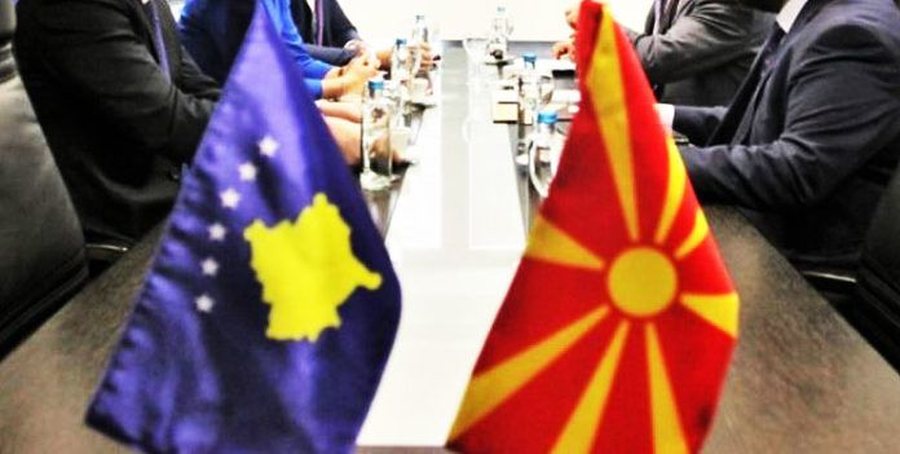
Macedonia still has the opportunity to avoid falling prey to the reconstruction of Serbian influence through external loans and narratives, while Kosovo can and should use the current crisis as a starting point for an inclusive governance that guarantees internal stability and strengthens its international position.
In sensitive historical periods, when nations find themselves at crucial crossroads, political clarity and historical awareness become essential elements to avoid the repetition of crisis cycles. Both Macedonia and Kosovo today face a challenge that is not only political, but also identity, geostrategic and existential for their European vision. Internal conflicts, international pressure, interference from foreign agendas and internal disunity are creating a situation that requires collective prudence and far-sighted decision-making.
The political impasses that characterize North Macedonia and Kosovo are not simply the product of political or ethnic differences, but rather a reflection of a raw historical legacy that continues to exert a powerful influence on institution-building, democratic legitimacy, and the architecture of civic coexistence. Both societies carry within themselves various dilemmas, internal political divisions, and a lack of consensus on a strategic vision for the future. In Macedonia, tension between ethnic components and efforts to build a multiethnic state often fail due to a lack of political will and the deepening of exclusive narratives that ignore the multicultural reality of the country. In Kosovo, extreme political polarization, the lack of unity of elites, and external challenges to sovereignty make the political system fragile and exposed to repeated crises.
However, what makes these two realities substantially similar is the lack of a deep reflection on the past, as well as the inability to build effective mechanisms for dealing with it. Often, the mistakes of the past continue to be repeated through new forms, but with the same content: exclusion, domination, instrumentalization of institutions and lack of political honesty in dealing with the collective interest. In this vicious circle, the concept of “second chance” takes on a special dimension. It is not about naive forgiveness or forgetting, but about a serious attempt to build a future that avoids the logic of cyclical conflicts and returns to the fundamental principles of democracy, justice and equal representation.
In this context, the situation in Macedonia takes on an even more complex dimension, where the attempt to avoid constitutional changes is not simply a legal-institutional crisis, but a deliberate political strategy to curb the advancement of Albanians in the public and economic life of the country. The fear of the economic and institutional empowerment of Albanians has created a stifling atmosphere, where the Macedonian political elites, instead of embracing the European perspective and the Franco-German plan as a way out of political stagnation, have consciously chosen to approach the Serbian-Hungarian axis.
This rapprochement is not just symbolic: through dubious loans from Hungary, which are supported behind the scenes by Chinese and Russian capital, a new financial dependence is being created that will very soon produce heavy political and geostrategic bills for the stability of the state itself. This approach, which distances Macedonia from the Euro-Atlantic path and makes it hostage to undemocratic foreign agendas, is expected to clash with three necessary reactions: the reaction of the international factor that will see with concern the sabotage of integrations, the reaction of the Albanians, who with their silence and reluctance to condition the constitutional changes on time have taken upon themselves a political complicity, and finally the reaction of the domestic Macedonian opinion, which will have to choose between a European future and a new isolation on the margins of a Russian-Serbian sphere.
In this charged political climate, another worrying dimension is taking shape through the project announced by academic and political circles close to VMRO-DPMNE, which they have named “Vtoro poluvreme” (“Second Half of the Game”). This strategy, which aims to be implemented in local elections, aims to undermine the role and influence of Albanian personalities who have contributed to the institutional and political advancement of the Albanian community.
By supporting independent Albanian candidates in the first round, selected not for their representative skills but for their affinity with this camouflaged project, an attempt will be made to fragment the Albanian political voice and weaken its role in decision-making. If this project achieves its intended success, it will have serious consequences for the statehood and political subjectivity of Albanians in North Macedonia. But if it fails, the local elections could open a new phase of mobilization and reshaping of the Albanian political scene, creating the preconditions for a strategic coordination that will put the demand for a genuine and equal statehood within the multiethnic structure of the state back on the agenda.
Ndërkohë, edhe Kosova ndodhet në një fazë të ndjeshme të procesit të shtetndërtimit, duke hyrë në momentet përfundimtare të rumbullaksimit të shtetësisë së saj, një proces që përmban në thelb marrëveshjet dhe negociatat e gjata me Serbinë. Në Serbi, siç ka ndodhur shpesh në historinë e saj diplomatike, po zbatohet një politikë bizantine me dy fytyra: nga njëra anë, deklarime për normalizim, ndërsa nga ana tjetër, një fushatë e qëllimshme për ta paraqitur Kosovën si palë fajtore, me synim që të sigurohet simpati dhe mbështetje nga faktori euro-amerikan. Ky instrumentalizim synon të prodhojë favore të reja politike, madje edhe pretendime të heshtura territoriale. Si pjesë e kësaj skeme, po tentohet edhe faktorizimi politik i botës serbe në Maqedoni, me qëllim që Serbia të përdorë ndikimin rajonal si argument për pozicion më të fortë në tryezat përfundimtare të negociatave me Kosovën.
Në rrethanat e krijuara me moskonstituimin e institucioneve të dala pas zgjedhjeve të fundit parlamentare dhe në këtë moment kritik të konstelacioneve gjeopolitike ndërkombëtare, elitat shtetërore dhe politike të Kosovës nuk guxojnë të bëjnë gabimin fatal të shkuarjes në zgjedhje të parakohshme parlamentare para mbajtjes së zgjedhjeve tashmë të përcaktuara lokale. Një veprim i tillë do të perceptohej nga faktori ndërkombëtar si mungesë vullneti për të përmbushur detyrat tashmë të marra për shtetin e Kosovës, që do të duhej të hapnin rrugën drejt implementimit të obligimeve shtetërore të dakorduara në kuadër të dialogut me Serbinë. Prandaj, çdo nismë për zgjedhje të parakohshme parlamentare jo vetëm që do ta vendoste Kosovën në kurs përplasjeje me partnerët ndërkombëtarë, por gjithashtu do të thellonte përçarjet e brendshme dhe do të shkaktonte një krizë të re legjitimiteti që do ta katapultonte vendin në një spirale destabiliteti institucional dhe politik. Në një situatë të tillë, pasojat nuk do të ishin vetëm të brendshme: do të rihapej me tone të paqarta çështja e statusit final të Kosovës dhe do të zbeheshin përpjekjet e deritanishme për njohje ndërkombëtare. Në këtë kontekst, zgjuarsia politike konsiston në ruajtjen e ekuilibrit, në shmangien e tundimit për protagonizëm elektoral dhe në vënien e interesit shtetëror mbi çdo kalkulim afatshkurtër.
In this complex landscape, Albania’s experience represents a valuable model that goes beyond political rhetoric and enters the realm of measurable institutional action. Albania has demonstrated a clear determination to meet all the standards required by the European Union, creating a functional framework of reforms that gave a sustainable direction to the integration course. It is precisely this approach that brought the political reward from Brussels, through the opening of the final chapter of negotiations for full membership by 2030. This development is not simply an individual success, but a message to all countries in the region, especially North Macedonia and Kosovo, to no longer waste time on political rhetoric or sterile clashes, but to actively engage in the spirit of integration that is being offered by the European Union itself. If this momentum is used with determination and foresight, it can become the bridge that takes these two countries from uncertainty to a stable and European future.
Both Macedonia and Kosovo today find themselves in moments that history rarely gives to two states at once. They are not simply facing everyday political issues, but the existential challenge of strategic self-determination: will they be an active part of a democratic Europe, or will they slip into the orbits of autocratic Eastern agendas? Political maturity is measured in these moments not in the words of the day, but in the approach to tomorrow.
Macedonia still has the opportunity to avoid falling prey to the reconstruction of Serbian influence through external loans and narratives, while Kosovo can and should use the current crisis as a starting point for an inclusive governance that guarantees internal stability and strengthens its international position. For both, the time for big decisions is now, and tomorrow will not offer more opportunities if these are not used with wisdom, unity, and historical prudence.






Lini një Përgjigje