


 Shkruar nga Pamfleti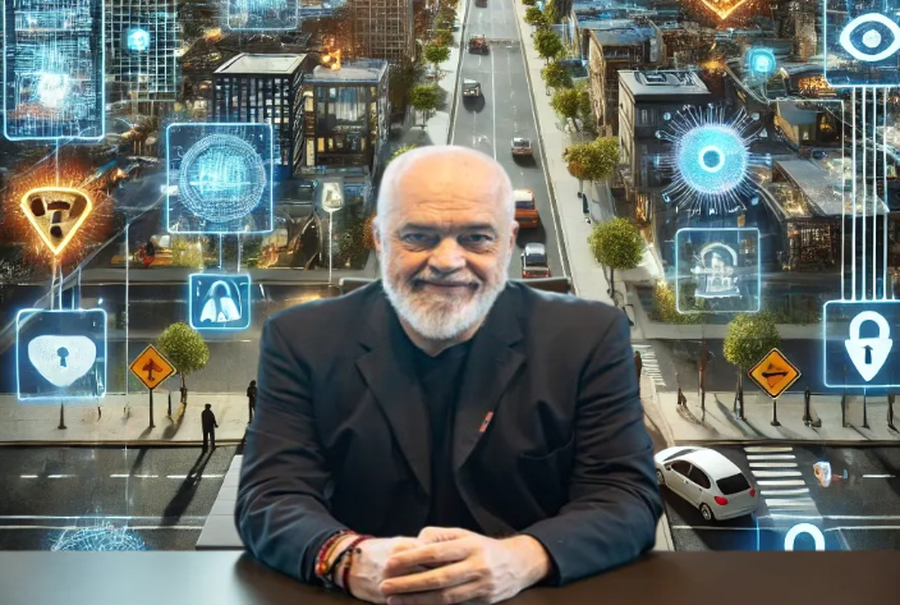
The project, which aims to modernize public safety, will rely on thousands of smart cameras and artificial intelligence. International experience shows that, along with the benefits, such systems are also associated with risks related to privacy, cybersecurity, data control and the use of algorithms.
With the launch of the first smart cameras in Tirana, Albania has officially entered the "Smart City" era. The project, which the government presents as a transformation of the way public safety will be guaranteed, will gradually be extended throughout the country with around 5,000 smart cameras connected to a single control center.
In practice, this means that cities will no longer be monitored solely by cameras that record footage. The new system uses artificial intelligence to analyze what is happening in real time. It can read license plates, record traffic violations, identify wanted vehicles, detect unusual gatherings of people, signal accidents or emergency situations, and send instant notifications to the control center.

This is the model that is being used in many countries around the world today. From Singapore to London, from Dubai to Barcelona, cities are investing billions of euros in smart technology to manage traffic, reduce crime, and respond more quickly to emergencies.
However, almost everywhere such systems have been deployed, the debate has not stopped at the technology. It has focused on the risks that arise when an entire city begins to rely on a centralized system that constantly collects and processes data.
The first risk is related to privacy.
In a smart city, not only images are recorded. Every passing vehicle, every movement on the road, every entry and exit to monitored areas can be turned into digital data. Depending on the technology used, the system is able to reconstruct a vehicle's route, analyze traffic flows, and create behavioral patterns in public spaces.
Precisely for this reason, the European Union has established strict rules for the processing of personal data. The questions that arise are concrete: Who manages this data? How long is it stored? Who can consult it? Are they automatically deleted after a certain period or are they stored for years? Is the system controlled by an independent authority? These are not theoretical issues. They are the elements that determine whether a system is used only for security or can be transformed into a mechanism for mass surveillance.
Një tjetër sfidë lidhet me vetë kompanitë që ndërtojnë dhe mirëmbajnë këto sisteme. Projekti shqiptar po realizohet me kompaninë Presight AI, pjesë e grupit G42 nga Emiratet e Bashkuara Arabe. Në nivel ndërkombëtar, Instituti Kombëtar i Standardeve dhe Teknologjisë në SHBA (NIST) ka paralajmëruar se administrimi i të dhënave nga kompani të treta rrit rrezikun e rrjedhjeve të informacionit, aksesit të paautorizuar apo përdorimit të të dhënave për qëllime të tjera nga ato për të cilat janë mbledhur. Sa më shumë aktorë të kenë akses në sistem, aq më e vështirë bëhet garantimi i sigurisë dhe transparencës.
Po aq serioz është edhe rreziku kibernetik.
Një Smart City nuk është vetëm një program kompjuterik. Ai është një rrjet i madh pajisjesh të lidhura me internetin. Çdo kamerë, sensor, server dhe qendër kontrolli komunikon vazhdimisht me pjesën tjetër të sistemit. Kjo arkitekturë e ndërlidhur e bën sistemin shumë efikas, por njëkohësisht zgjeron edhe sipërfaqen e sulmit. Mjafton që një hallkë të ketë dobësi sigurie që sulmuesit të tentojnë të depërtojnë në të gjithë rrjetin.
EastWest Institute, në një udhëzues mbi qytetet inteligjente, paralajmëron se sa më shumë pajisje IoT të lidhen në një rrjet, aq më i madh bëhet rreziku i sulmeve kibernetike, defekteve teknike dhe ndërprerjeve të shërbimeve kritike. Nëse nuk ekzistojnë sisteme rezervë dhe plane reagimi, një sulm mund të ndikojë jo vetëm te kamerat, por edhe te funksionimi i shërbimeve të emergjencës apo i menaxhimit të trafikut.
Për Shqipërinë, ky nuk është një diskutim hipotetik.
Në vitin 2022 vendi u përball me një seri sulmesh kibernetike që goditën administratën publike. Platforma e-Albania u nxor jashtë funksionit, u sulmuan serverë shtetërorë, më pas u godit edhe sistemi TIMS dhe u publikuan në internet mijëra dokumente zyrtare. Sulmet treguan se edhe infrastruktura kritike mund të bëhet objektiv i aktorëve të sofistikuar. Pikërisht për këtë arsye, ndërtimi i një sistemi që do të mbledhë çdo ditë sasi shumë më të mëdha informacioni e bën edhe më të rëndësishme mbrojtjen kibernetike. Në rast se një sistem i tillë komprometohet, pasojat nuk kufizohen te humbja e të dhënave. Mund të preket funksionimi i vetë mekanizmave të sigurisë publike.
Another debate is related to artificial intelligence. Smart City cameras will not be just electronic eyes. The first decisions will be made by algorithms. The system will analyze the images and determine whether a situation poses a risk or not. This method has also been used in some countries to predict areas where crimes are most likely to occur or to orient police patrols. However, various studies have shown that algorithms can be wrong or reproduce biases that exist in the data on which they are trained. For this reason, the European Act on Artificial Intelligence classifies the use of AI in public safety as a high-risk area and requires constant human control.
There is also a less obvious challenge: technology dependency. The more city functions move onto a single platform, the more their normal operation depends on the stability of the system. A technical glitch, a network outage or a cyberattack can affect traffic monitoring, police response or emergency coordination. This is why most countries that have built Smart Cities invest as much in backup systems, ongoing security audits and infrastructure testing as they do in the cameras themselves.
Smart City is not a technology that should be viewed with fear, but neither with unconditional enthusiasm. International experience shows that its success is not measured by the number of cameras installed, but by the state's ability to protect data, guarantee privacy, be transparent about how the system works and build strong defenses against cyberattacks. For Albania, which has already gone through the bitter experience of attacks on state infrastructure, this challenge is even greater. / Pamphlet







Dhe thuaj pastaj qe George Orwell Keta e zpatuan strategjine e diktatures se derrave ne "fermen e kafsheve"pike per pike dhe tani do na vene edhe Bib Brother ne cdo cep si tek 1984. A thua kemi nevoje per smart city, sesa per uje 24 ore, drita qe nuk fiken e energji qe nuk luhatet, spitale te pastra, e te pajisura me pajisjet dhe mjekimet e duhura, shkolla qe jane te pajisura me laboratore dhe cdo gje tjeter qe iu duhet por mbi te gjitha me femije dhe mesues qe duan dijen, me qendra kulturore dhe sportive qe te bejne te mundur per keta femije e te rinj qe te angazhohen aty e te mos iu grije koka tek telefoni apo te fillojne e te merren me gjera qe nuk iu sjellin asgje te mire as atyre as shoqerise ne pergjithesi Smart city eshte nje hap me tej drejt kontrollit totalitar, per kete eshte i iteresuar Rama, po se iu vidhet pensioni, iu rrembehen tokat shqiptareve e se vdesin neper spitale se nuk ka ilace dhe pajisje pune e madhe
SPAK duhet te fokusohet ketu. Eshte nje super afere. Ky vazhdon vjedh me te njejtin ritem.
Ne nje vend te vogel qe shumica merret me llafe do degjoni çudira ke ka te dashur kjo apo ky Mjafton nje kafe policave e ta vertetojne me vidio ke takove Mendoj qe jeta private do marre fund ne Shqiperi me instalimin e ketyre kamerave
Smart city ne nje vend ki nuk uj te pijshem neper banesa?
Shtet VK. Bojn eksperimente shtetet e tjera me ne se kena politikan RQima q pranojn cdo gjo me nejt npushtet. Ky esht shkatrrim privatsi ene ska t drejt asnjiii me na kontrollu o njerez VK-sa