


 Shkruar nga Mero Baze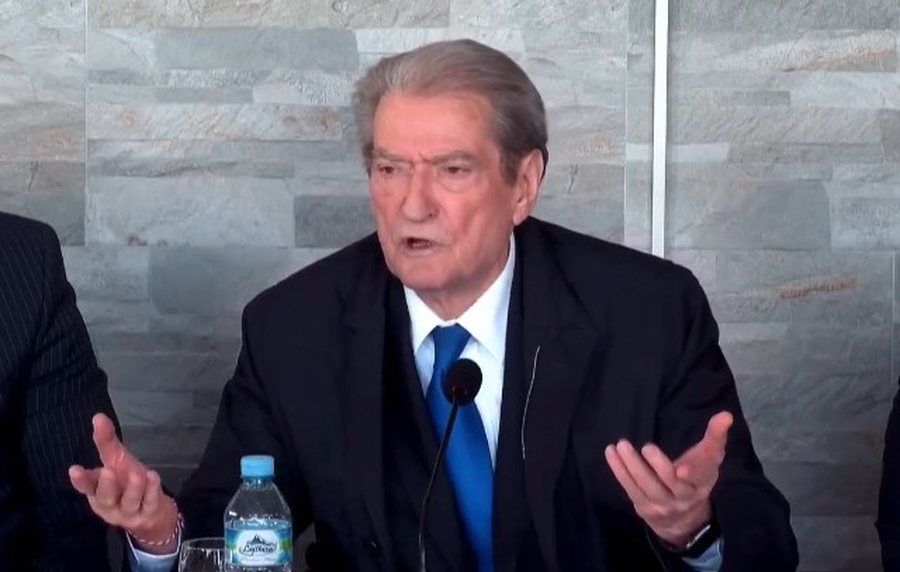
All of this has trivialized the seriousness of the media, and since it has largely identified with the opposition, it has also trivialized the opposition.
These days I hear a bunch of nonsense about the role of the media, starting from Berisha, repeated by his parrots, and then bureaucratically inserted into ODIHR or European Parliament reports.
The most absurd problem that arises is “the government’s use of the media in electoral campaigns”. Technically, not only with television time, but in fact, the opposition is dominant even in the content of television debates every evening in Albania. There are over 20 political shows every day, in which, with exceptions of no importance for viewership, opposition representatives dominate and the topics discussed are simply its recommendations.
Five former spokespeople or advisors to Sali Berisha, including two former vice-presidents of the Democratic Party, host television shows and television stations. The opposition leader himself, who treats everything as personal property, has a television station owned by his family.
Public television continues to remain a private property of the opposition. There, you will find important program directors and journalists who are members of the National Council of the Democratic Party. Not to mention the fact that the editors-in-chief, editors and directors are open admirers of Berisha – the kind of people who can go without eating for three days, since Berisha does not appear at the press conference because he has a virus.
Kombëtar Klan Television is owned by a person who is a family friend of Berisha and the main shows are openly engaged in his favor. Meanwhile, Top Channel, which has been critical of Berisha, is today more of a spectacle television and its only political show is hosted by a former senior DP official, who cries on the show for her husband, a former DP MP.
We are not talking about television stations without a national license, which are so insignificant that the fact that they are not with Berisha does not impress anyone.
I don't know what statistics they are referring to when they say that the media has been campaigning for the government. Even if we look at it with the sickest imagination, we can't even gather 20 percent of the media that are in favor of the government. Even the newspaper that I run, which is a popular media, is popular precisely because it is against Berisha and not because it is pro-government – but come on, let them put me in there too.
And this is not a criticism of Edi Rama, on the contrary, this is a tactic of his. Edi Rama has consciously allowed a pro-Berisha media noise to flourish in the press, without intervening, without going into debates and without having any active relationship with the media. This has created an oversaturation of public opinion with pro-Berisha propaganda and has defamed people more than he could have defamed if he had attacked or controlled them.
He simply trapped the media by giving Berisha the illusion of popular support and then destroyed him in the elections, many times more severely.
But this is not a reason to criticize the government. This is only a consequence of Berisha's desire to be the leader of the screens, not of Albania. Rama has given him this toy to play with like a rosary, but nothing more.
It is unimaginable that Berisha would place Edi Rama's admirers in RTSH, or allow the editorial offices to be run by members of the SP Assembly. But Edi Rama has done this with full awareness and desire, against any internal opposition in the SP. He has also left space for hundreds of delirious people who support Berisha – who feel famous because they appear on the screens and think they are journalists, moderators or show hosts.
Simply, Rama has abused the stupidity of the opposition – but any politician would do this if faced with such mediocrity. He has even often sponsored these media. Rama's ministers are sponsors of "opposition" portals, which run the media basements, which pretend to cry for Berisha in the morning and receive envelopes from ministers at dinner.
All of this has trivialized the seriousness of the media, and since it has largely identified with the opposition, it has also trivialized the opposition.
The media in Albania has serious problems that are not related to political alignment. It has lost reporting standards, it has lost resources, it is used by crime and by justice institutions to lynch victims of justice. It is financially unaffordable and surrenders to black money or underhanded sponsorships.
The government, consciously or unconsciously, has yet to enact a serious law for digital media – especially portals – to register, have legal status, and face the law if they defame or are used for blackmail.
These are the real problems of the media in Albania, but no one mentions them.
The government feels comfortable in these troubled waters. It leaves the media free to curse and slander whoever they want, sometimes even paying them for it. Meanwhile, the opposition, which feels pampered by being mentioned in the headlines of the portals, feels superior and satisfied all year round, but wakes up from its slumber only on election day – when it realizes that it is in the minority.
But then it's not the media's fault.
They have a thousand and one sins, and their biggest sin is that for four years in a row they have replaced the opposition in public opinion. And this has done more harm to the opposition than its appearance with Berisha at its head.
The real problem with the media in Albania is that for four years in a row it has been acting as if it were the opposition — but it cannot play this role on election day, when people have to choose between the government and "with honor to the flag."


Lini një Përgjigje