


 Shkruar nga Ylli Pata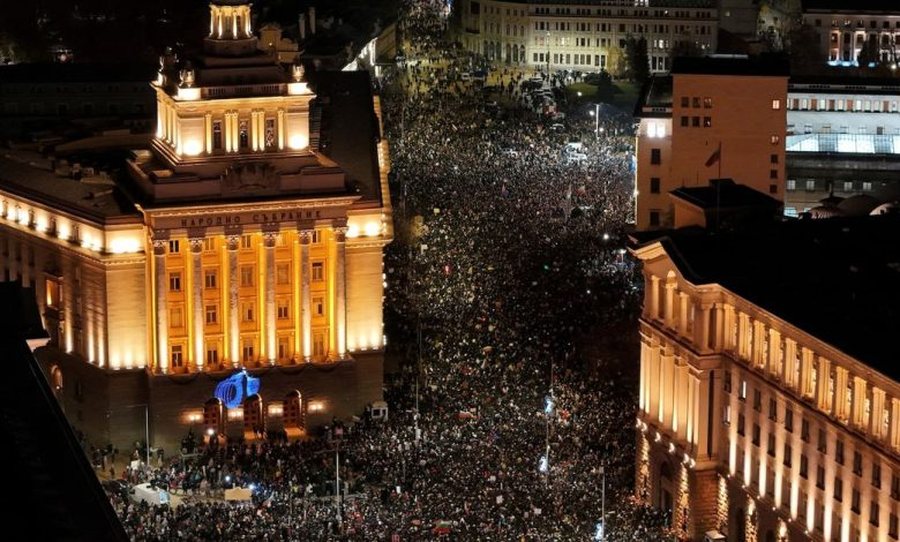
We are dealing with a development that has a certain context, in a country that is, among others, a member of the European Union. So why aren't revolutions imported so easily?
For years now, a significant part of public opinion has been trying to be "contaminated" by the violent revolutionary viruses coming from different parts of the globe. And for this, there is no need for any slander, it is enough to "explode in Kuçova".
The lights are turned on without being born, because in the network today, schedules are not connected to our meridians. They aim to be parallel and distant meridians in space and time, but not on platforms. Where the event comes with a vengeance, often even more often than you think. And this new trend, tickles the minds and egos of the digital citizen who has long been looking for the revolution to explode if not on the Boulevard "Martyrs of the Nation", somewhere to release the burning smell, even of some car tires.
And so we have become accustomed to an epidemic, which the West experienced at the time of the allure of sexy Latin American revolutionaries a la Che Guevara.
The first to spread revolutionary scenes from the "Global South" as the West calls it or Mao's "Third Snake" on the 28-inch bicycle of the 1980s are Sali Berisha's close militants. Who are within nature; because they are looking for sparks for the cold flint of the Albanians to light the spark of revolution.
But apart from this category, there are many others who reclaim this environment, asking and throwing questions, of course without giving any answers. Why do we sit, when the Bangladeshis burned their governors? Why don't we stand up when the Nepalese took the deputies and threw them into the river? The panelists-influencers who post such notes-exclamations in their free time do not stop, since they are full-time engaged in vvork shops, civic projects that come from international funds to help the democratic behavior of society.
For which sparks are thrown every time they see a revolution in different parts of the globe, putting it on the virtual stock exchange in the hope of importing it. The most recent was the case of the protests in Bulgaria. A traumatic development, more than political, since in addition to domestic actors, other influences are also being talked about. Bulgaria is preparing to enter the euro area in January, a development that will bring another standard and mold to the economy and financial transactions. A part of the business that feels scared by the flow of European businesses and community transactions, linked to gravitational centers outside the community, does not want to enter the euro area.
In power in Bulgaria are GERB, an ally of the Democratic Party, plus the New Beginning party, a new pro-Western political force. Protesters have burned down the headquarters of these two parties in Bulgaria's second largest city, Plovdiv. Behind the protests is the Bulgarian Socialist Party, namely the country's President, Rumen Radev, who is considered a Balkan Orban, as a result of good relations with Moscow.
The two ruling parties have openly accused President Radev of being the architect of the arson. As Radio Bulgaria in Albanian points out: “The leader of ‘DPS-Fillim i Ri’ Deljan Peevski accused President Rumen Radev of being the real organizer of pogroms, arson and chaos. Is this what you want for Bulgaria, Mr. Radev? Chaos, unrest, lawlessness and anarchy? What is the price - democracy and peace in the state,” Peevski asked in a post on social networks. According to the politician, Radev and the coalition “Continuing Change - Democratic Bulgaria” have used the youth. And all this to provoke elections and seize power with blood!?... And we from the DPS will not be broken by your aggression,” Peevski also wrote.
In other words, we are dealing with a development that has a certain context, in a country that is, among others, a member of the European Union. Why aren't revolutions imported so easily? Very simply, we have experienced on our backs, on the threshold of democracy, the imported theories since shock therapy, the massive burning of mortgages and archives, libraries and bookstores, apple and citrus plantations, and above all factories, mines, combines and plants. To then continue with the melting down for scrap of howitzer muzzles, tanks, aircraft and every industrial and military asset of the country. To then take its place, the occupation of lands, beaches, hills and mountains that became flat according to the theory of importing revolutions.
Those who made these revolutions today are at least real estate influencers and don't kill much. However, the archival jewels of revolutions never end. It is enough to look at who are the real owners of the mining territories in the country. When in reality they are the property of everyone, like the sea, the coast or even the forests and mountains. That is why no one wants to import revolutions anymore, on the contrary, they demand the export of the wealth stolen by these billionaire revolutionaries who have surrounded towers and tourist villages on lands they did not know existed.




Lini një Përgjigje