


 Shkruar nga Skënder Asani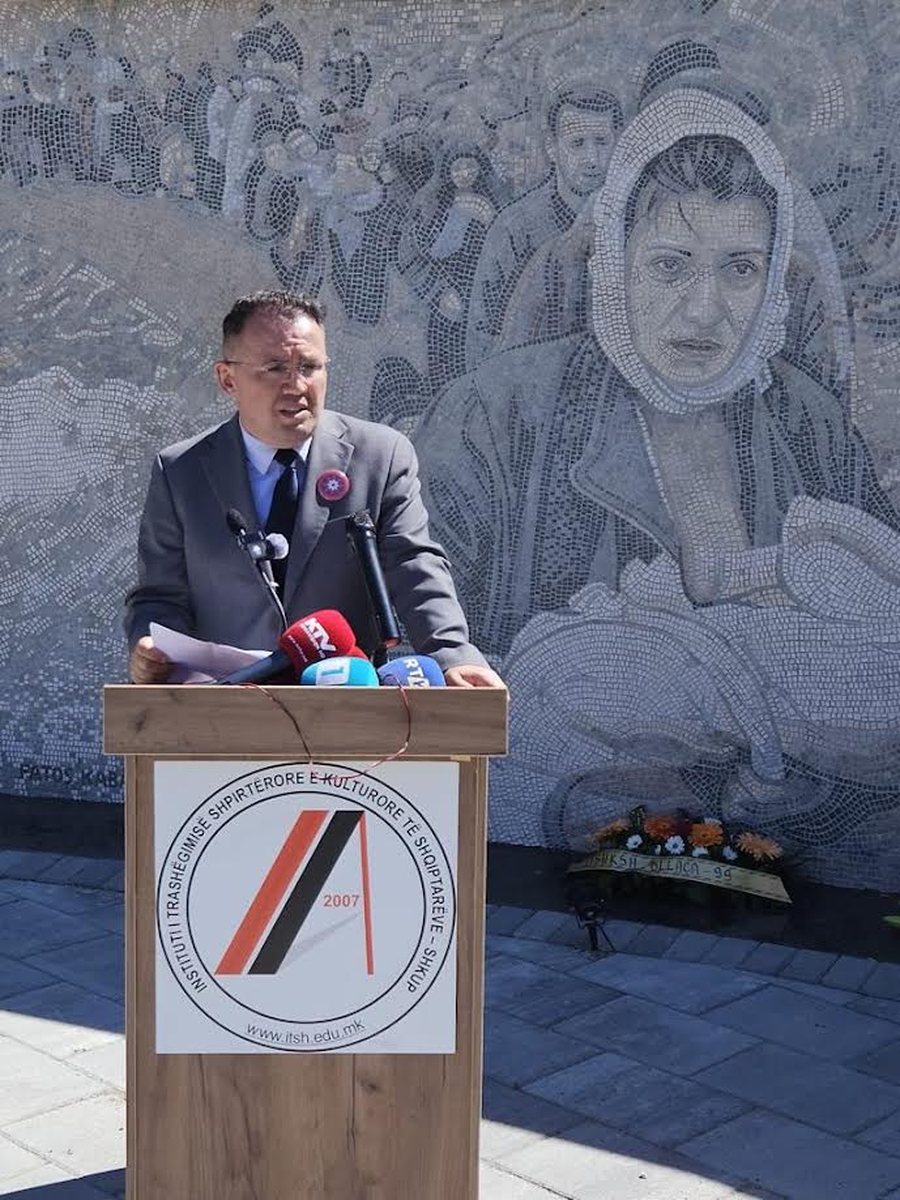
All those raging rivers of deportees in Bllacë, in a few days, were washed away, because the warm rays of solidarity triumphed over the black clouds of extermination. The sisters and brothers from Macedonia were activated, who gave their help through humanitarian organizations but also on an individual basis, because only in this way could Gligorov's idea on the corridor, which envisioned the transfer of Albanians to third countries without leaving them, fail to set foot on the land of Macedonia.
While writing about the expulsion of the Albanians from Kosovo in 1999, our writer Ismail Kadare captured this moment from a very special perspective:
"That Kosovo, which they left as an evil, the Albanians will fill it again with their presence, with the beautiful boys and girls, with the wrinkles of the old people, with the invincible army of babies and children, who will all be renewed, as life was renewed after the mortar runs away... Parting from a black night of terror, the Albanians they should never forget what happened to them. Not to fall into the trap of barren hatred, but to value and better protect their lives...", Kadare wrote.
Even today, when we are remembering the Golgotha of Bllaca, which happened a quarter of a century ago, we are actually declaring war on oblivion, bringing back to memory those events that gave more accelerated dynamics to the process of Kosovo's liberation, but also globalized it the human solidarity of the democratic world, which came as a result of an aerial campaign against the murderous machine of the Milosevic Serbian regime.
So we are not forgetting the painful past, but rather valuing the future, which should be safer, more dignified and, finally, more humane.
Every time it comes down to organizing a tribute, like today's, I have always been presented with a dilemma in the form of a question: Is it enough to refresh the memory only with events and events, if they are not legitimized according to an institutional-state culture?
In memory of the long ordeal of the deportees of '99, which ended in the valley of Bllaca, five years ago, where we are today, the cornerstone of the Serbian Genocide Museum 'Bllaca 99' was laid. This event had the blessing of our two governments, of Kosovo and Macedonia, where the Institute of Spiritual and Cultural Heritage of Albanians in Skopje was the originator and creator of this initiative.
So this was the first step towards the legitimization of memory in the form of institutional culture, for which our Institute every year has made official offers to the institutions of Kosovo, including the Prime Minister, the Presidency, so that this place called Bllacë has a more substantial treatment , starting from the fact that it was here that the statehood of Kosovo was conceived, as a result of the suffering of the people after all those unequal confrontations between the Kosovo Liberation Army and the Serbian criminal soldiers of Milosevic, but also as a result of the revenge against the Albanians after the beginning of the bombings on Serbian military targets. Our idea was and remains, that Bllaca is transformed into a place of pilgrimage to honor and remember the victims of genocide against Albanians in all times. With this idea, we owe a debt to the victims of wars and suffering, but we also express a dignified protest against the trends that deny the genocide in Kosovo, as the official policy of Belgrade is currently trying to do, which is very worried because the International Court of Justice in The Hague declared the crime committed in Serbrenica, in July 1995, genocide, in which Serbian forces killed over 8,000 Muslim men and boys in a few days. It is expected that the Serbian genocide will receive a well-deserved response at the United Nations on April 24 of this year, so this is also a moment of reflection and institutional mobilization, with the help of Albania's diplomacy, so that Kosovo and the Albanians take their rightful place. at the international levels of punishment and penalization of Serbia, where it would ultimately be declared responsible and the author of many macabre crimes bearing the stamp of genocide in Kosovo. I would like that on April 24 of the next year, a resolution would be included in the UN agenda, which would make Serbia responsible for the Kyrean genocide in Kosovo.
Therefore, I am glad that here among us today is the director of the Institute of Crimes Committed During the War in Kosovo, who represents the voice of hundreds of thousands of unfortunate Albanians, who in those cold days of March and April 1999 were forced to leave their homes by force. This was indeed the final goal of the Milosevic regime, that within the framework of the "Horseshoe" project, realize the centuries-old Serbian dream of a Kosovo without Albanians.
Many foreign and local reporters had described that world of Bllaca as a place of hell, where death was closer than a shirt soaked with sweat and blood. On the stage called Bllacë, a human tragedy was played out, while the directors from Belgrade controlled the fate of hundreds of thousands of people, who had gathered in search of saving their lives.
And the miracle happened. All those raging rivers of deportees in Bllacë, in a few days, were washed away, because the warm rays of solidarity triumphed over the black clouds of extermination. The sisters and brothers from Macedonia were activated, who gave their help through humanitarian organizations but also on an individual basis, because only in this way could Gligorov's idea on the corridor, which envisioned the transfer of Albanians to third countries without leaving them, fail to set foot on the land of Macedonia. Gligorov's "Corridor" was intended as an extension of Milosevic's "Horseshoe" plan, so that the ominous idea of ethnic cleansing of Albanian lands could develop unhindered. But the Macedonian Albanians themselves, with their generosity and fraternal hospitality, became an obstacle to these fascist ideas, and as a result, after June 12, 1999, Kosovo was once again filled with Albanians, giving the final blow to the Serbian genocidal projects.
In conclusion of my speech today, I would like to recall once again that Kosovo must prepare comprehensively that one day, when it fulfills all the conditions, it will submit its lawsuit to the International Criminal Court against Serbia for committing of genocide in Kosovo. Bllaca, as a place where the Serbian genocide left its indelible traces, can serve as a starting point and a point of orientation for this lawsuit, but also the cornerstone of a state tradition not to forget the bricks of suffering that became the fortress of the Kosovo state.



Lini një Përgjigje