


 Shkruar nga Armand Shkullaku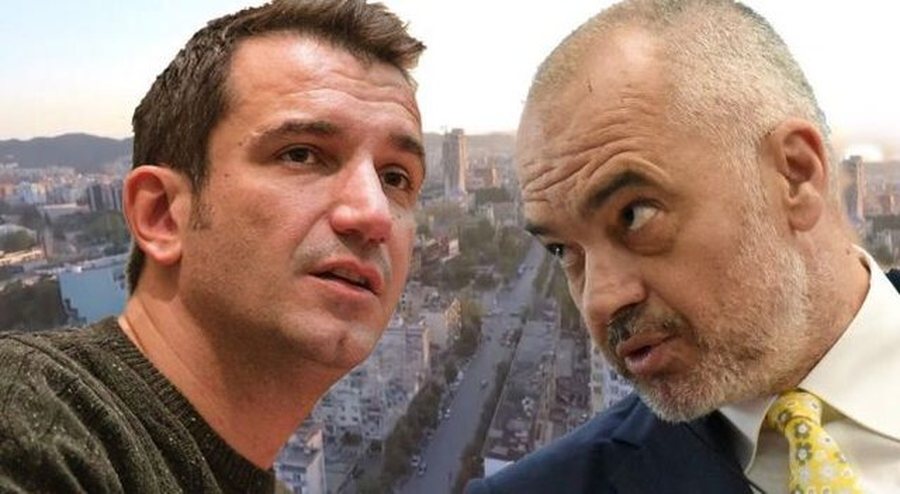
After having made fools of the "heroes" of SPAK (understood with their full desire), Rama and Veliaj are also taking the Albanians for fools with the argument that "what business do we have, what is being done below us".
The reaction to the prime minister and the mayor of Tirana, regarding the terrible corruption in the governance of the capital, shows that the leaders of the Rilindash organization have reached the point where they will not be able to believe later how credible they can be in their justification and that what can those who vote for them think. Rama and Veliaj pluck the same pieces, without losing their minds that the citizens are not sheep that can chew on their innocence, while the rotten system of a mafia government is clear to all.
If Rilindja had once tried to preserve some semblance of what is called political responsibility, now it has completely cracked. After having made fools of the "heroes" of SPAK (understood with their full desire), Rama and Veliaj are also taking the Albanians for fools with the argument that "what business do we have, what is being done below us". The point is that in this small country, both SPAK prosecutors and every ordinary citizen are clear about the scheme with which the Rilindsha organization operates. Hundreds of millions of euros that flow from tenders, concessions of PPP and go to enrich some, to be used in elections, to buy media and journalists, do not move from the initiative of some individuals who abuse the position, but are the mechanism of which guarantees the power of the Renaissance dome.
A very simple logic would be enough to understand why the pathetic speeches of Rama or Veliaj are funny and do not convince anyone. Both of them did not find themselves in front of a scandal that broke out suddenly. They were not caught off guard by a secret and sophisticated scheme of corruption, which their subordinates had woven into a complete conspiracy. Both in the case of the scandals of the government and those of the municipality, for years the alarm was given by the High State Control, the opposition and the media that millions of euros were being openly abused in broad daylight. But no one took the trouble to verify these accusations, and instead advocated their own, because the system and the organization were not to be discouraged. And when any of the soldiers of the Renaissance fell into the net of justice, the magic formula was: The Socialist Party is not a law office. The meeting of the SP assembly at the incinerator of Elbasan, the walk of the prime minister through television studios and hospitals with a scalpel in hand, the public defense by Velia of the directors who made tenders for their company, were precisely the strategy to encourage those who "steal Albania to steal votes and they steal votes to steal Albania". Otherwise, how can it be explained that the prime minister and the mayor, these working people with high taste, did not ask who were the businessmen who would manage tens of millions of euros from the budget of a poor country.
How is it possible that a project worth up to 430 million euros (incinerators) was entrusted to some nameless individuals with no experience in this field? How did a mason from Italy win the trust of the Scythian leader for the sterilization concession or a tall baker who beat all the big companies to win the several million City Hall tenders? Were they not once surprised by this sudden success of the modest class of society that would surprise even the fathers of the market economy? Good Edi Rama, maybe at that time he had much bigger problems on his shoulders, such as the crisis in Belarus or the reconciliation of Greece with Turkey, but this one from the municipality did not once meet the baker to advertise him as a model of success of the man of work?
However, Rama and Veliaj can say again what their business is with how public money is procured, who takes it and where it goes. SPAK prosecutors may be satisfied with this explanation, but citizens are certainly not sheep. If once 20 percent was given as a corruption fee for public tenders, Rilindja has taken the level to the next level: it creates its own companies to take the full amount from citizens' taxes. If in the past there were paper maneuvers to determine a competition, now the private person receives the codes of the evaluation commission to enter the procedure himself and declare himself the winner. But again the leaders have no responsibility.
Rama is not responsible for ministers eating apples and pears. The deputy prime minister feels no guilt that her most important director took public money to his company. This mayor is proud that he didn't know that the millions of the budget were going to the business of his directors. Can this be called a state? If not for the criminal responsibility, but for the political one, should they at least apologize and sit down?
Blaming the fall of the state on some subordinates, who are simply the executors of the organization, is not only a shame for those who do it, but also for SPAK prosecutors and for all those who pretend to believe it. It is as if a mafia godfather, who divides the work and runs the organization, when the soldiers are caught, comes out to say that the responsibility is individual, that he respects the law and works in the service of the community. We have reached here and we have not seen anything yet./Lapsi


Lini një Përgjigje