


 Shkruar nga Neritan Sejamini
The story of the Challenge for Albania is the usual story of new parties in the last 2-3 decades. With some exceptions, they have all been parties created by one person (in a few cases 2-3 people) as a means to advance their political aspirations.
Gjergj Bojaxhiu's campaign for the Municipality of Tirana (2015) remains one of the most unique campaigns in the last three decades. It started with just an idea, without prior preparation and resources; started by 4-5 people, it brought together over 200 professionals, without knowing each other; it was all conducted on social networks and street meetings; it was financed with little money raised entirely from small donations from citizens, which were made publicly transparent. The result still remains the best by a candidate outside the two major parties: over 16 thousand votes—about 5.4% of the votes of the citizens of Tirana.
What is not known to the public are the developments after the elections. After the campaign participants decided to create a party, two different approaches emerged. One part wanted a typical party under the leadership of Gjergj Bojaxhiu; the other part wanted a new and modern political organization: organization with online forums and social clubs instead of branches, sections and hierarchy of leaders; electronic management of communication with members; decision-making by all members on key issues; and a party leader without power in important decisions, with a 2-year mandate, without renewal. After debates and nervous clashes, the first alternative won, based on the reasoning: Bojaxhiu was confirmed by the popular vote and a party born from this vote should be led by him.
The group that did not want a party with a strong leader withdrew; the others formed the Challenge for Albania party. Two years later, in the 2017 parliamentary elections, it received only 3,500 votes across Albania, about a fifth of the votes it received in Tirana in 2015. After these elections, the party ceased to exist. With it, an opportunity to bring a new approach to politics in Albania was lost.
The story of the Challenge for Albania is the usual story of new parties in the last 2-3 decades. With some exceptions, they have all been parties created by one person (in a few cases 2-3 people) as a means to advance their political aspirations. For this reason, their organization and functioning have resembled more a personal project than a political party.
But this trend was not just Albanian: after the fall of communism, a new type of party emerged, mainly in Europe, which in political literature became known as the “personal party” or “personalistic party.” Silvio Berlusconi’s Forza Italia is considered the first such personal party in Europe.
As one of their leading scholars describes them, these parties are “the most extreme case of party personalization, which is embodied in the complete control by an individual leader of the party he himself has created.”
In fact, all Albanian parties are essentially autocratic parties—the leader of each one sets the party’s direction and vision; nominates candidates for election; allocates resources; and exercises complete authority over all other politicians in his or her party. But personalist parties have an important distinction: their survival is dependent on the personal resources of the founding leader—his or her networking skills, his or her ability to raise funds, and his or her personal charisma to attract followers. Because of this dependence, the longevity of these parties is closely tied to the leader: the moment he or she steps down, the party ceases to exist.
This personalistic nature and the lack of a serious vision beyond the ambition and personal charisma of the leading founders has prevented new Albanian parties from attracting voters even though the number of those dissatisfied with the major parties has been steadily increasing.
With the exception of the New Democratic Spirit, which received over 29 thousand votes (about 1.7% of the total) in 2013, and LIBRA, which received almost 20 thousand votes (about 1.3% of the total) in 2017, no other party has so far crossed the 1% threshold of the popular vote. The Red and Black Alliance in 2013 and the Nisma Thurje in 2021 have the next best results—both received about 10 thousand votes, about 0.6% and 0.7% of the country's total, respectively.
Almost all new parties, from G99 in 2009 to the Movement for Change in 2021, practically ceased to exist after their founding leaders abandoned them after electoral defeat. As a significant exception, small traditional parties such as PR, PAA, LZHK, PDNJ still stand because of coalitions with one of the major parties that enabled their leaders to be elected MPs.
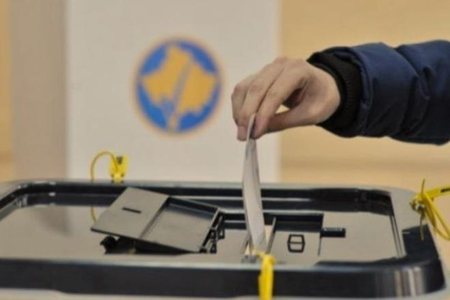
With this pessimistic historical backdrop, a number of new parties will run in the May 11 elections: The Together Movement, Albania Becomes, Opportunity, Right 1912, Euro-Atlantic Democrats and several others.
So far, all are repeating, to a greater or lesser extent, the organizational features and the same approach of the personalist parties like those above. They are completely ruled by the founding leaders and offer the only “solution” that those before them have offered: 'we are better than the old politicians, so vote for us to change Albania'.
There is no doubt that if the leaders of these parties were MPs, this would enrich the parliamentary debate and accountability in the Assembly. But beyond the possibility of enriching parliamentary pluralism, the new parties have not brought a new standard of party democracy nor a new approach to doing politics.
Their public discourse is a new variation of the complaining approach: denounce, expose, attack—without inspiration and without dreaming. Their public discussion is devoid of reflection and explanation of the underlying problems facing the country. None of them answers the fundamental question: Why are we here? How did we get to this state as a society? Consequently, they lack a sound and realistic vision for getting out of the situation we are in.
Faced with a disillusioned society that has lost faith in politics, the new parties lack humility, they lack the sobering awareness that the country's problems are deep and difficult and cannot be solved with a stroke of the pen by great leaders. This requires the awakening and effort of the entire society to change. The role of political leaders is to foster this awakening and inspire this effort to change.
No one expects the new parties to win the elections or topple the government. But many expect them to bring about a turning point in Albanian politics: to establish a modern and Western standard of party functioning and political making in Albania. Neither the DP nor the SP can bring this standard; only they can bring it. If they do not make this turning point, which depends only on them, they cannot solve Albania's problems, which are beyond them.
Therefore, even though they are new parties, they must change! Only by bringing a new way of doing politics can they break the historical "curse" of failure of new parties on May 11th.




Lini një Përgjigje