


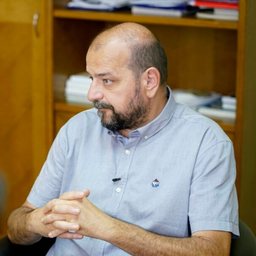
 Shkruar nga Dragan Sormaz
The collapse of hybrid regimes is not a spontaneous process. It requires strategy, organization, and a serious political alternative...
The defeat of Viktor Orban and the victory of the opposition gathered around Peter Magyar mark the end of a political era in which hybrid democracy tried to present itself as a viable alternative to the European model. The citizens of Hungary have made it clear that this is not the case.
But what is even more important than the result itself are the messages that emerge from it, because they do not apply only to Hungary.
First, it was shown that the narratives about “state guards” and self-proclaimed sovereignists are tired. The construction of an external enemy for years, whether from the European Union, from migratory waves or from liberal circles, can only be used for a limited time. When real life begins to refute the propaganda, fear ceases to be a political currency.
Secondly, the historical rule was confirmed once again: the European peoples between Russia and Europe, at key moments, choose Europe. Not out of ideological blindness, but out of rational interest. Because Europe, with all its weaknesses, remains a space of economic progress, legal security and a predictable future. And this fact cannot be changed by the propaganda richly financed by corrupt hybrid autocrats.
Third, the collapse of hybrid regimes is not a spontaneous process. It requires strategy, organization, and a serious political alternative. The victory in Hungary did not come only as a result of government mistakes, but as a result of a clear political offer: leadership, work on the ground, a program, and a willingness to offer citizens concrete solutions, not just resistance.
Fourth, these elections once again confirmed a political legitimacy: in the clash between the motivation of those seeking change and the organizational machinery of the regime that defends the status quo, time works for change. The question is not whether it will happen, but when and what alternative will shape it. Here the alternative factor begins to play a key role. Alternatives to the Orbán regime in Hungary have existed before, but with many organizational and conceptual shortcomings, which, in the specific conditions of the electoral system in Hungary, hindered political change.
Fifth, despite media dominance, sophisticated sources, and mechanisms of manipulation, truth and facts have a long-term advantage. They can be suppressed, but not ultimately defeated. In the clash between manipulation and facts, the latter always wins in the end. The only problem is that autocratic rulers refuse to admit this and are willing to invest huge resources to protect their manipulations, resources that they have taken from their citizens through corrupt networks.
And finally, perhaps the most important lesson: democracy, even when it seems fragile, proves to be the most vital political system. Its strength lies not in control, but in the ability to renew itself and in the desire of people to live in a free society, where institutions are accountable to their citizens. For this very reason, democracy is stronger in the long run than any corrupt or autocratic hybrid order.
All these messages are directly reflected in Serbia. Changes will not happen by themselves. It is not enough for the government to make mistakes. A clear, credible and values-based alternative is needed. The citizens of Serbia will not be motivated by the choice between loyal radicals and disillusioned ones. Nor between those competing for proximity to Vladimir Putin and the Moscow regime.
As in Hungary, the only political impulse that can move the majority of citizens is a bold step towards the future, based on the values of contemporary Europe: the rule of law, institutional stability and economic development. Hungary can teach good lessons to all those who want a change of power in Serbia, especially the student movement and the opposition:
Against an authoritarian regime that relies on a leader, one must fight with a strong leader! A strong leader must be a politician or, at least, a politically knowledgeable and well-known individual! The elections are approaching, and such a person does not exist on any possible list! During the campaign, for two whole years, Tisza used 16 program teams, which, together with the leader Mađar, visited the entire country, every locality!
The offer to voters should be crystal clear! It should be an alternative to Vučić's rule, it should be the complete opposite of it! The student movement focuses on the fight against corruption and the rule of law, which is fine, but it is not enough for victory! Much more attention should be paid to the economy, because Serbia is fifth from the bottom in Europe in terms of the purchasing power of the population! The lack of income for basic living needs is a nightmare for our families! The solution, both in the short and long term, to this problem is only EU membership! So, Serbia's membership in the European Union should be emphasized in the campaign because of: the economy, the rule of law, the fight against corruption, freedom of the media, human rights and freedoms, energy, agriculture, ecology...
Consequently, the stance towards Russia should also be crystal clear: distancing from Russia in every aspect and energy diversification! In addition, the message to voters regarding Kosovo should be harmonized! Implementation of the Brussels Agreement until the signing of a final, legally binding agreement on the normalization of relations, which is not recognition, but is an obligation of Serbia in the process of accession to the European Union.
For creating a referendum atmosphere, this is important. Yes, a single list would be desirable, but with the above elements. However, in Serbia it is not necessary, because the electoral system is completely different. Tisza, in our electoral system, would have an absolute majority, but not two-thirds! Two lists could even increase the turnout, as this is another important factor for victory.
The elections in Hungary were not just elections for power. They were elections for leadership. And precisely for this reason, the message of these elections and their consequences will not stop at the borders of Hungary. Who will be next depends only on us.
Serbia definitely needs a change of power from Vučić, but it also needs a change of direction! There is only one good direction for Serbia and anyone who wants the best for the country should clearly and loudly commit to it, membership in the European Union! / Adapted from “Pamphlet” by “The Geopost”


Lini një Përgjigje