


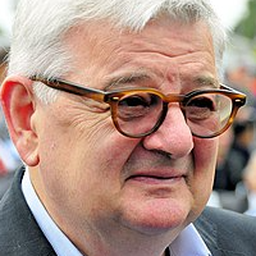
 Shkruar nga Joschka Fischer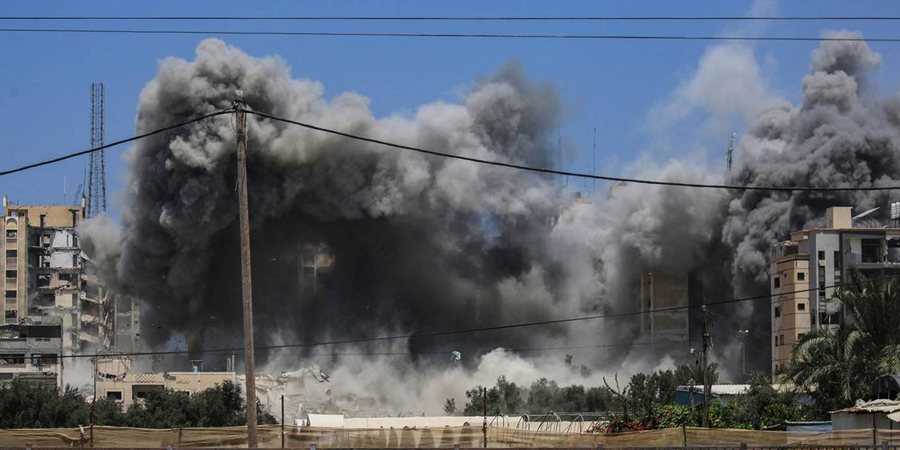
Both sides have given up on reason, and that should worry us all...
The conflict between Arabs and Jews over the territory between the Jordan Valley and the Mediterranean Sea - centered on the holy city of Jerusalem, which is now the capital of the state of Israel - has been going on for more than 100 years. But now he is changing, and not for the better.
It all began under the rule of the Ottoman sultans and continued after the First World War, when a League of Nations mandate provided a thin facade for what was in fact colonial rule by the two European victors, Great Britain and France.
Then came World War II, which ended with the fall of the Nazi regime in Germany. In 1947, a two-thirds majority of the member states of the United Nations, a newly created institution, agreed to a partition plan for the territory of Palestine.
Meanwhile, a year later, with the expiration of the British protectorate, the state of Israel was founded.
This act led to the first Middle East war between Israel and its Arab neighbors, which were defeated within a year, causing the mass displacement of many Arabs from the disputed territory (an event known as the Nakba, which in Arabic means "disaster").
But other wars would follow over the next decades, bringing more displacement and expulsions. Throughout this century-long struggle, the world has undergone major and profound geopolitical changes, from the fall of old colonial empires to two world wars and the long-lasting Cold War.
And yet, the Israeli-Palestinian conflict has largely remained a regional issue, or even just a local issue between two small populations. Unlike the Sarajevo crisis in the summer of 1914, this conflict has never sparked a global conflict or a clash of great powers, culminating in a world war.
But now even this geopolitical reality may be changing before our eyes. It's been almost a year since Hamas attacked Israel's border area with Gaza, massacring civilians and taking hundreds of hostages, including young and old, women and children.
The ensuing war in Gaza has taken a terrible toll on Palestinian civilians, among whom hide Hamas militants, along with the weapons they possess. But from the beginning, this war has been more than just another bloody chapter in the centuries-old Jewish-Palestinian conflict over the same territory.
The broader context, undeniably, is the struggle for regional hegemony between Iran and its "axis of resistance" and those who oppose it. Since Iran launched an unprecedented missile attack against Israel from its territory on April 13, the two countries have been in a state of undeclared war, and not over any part of the territory.
This conflict has a much larger dimension, because as long as Israel, one of the strongest military powers in the Middle East, exists as a state, Iran cannot achieve its goal of regional hegemony. So for Iran, Israel is primarily a means to that end. The Jewish state provides it with a decisive advantage over its main Arab rival, Saudi Arabia, by providing a raison d'etre for Hamas, Hezbollah and other participants in the Axis of Resistance. Iran's advanced nuclear program is another means to the same end.
A nuclear-armed Iran would change the balance of power in the Middle East, and perhaps globally. Now that the danger of a major regional war in the Middle East is felt, it is unlikely that anyone will be able to stop it.
Iran and its proxy militias in the region have vowed to avenge Israel's recent killings of senior Hamas and Hezbollah officials in Tehran and Beirut, respectively. In a world undergoing great change, and increasingly unstable, the age-old conflict in the Middle East has transformed into something new.
It involves all the major powers - as Iran is a close partner of Russia and China - and the region's status as a major energy exporter means that any further escalation would cause severe global economic disruption.
As in the 1970s, the Middle East has the potential to trigger a global economic crisis. But this time, there is no lasting solution in sight. Because all parties involved are stubbornly convinced of their chances. Neither the Palestinians nor the Israelis will ever surrender.
By risking a wider war with Israel and the United States in pursuit of regional hegemony and nuclear weapons, the Iranian regime could bring about its own demise. But in the meantime, Israel will also continue to be isolated internationally, continuing its brutal military campaign in Gaza. Both sides have abandoned reason, and that should concern us all.
Note: Joschka Fischer, German Foreign Minister and Vice/Chancellor 1998-2005.








Lini një Përgjigje