


 Shkruar nga Ylli Pata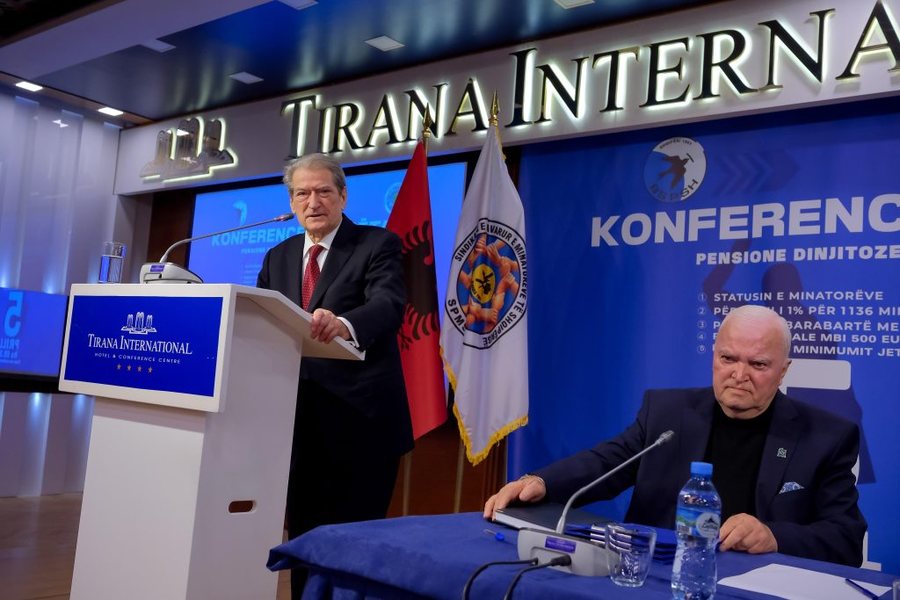
Anyone who followed this event on the numerous news reports on Tirana television, including those who worked as miners across the country, from Tropoja to Konispol, had their minds filled with images of everything that happened during the era of Berisha the First, when even the ghost that appeared before the doctor was a character.
The publication by the majority campaign, namely Edi Rama, of film materials showing Sali Berisha making demented blunders, seems to have complicated his political rival.
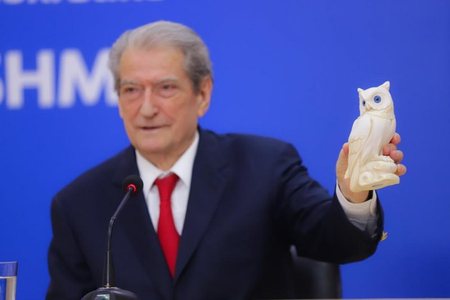
Sali Berisha, as if to show that not only has he not forgotten, but remembers everything from his exploits in leading Albania, today resurrected a ghost. He not only brought it, but brought it in front of the cameras and signed a type of agreement. Which had the DP seal on it, exactly the same seal that Berisha won years ago from the "criminal organization of justice".
The ghost is called Gëzim Kalaja, with whom Berisha signed a so-called agreement on the "status of miners" and the increase in miners' salaries in Albania.
Anyone who followed this event on the numerous news reports on Tirana television, including those who worked as miners across the country, from Tropoja to Konispol, had their minds filled with images of everything that happened during the era of Berisha the First, when even the ghost that appeared before the doctor was a character.
Gëzim Kalaja calls himself the President of the Trade Unions, but he has never been a trade unionist. His only mission, as a former employee of the former Valias mine in Tirana, was to strike in 1991 to overthrow the government that came from the elections of March 31, 1991, which was led by Fatos Nano.
A mission that Kalaja successfully accomplished, after a hunger strike in the coal mine's cellars, where its actors, only, did not experience hunger for a single minute, as they were fed with chops and beer.
When Sali Berisha became President of Albania in 1992, namely the man who had superpowers in everything, the biggest victims of his power were the miners.
Throughout the country, massive layoffs of all mining company personnel were carried out. Hundreds of thousands of miners, firefighters, mining technicians and geologists, as well as engineers from all the mines of Albania, were taken into early retirement at the age of 35-40, that is, at the most active time of a person.
The victims of this policy were not only the workers of the so-called high-cost and unprofitable mines, as was said for those of coal or iron-nickel, which was not true. But also for the mines of copper, chrome, and rare minerals, whose price has reached the skies year after year. All those countries that possess such minerals are considered rich today.
Let's go back to 1992. The mines were emptied of workers, and those who resisted in various strikes were burned alive.
As happened in Bulqiza, where the DP MP who had no connection to either the mine or the town was Minister of Defense. He sent special forces 800 meters below sea level, risking the lives of both police and miners.
The union leader Kalaja neither spoke nor stood up to defend his fellow miners. He took over from the DP government, with a firm hand, the Palace of Culture of Tirana, behind the Historical Museum, where today a private University is located, as well as all the workers' camps along the coast from Shëngjin to Saranda, as well as in the mountainous tourist areas.
Properties that were then sold to the powerful in the area. Who then took over the mines, the mining rights to exploit the country's national wealth, even though they had no idea how they were extracted or what needed to be done to process them. They only learned reference prices and how to get rich from them.
During the time of Berisha I, the demolition of mines and exploitation of the country's natural resources began, which were not stopped by any other government in 34 years.
Meanwhile, Albania is the only country where unions have not existed at all since the fall of communism. The status of the miner that Berisha mentioned today could have been approved precisely on March 23, 1992, when he won 2/3 of the Albanian Parliament and could approve any law in the country.
The pensions that Sali Berisha mentioned today could increase year after year if every miner were paid social security, and not taken into early retirement, with the lek provided as a loan by the International Monetary Fund.
Of course, there are many culprits, more precisely co-culprits, for what has happened in these years regarding the administration of national wealth, who would not be a bad thing if they were also the focus of SPAK's investigations.
Simply this return of union ghosts, to show that it has not been guarded, as Edi Rama calls it, could bring about that vision, which is even more boomerang than memory loss.


Lini një Përgjigje