


 Shkruar nga Andrea Fioravanti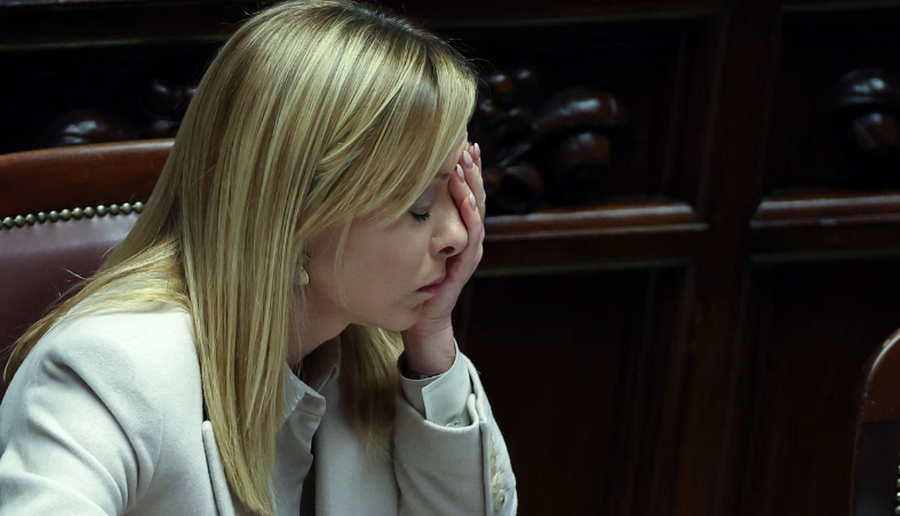
Few structural reforms, broken promises and a weak management of the national recovery plan. But despite the modest results, Giorgia Meloni's popularity remains unwavering. The key? An anemic opposition and an almost surgical communication strategy...
Giorgia Meloni has been governing Italy for more than 3 years without any parliamentary crisis, supported by a stable majority and an unwavering consensus. She is now leading one of the longest-serving governments in the history of the Republic, defying the tradition of political instability that has characterized the country for decades.
But what will really remain from this period of power? So far, the only significant legislative act is that of the Minister of Justice, Carlo Nordio, who abolished the crime of abuse of office and limited the publication of wiretaps for persons under investigation.
The rest are penal regulations or quick media "shits": the decree against "Rave" parties, the new traffic code with harsh sanctions, and the failed immigrant centers in Albania, which served more as propaganda than as a solution.
The vast majority of parliamentary activity produces volumes of papers, but without touching the essence of citizens' daily lives. Major promises still remain on the horizon: the Messina Bridge, the reform of the institution of the prime minister, and the new electoral law.
Even the "differentiated autonomy", so much trumpeted by the League's allies, without the necessary funds to guarantee basic services from south to north, remains simply an empty framework. Likewise, the division of careers in the judiciary remains hostage to the uncertainty of a referendum that could blow up the entire project.
There is a strong sense of déjà vu. The Meloni government seems to be suffering from the same syndrome as the "Berlusconi II" government (2001-2006). After five years of absolute power, only the points-based license system and the ban on smoking in enclosed spaces are remembered.
On the political front, the only promise kept is to eradicate the "nepotism" of the left, replacing it with loyalists of the right in RAI and the main cultural institutions. As for the reduction of fuel excise duty, the naval blockade in connection with the landings of illegal immigrants and other electoral slogans, they have been quietly archived until further notice.
Meloni quickly realized that holding on to power required extreme pragmatism. She kept Italy on a pro-Atlantic course, regardless of who was in the White House, and carefully avoided a masochistic clash with Brussels.
The woman who once shouted against "the bureaucrats of Europe" has now become a disciplined enforcer of its rules, even claiming a special rapport with Ursula Von der Leyen, which often angers her sovereignist electoral base.
In the economy, fiscal impotence is very evident. With public debt at an alarming 135 percent of GDP, the budgets of the last 3 years have been mere survival exercises, focused on pensions and neglected healthcare.
Minister Giorgi has made linear budget cuts that do not affect the structure of spending, but only spread the difficulties. Meanwhile, the National Recovery and Resilience Plan (NRRP) remains a huge wasted opportunity: out of the 153 billion euros provided by the EU's joint fund, Italy has spent only 1/3. Two out of three euros remain blocked in the drawers of ministries, while most projects in the country have stalled.
So why isn't Meloni falling in the polls?
The first answer is the weakness and division of the opposition. The second has to do with the recognition of an unwritten law of national psychology: you can do anything to Italians except annoy them.
Thus, Meloni has abandoned press conferences, where she could face difficult accountability questions, preferring mainly controlled monologues on social media. She does not speak directly to the media, but forces them to talk about her constantly.
When the failures become too obvious, she quickly pulls out the "victim card": it is no longer the prime minister who is held accountable, but the mother, the wife, and the ordinary Italian persecuted by the malevolent "elites."
When even this is not enough, attention is drawn to the successive blunders of its ministers or the statements of Antonio Tajani and Matteo Salvini, which serve as media noisemakers to cover up the lack of results.
Meanwhile, real life and "politics" function like in the famous American series "Severance": on television it is shown how the government is "saving" the country, while in reality schools are collapsing, waiting lists at hospitals are endless, and trains at stations are constantly arriving late.
Meloni seems to have found the golden formula: leaving Italians in their perpetual stagnation, skillfully selling them the illusion of stability through an unstoppable marketing campaign.


Ashtu pat qenë edhe Mussolini,por italianët ja dhjenë kufomën në piazzale Loreto në Milano ...