


 Shkruar nga Andrea Fioravanti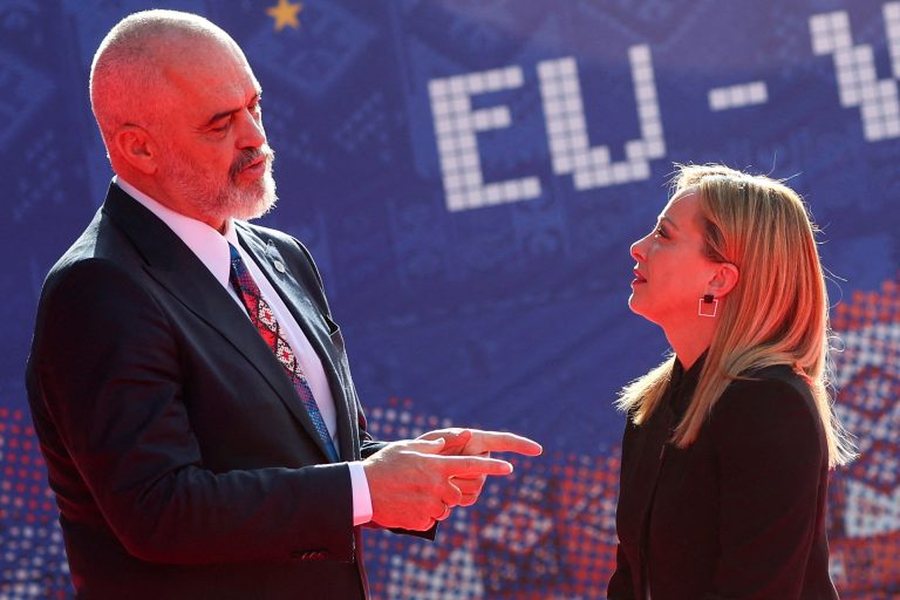
When Meloni has no excuse for the controversies of the day, her not-so-perfect ministers from the court of miracle workers lend her a hand, filling the newspapers with one blunder after another...
Giorgia Meloni has governed Italy for more than three years without a parliamentary crisis, with a strong majority and a consensus that shows no signs of weakening. It is already one of the longest-serving governments in the history of the Republic, and not just by the standards of the last twenty years.
But what is left of these three years of government?
For now, only one really important law: that of Justice Minister Carlo Nordio, which abolished the crime of abuse of office and protected those under investigation from the unlimited publication of wiretaps. Then there are a few draconian regulations or newsworthy advertisements: the enthusiastic decree, the new road code and the failed migrant centers in Albania.
The rest of the parliamentary activity only adds volume, without really affecting the lives of Italians. The promises are endless: the Messina Strait Bridge, the reform of the prime minister's office, the new electoral law.
Of course, everything in politics is temporary and journalism is always bound to take blurry pictures, but so far the Meloni government has suffered from the same syndrome as the longest-lasting government ever, the one led by Berlusconi from 2001 to 2006. From that eternal period, we remember only three things: the fine-based driving license, the ban on smoking in public places and the extremely complicated relationship between politics and the judiciary. A sense of déjà vu, twenty years later.
So far, the only promise kept by the election campaign has been to crack down on the treacherous nepotism of the left wing by randomly placing trusted people in positions at RAI and cultural institutions. After all, it wasn't that difficult. As for the reduction of excise taxes, the naval blockade and other slogans impossible to translate into law, we'll have to wait.
Meloni had the merit of immediately understanding that the government has its own reasons, of which the opposition is unaware, and she kept Italy as a loyal ally of the United States, regardless of who was in the White House. She did not wage a masochistic war against the European Union, as many expected. In this case, instead of writing a new history, Meloni denied hers. The same woman who for years shouted against a bureaucratic Europe has now transformed herself into a disciplined interpreter of its rules, to the point of claiming a special relationship with Ursula von der Leyen, not reminding her base that the President of the European Commission was also confirmed with the votes of the Socialists in the European Parliament.
The last three budget laws are a testament to the government's fiscal impotence. The budget is extremely tight: with debt at 135 percent of GDP, margins have been absorbed by pensions, healthcare, and contract renewals. The measures announced to address the birth rate have remained fragmented and insufficient, with no new family policy capable of reversing the demographic curve.
Over the past three years, the government could have benefited from an extraordinary boost for our economy: the National Recovery and Resilience Plan. Rome has already received over 153 billion euros in European and national resources (at least seven tranches, including the eighth of the 12.8 billion euros approved in December). But actual spending is only a third: 86 billion euros. Therefore, two out of three euros remain in the drawers of ministries, while construction projects are encountering difficulties. And the minister who mishandled this file in the first part of the legislature, Raffaele Fitto, was even promoted to European Commissioner; mocking critics say this was because he was the only one in the government who spoke fluent English.
This government has promised much and delivered little, doing the bare minimum on the economy, aligning itself with Atlanticism on foreign policy, delving, like many of its predecessors, into divisive reforms such as the justice system and the prime ministership, and failing to influence structural issues such as immigration.
Why isn't it falling in the polls?
There are two possible answers. The first is: thanks to the opposition. The second is because Meloni knows well the true unwritten law of politics: you can do anything to Italians except irritate them. Meloni has adopted a different strategy: reducing press conferences to the bare minimum, so that journalists do not put him in charge, and speaking only through videos on social media, press releases, triumphant announcements and unfounded criticism of the opposition.
The result is a social media campaign perfect for energizing the base, without being invasive for Italians watching TV. A strategy refined over time that forces the media to follow the prime minister; to talk about her, not with her. In the absence of statements and interviews to ignite a controversy, the newspapers are filled with behind-the-scenes stories that depict Meloni as a spy who studies files, who works and doesn't waste time, who puts up with her mediocre ministers. And who resolves tensions within the majority, whatever that means.
Every now and then, when the pressure for lack of results becomes intense, or the government slips into media self-interest like the Almasri case, Meloni takes off the Prime Minister's mantle, makes an inappropriate statement and begins a lesson in the rhetoric of role reversal: she is no longer the Prime Minister under scrutiny, but the accused mother, the thwarted wife, the Italian woman persecuted by malicious elites.
When Meloni has no excuse for the controversies of the day, her not-so-perfect ministers from the court of miracle workers lend her a hand, filling the newspapers with successive gaffes and elaborate hoaxes. And when they are not there either, there is always an interview with Foreign Minister Antonio Tajani on every subject except Papua New Guinea. The Forza Italia leader's brief greetings to the world contrast with the political obsession of the League leader, Matteo Salvini: building the Messina Strait Bridge, just to remember, anyway.
Meanwhile, Italians are increasingly poor in a country that has made stagnation its foundation. With other governments and prime ministers, the situation would be in turmoil. With this government and this prime minister, not.
For three years, we have lived like an endless episode of “Severance,” the Apple TV series in which workers have split their brains, one for the office and one for their private lives, with no contact between the two. So, on the one hand, we hear the national news telling us that the government is working tirelessly to improve our lives, and we see Meloni’s tweets assuring us that the right has saved us from chaos and destruction. Then there is real life, with schools being destroyed, endless waiting lists at hospitals, trains being constantly delayed, and daycare centers becoming increasingly expensive and poor. Have we really become a mature people, aware of the structural limitations of this country, or has Meloni figured out how to treat her fellow citizens? / Adapted “Pamphlet” from “ Linkiesta ”
*Note: Editorial title




Rama deri ne prill ose eshte ne hapsane ose ne azil politik ! Te fala Frrok Çupit !