


 Shkruar nga Ilir Çumani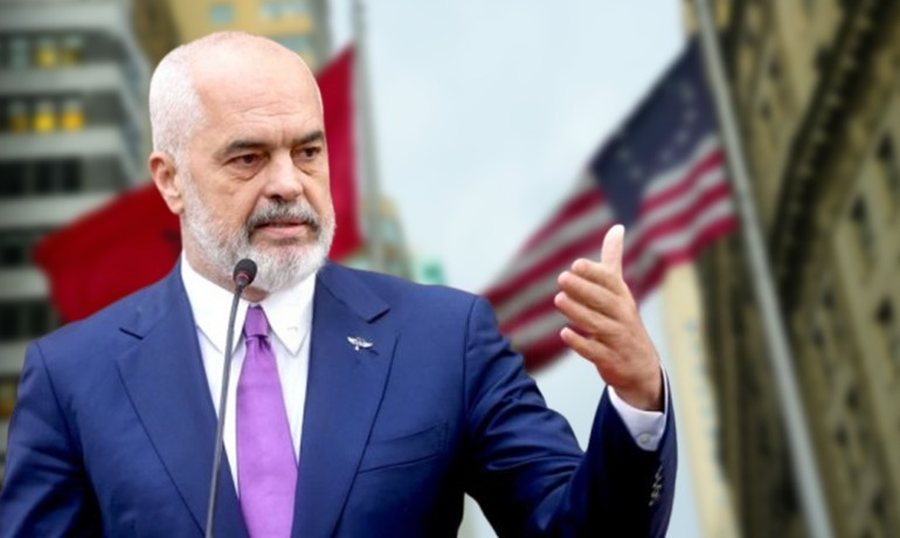
The policy pursued by him has created a deep contrast between the image projected abroad and the reality perceived by strategic partners.
The recent decision of the United States to freeze visa procedures for a large number of countries, including Albania, cannot be treated as a technical act or administrative formality.
Beyond bureaucratic language and diplomatic formulations, this is a clear political message, expressing distrust and signaling a reality that Albania can no longer hide behind beautiful rhetoric.
The rhetoric of geopolitical power and blackmail, for internal political consumption, bursts like a soap bubble as soon as it is touched by reality.
Albania's inclusion in the list of around 70 countries, many of which face institutional crisis, endemic corruption, mass emigration and political instability, undermines the image of a privileged partnership with Washington.
A NATO member country, traditionally pro-American and self-defined as a steadfast ally, is now treated as a suspicious partner, on the same level as problematic states.
This development is not accidental, but the product of a long erosion of trust, built by a governance model that has weakened institutions, relativized the separation of powers, and turned the state into an instrument of personal power.
At the center of this model stands Prime Minister Edi Rama, as the architect of a system where decision-making, rhetoric, and international relations focus on an individual, often impulsive and conflictual discourse.
The policy pursued by him has created a deep contrast between the image projected abroad and the reality perceived by strategic partners.
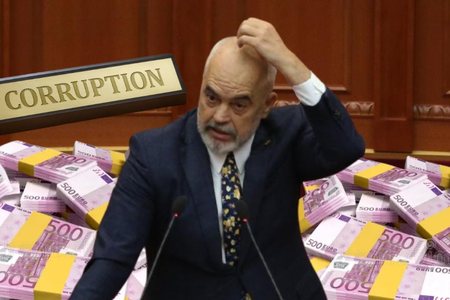
Domestically, the government is accused of significant high-level corruption, institutional capture, and tolerance of organized crime.
Abroad, the rhetoric often displays arrogance, complacency, and defiance of Western standards. This contrast is a manifestation of the soap bubble that the more you inflate it, the more it risks bursting once it collides with reality.
The situation is aggravated by the problematic rhetoric used towards the American ally. References to China with the metaphor of a "honeypot", as a strategic alternative and as a "reserve card" that can be used if the West criticizes, reveal the deviation from the logic of a strategic alliance.
For the US, which sees the Balkans as a space of high strategic sensitivity, any such flirtation is interpreted as ambiguity, lack of coherence, and a risk to regional stability.
Albania is no longer seen as a reliable ally, but as an unstable partner that fluctuates according to the interests of the moment, like a bubble that threatens to burst.
The US decision to freeze visas is not an arbitrary punishment, but a reflection of a consciously constructed crisis of trust.
The alliance is not held hostage by rhetoric and is not consumed for domestic political use. It is respected by building a functional state, with credible institutions and accountable governance.
The consequences directly affect Albanian citizens: students, professionals, families, and businesses who see restrictions on movement and pay the price of the whims and political adventures of others.
The strategic alliance and pro-American capital of Albanians cannot be used as a shield with rhetoric and blackmail. When foreign policy turns into a soap bubble, the illusion collapses and reality hits, and thus trust is seriously undermined.
The question is not whether the US has acted strongly, but whether Albanian politics, and especially Prime Minister Rama, are willing to admit that this path has led to isolation rather than strengthening the alliance.
A small country does not win by threatening geopolitical alternatives, but by building lasting trust. Today, it is precisely this trust that is seriously questioned.


Lini një Përgjigje