


 Shkruar nga Flamur Vezaj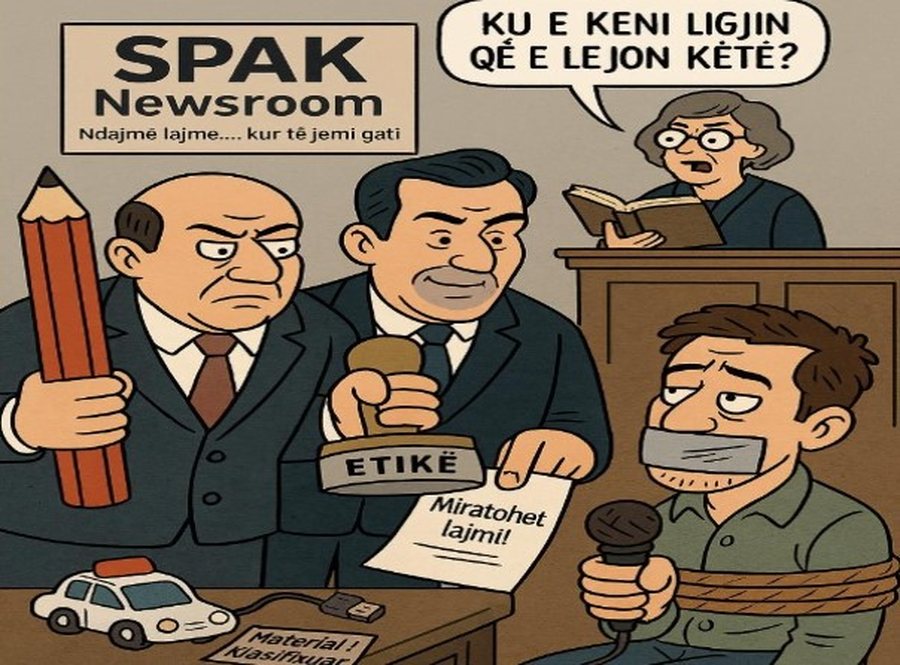
Tomorrow is the decisive day: the last word in this process will be either a statement in defense of free media, or an official stamp that SPAK will not only prosecute, but also edit, approve, and perhaps tomorrow publish the next editorial instead of the editorials...
Chief Prosecutor Altin Dumani's representatives at the Constitutional Court, prosecutor Bledar Maksutaj, together with his colleague Ols Dado, presented themselves as two knights of the constitutional order, or more precisely, as "advocates of the new media morality."
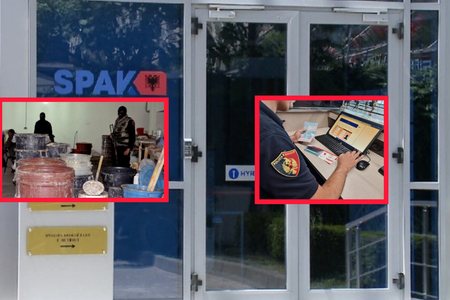
At the center of their attack was not a criminal group, but a journalist: Elton Qyno. And the weapon they used? Well, an entire arsenal: hours of isolation in SPAK offices, searches of homes, cars, workplaces, even children's toys were considered potentially "criminally influential."
Because, as we already know, any journalist who writes without permission can erase evidence with the help of a children's toy car...

But the culminating spectacle began in the Constitutional Court hall, a few days ago, where the two prosecutors turned into journalism teachers and invented a new rule of the game: before writing a news story, you must get permission from SPAK. Yes, yes. Journalists, according to them, should line up like students in front of the editorial board of the Special Prosecutor's Office and seek approval for every sentence.
When the judge, with a curiosity that doesn't often appear in this system, asked:
– “Is there any legal provision that requires such a thing?”
The prosecutor, with a certainty that makes one doubt the nature of legal education in the country, replied:
– “No, Madam Speaker. But we are dealing with an ethical obligation…”
Ah, ethics! The magic word that is used whenever the law ends and imagination begins. With this justification, you can seize everything, including laptops, cell phones, and maybe next time even the journalist's RAM memory. Because "in the name of ethics" everything is permissible according to SPAK!
The irony doesn't stop there: in an "Oscar-worthy" moment, the prosecutor explained that the journalist, being "old and experienced," should have sensed for himself that he was under investigation. That is, in Albania, no one notifies you of an investigation, you have to have an internal antenna, an app in your soul that pings you when you're under surveillance.
Another gem: the prosecutor calmly admitted that he has no authority to take action against "ethical violations" because legally they have no right to do so - but that didn't stop them from seizing, isolating, and exerting pressure as if they had an enemy of the state on their hands. Yes, the prosecutor's office has no authority over ethics - but apparently, when it comes to journalists, one suspicion is enough and the parade begins.
So, in summary: if you are a journalist and you have information, you have no right to publish it without first asking an “expert” at the prosecutor’s office. If you publish it, you will end up in some “SPAK Studios” scenario, with investigation, seizure, and sometimes even analysis of children’s toys for a USB drive hidden inside.
In this battle for free speech, the Constitutional Court has become an arena where the fate of not only Elton Qynos is decided, but of any journalist who dares to have a laptop, a microphone, and a question unconfirmed by the "ethicists" of justice.
Tomorrow is the decisive day: the last word in this process will be either a statement in defense of free media, or an official stamp that SPAK will not only prosecute, but also edit, approve, and perhaps tomorrow publish the next editorial in place of the editorials.
Colleagues, don't miss it! Because next time, if this passes, your news will start with: "Title awaiting prosecutor's approval. The article will continue as soon as SPAK's ethics committee gives the green light."



Lini një Përgjigje