


 Shkruar nga Ben Andoni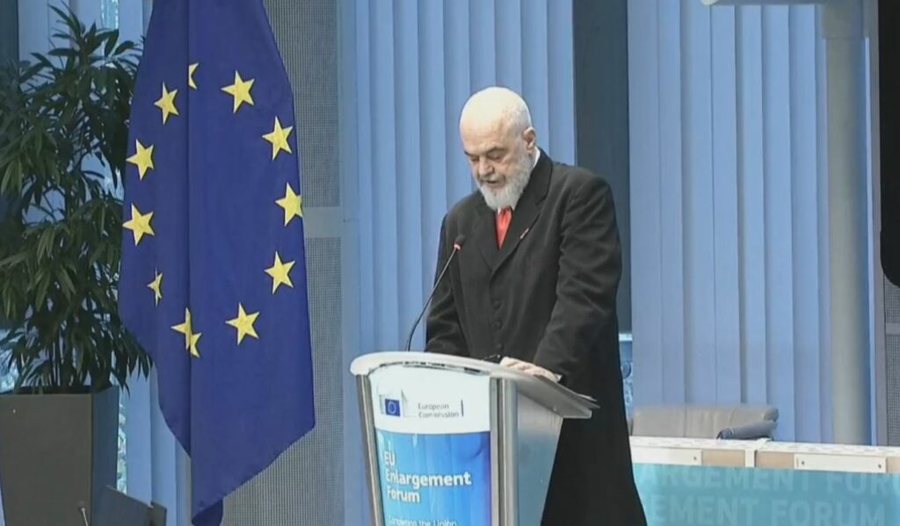
Meanwhile, in our country, the biggest democratic challenge is and will remain the elections...
Prime Minister Rama's response in an interview during the meeting of the Italian-Albanian governments, according to which he does not have a political son to replace him, has only impressed for a few minutes. If it were a surprise then, it would be commented on, analyzed and even the visions of the leaders of the future Albania would be looked at. No one today takes into account the identity of Rama's deputy and the man who will lead the Socialist Party after him. The difference in the cult they have built is so great that mentioning alternative names is simply grotesque. In the other camp, if you were to mention any successor to Berisha after the "Basha" case, it would be heresy. Whoever wants to come and face the elections, says Berisha, the greatest political figure of these 35 years of unimaginable ups and downs. The contempt for their political Alter Ego is open and cynical. No one can compare to them. The propaganda around Rama helps him, while the weak requests to Berisha for reflection remain in the ether.
First, because the internal democracy of the DP is excellent in form, but completely false in reality. The case of Basha's promotion, the primaries, the inferior lists of candidates are some of the most open manifestations of this argument. Whereas in the SP, there is no need for propaganda, because Rama dictates with the power of the Executive that he leads. He is not accountable to the Legislative Power; the presidency does not cause him any headaches with the signatures on decrees; the party has turned into a detachment (the choreography of silence in the Assembly and always shows this); the international performance with the opening of the last cluster is a mockery of the Albanian Prime Minister. His propaganda is now simple because it is direct: "With Ed in Europe in the 30s". In Berisha, the propaganda is even more precise: "Nobody throws Rama, except Berisha". Even the clearest in the DP, after getting a little out of line, he returns to the same point: Yes, only with Berisha! The secular 'cynic' Noam Chomsky, with his own perspective, has an idea for this democratic impasse: "That's the whole point of good propaganda. You have to create a slogan that nobody will be against and everybody will be for. Nobody knows what it means, because it means nothing."
There is a logic that goes more to the anthropological aspect. In Eastern Europe, it is natural and quite common for political elites to avoid even in rhetoric the successors. The cases of Serbia, Hungary, the Federation of Bosnia (especially the Republika Srpska), Poland, Bulgaria, Georgia, are good illustrative examples. An answer for us Albanians is understandable: Post-communist political culture is linked to the memory of internal fear, where opponents were eliminated because they jeopardized the position. The Albanian case is an accurate illustration of the massacre that Enver Hoxha committed with the people closest to him with whom he won and held power after World War II. In the SP today, the people with whom Rama started the government no longer even appear in photos because they have been avoided or, worse, are in prison and penalized. Worse in the DP. Those who tried to even raise their voices against Berisha no longer exist. Similarly, parties everywhere in the East do not base internal democracies on institutions but on individuals.
Party statutes, even though they are well-tailored according to democratic canons, do not work. Just thinking that in the last instance they are accountable to the Party Chairman makes you understand how efficient they are. If the Democratic Party statute worked, the split with Basha and Berisha's perversions with "Foltore" would never have happened. If you were not loyal to Berisha, you would see yourself in the Open List (as happened), where the probability of elections in this year's elections was minimal. As for ideology, it has long been forgotten. The Socialist Party behaves normally as the Right and has the best connections with problematic Right governments (among them Meloni, Orban), just as the Democratic Party speaks normally with a Left discourse, first because it will absorb the voters of this group that is very large in the country and second because it will show a very social face to the majority of the public.
Meanwhile, in our country, the biggest democratic challenge is and will remain the elections. We still vote based on regional influences and especially with the use of a large amount of administration and power, defects often predicted and advertised by the OSCE-ODIHR. Parties show weakness on the ground because they completely forget the base and above all the noise of small parties "corrodes" the political ladder. In these conditions, Rama and Berisha show their appearance and identify the elections with their name. The system sewn by the joint electoral reform of the PS and the DP supports their strength, even in the Open Lists, it is their direct or indirect appearance that has an impact. As for the Alter Ego of the mayors, forget it, they do not even exist in dreams.
Rama has long been saying that he will leave when he wants to and, with a similar discourse, Berisha claims that he will not leave and that he has enough strength to return to power even in his eighties. “He has the strength of a young man,” said Mr. Noka, one of his secretaries, alluding to sexual potency! In every kind of props, Rama's stature is shown, as challenge, dominance and security; just like the cured Berisha who gives the idea of stability, forcefully explaining the government's nonsense.
In systems like ours, the power of the leader has an oligarchic influence, where business-political networks and clientelism thrive and where it is understood that leaders act as focal points that distribute resources. Today, in the media there are constant references to how many of the construction permits are linked to Berisha's people, or how Mr. Rama's people have power thanks to their acquaintance and conjuncture with him. Rama's deputy on the run, Ahmetaj, has listed some of them. Meanwhile, imagine if a successor falls into these sources, then the supreme leader loses power and opportunities, so it seems that our leaders are delaying their political legacy. It seems as if they want to take the post with them...
You remember the moment when the German Chancellor came to Albania and at the protocol reception in front of the National Museum he gestured to Rama (Starting after the elections): You, four times! It is true that Chancellor Merkel stayed a long time, but German institutions function. British ones much more. Even those of our Italian neighbors.


Lini një Përgjigje