


 Shkruar nga Pamfleti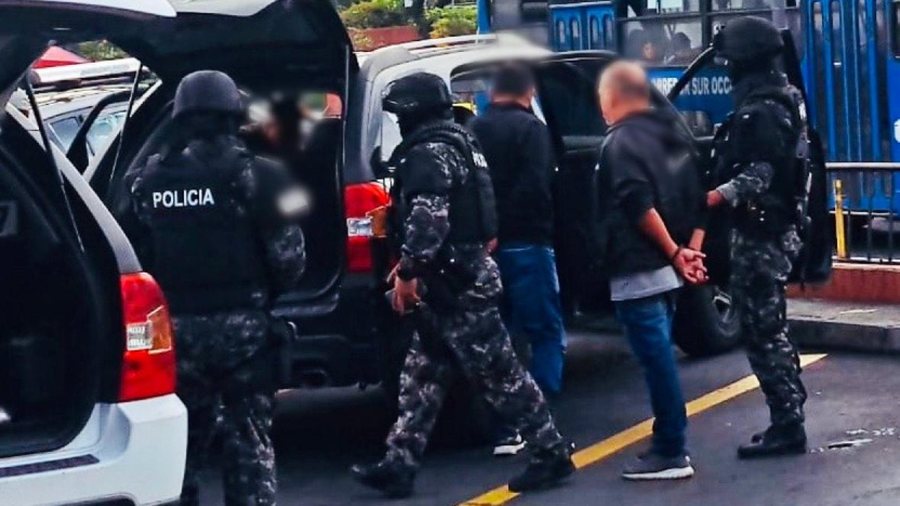
Three retired military officers were arrested with $100,000 in cash. Prosecutors accused them of planning to pay bribes in exchange for intelligence information. The courts found them not guilty.
On January 21, 2024, the Armed Forces (FF. AA.) discovered a 'caleta' and seized 22 tons of cocaine in Vinces, Los Ríos province, making the largest seizure in the country's history. However, it was never determined to which criminal organization the drugs belonged.
More than a year later, a case for organized crime and money laundering against three retired military personnel has yielded evidence suggesting that this drug may have links to the Albanian mafia.
On January 25, 2025, anti-corruption judge María Fernanda Castro announced a decision to dismiss the case in favor of the three retired military personnel. But Santiago Requelme, a prosecutor for the Anti-Money Laundering Unit, appealed the decision, stating that there is evidence that the former military personnel collaborated with organized crime.
Seizure and arrests
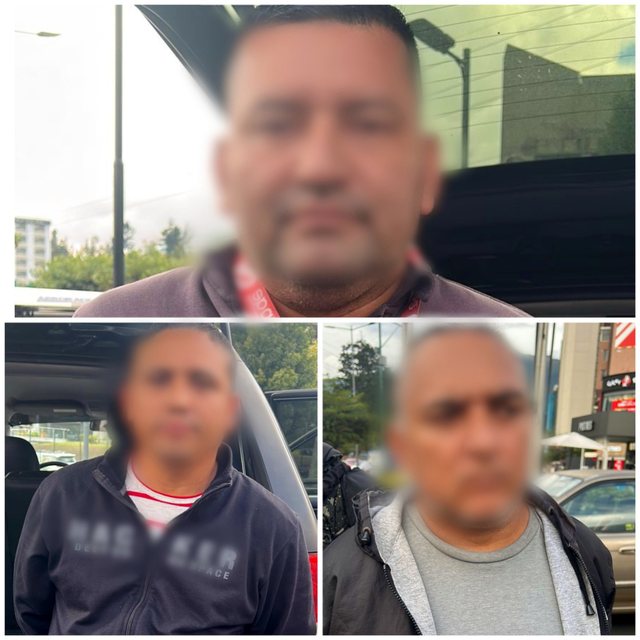
Thirty-nine days after the historic seizure in Vinces, on February 29, 2024, the National Police announced the arrest of three military personnel — two on active duty and one on active duty — north of Quito. They were caught with approximately $100,000 in cash, which they were unable to account for.
Initially, they were charged with money laundering, but the case was later amended to include organized crime. On January 10, 2025, prosecutor Requelme charged the three and filed his indictment.
The arrest took place at 5:30 p.m. at a popular restaurant on Patria Avenue in northern Quito. Orlando Jiménez, one of the defendants, was driving a black car, with Héctor Castillo in the passenger seat and Jairo Arteaga in the back. Near Arteaga, a white plastic bag containing $94,842 in cash was found, including 917 $100 bills and 30 counterfeit bills of the same denomination.

Albanian mafia
According to the Prosecution, the money came from a criminal organization and was intended to be given to two military intelligence agents, Juan Manuel SJ and Efrén Gustavo JR. In exchange for this bribe, the agents were to reveal information about the seizure of 22 tons of cocaine in Vinces, including the identity of the Armed Forces informant.
Investigations revealed that those involved talked about sharing money, recruiting intelligence agents, and planning a trip to Quito.
In addition, among the Prosecution's evidence are, for example, the versions and testimonies of Juan Manuel SJ and Efrén Gustavo JR. The latter reported that Castillo had called him twice. In one of these conversations, he allegedly told him that "the Albanian mafia boys would pay 300,000 USD to get information on the cargo". That call was recorded.
At the time, Héctor Castillo, one of the detainees, worked in the Military Intelligence Department in Los Ríos and was the liaison with other agents in the capital. He allegedly demanded information in exchange for money.
Messages exchanged between the arrested mentioned plans to divide the money, recruit agents, and find the informant.

Decision to dismiss the case
In the pre-trial hearing, the defense argued that evidence such as messages and recordings were not sufficient to prove the crime. The defendants' lawyers also stated that the money had a legitimate source and that the transactions were not linked to criminal activity.
After analyzing the evidence, Judge María Fernanda Castro decided that there was not enough evidence to prosecute the defendants and dismissed the case against them. But prosecutor Requelme appealed this decision, and now an Anti-Corruption Court will decide whether the case will be reopened or finally closed.
After evaluating the evidence provided by the prosecution and defense, Judge María Fernanda Castro stated in her decision that the Public Prosecution "has not proven that the behavior of the accused persons is consistent with organized crime."
Regarding the conversations and the recorded call, the Magistrate stated that "more elements of conviction are required to support the content of the conversations, such as monitoring, wiretapping, raids and demonstrated economic benefits, through transactions, which are evident that the three defendants were sponsored by a criminal group."
For these reasons, Castro concluded that the elements presented by prosecutor Requelme were insufficient and therefore dismissed the case against Jairo Arteaga, Héctor Castillo and Orlando Jiménez.
However, Requelme immediately appealed the decision. It will now be up to an Anti-Corruption Court to overturn this decision and bring the defendants to trial. If Judge Castro's decision is upheld, the case would end with his acquittal. / Adapted Pamphlet from Primicias.ec/







Lini një Përgjigje