


 Shkruar nga Enuma Okoro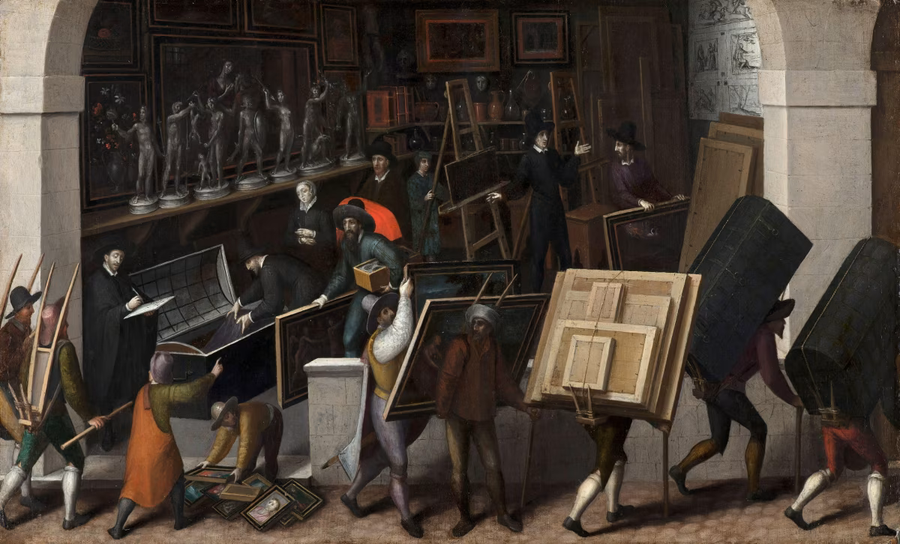
Art can profoundly influence how we consider the way we live and how we see and understand each other's experiences and stories.
As debates about the representation of art and human history in public museums intensify, I have found myself thinking about how an exhibition can speak to us on many levels, and why spaces that feature a wide variety of works, created by a variety of artists across an endless range of subjects, are invaluable. This underscores the importance of making such places accessible to broad swaths of society. It should come as no surprise to anyone reading this article that I believe that art can profoundly influence how we consider the way we live and how we see and understand each other’s experiences and stories.
-“The Confiscation of the Contents of an Art Dealer’s Gallery” is a work by François Bunel the Younger, a court painter to King Henry IV of France. Housed in the Mauritshuis in The Hague, the 1590 painting depicts several men carrying artworks and chests, apparently full of objects. There are paintings on the walls and sculptures, books, and ceramics on the shelves. At the back of the room we see a man, dressed in black with an uncertain expression on his face, gesturing to another person who is removing one of the works. In the left foreground, a man in a black cape stands by a large open chest and documents the items. There is only one woman in the painting. She stands in front of the figure holding an object covered with a red cloth. Her hands are crossed on her stomach and she has an expression of disappointment on her face. We do not know who ordered the confiscation or why. It could be related to a debt or because someone decided that these particular works should not be seen publicly.
This painting reminded me that throughout history people have recognized the power of art, and figures in power have felt threatened by certain works that challenge their ideologies. There is a stark feeling to it, with the sharp angular lines of the canvases and easels, and the thin human bodies, the elongated facial shapes, and the prominent jaws and beards. The people in the painting generally look similar. It suggests to me the idea that the decision about which art to confiscate is clear, that whoever orchestrated this event understands the world in a strict and somewhat unrealistically defined sense of black and white, right and wrong, without diversity of form and content. A world in which art is confiscated does not seem to be a world that has room for a wide and open imagination.
Titus Kaphar is a contemporary American artist and filmmaker. Much of his work explores narrative gaps in history, highlighting the ways in which ideas and representations of the past remain relevant to how we understand present-day realities.
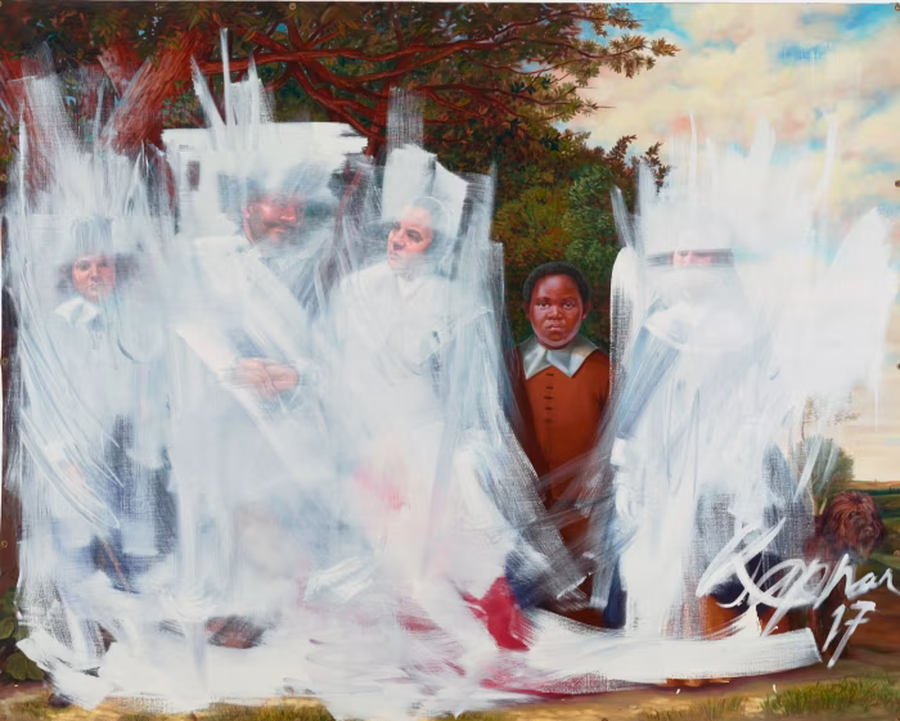
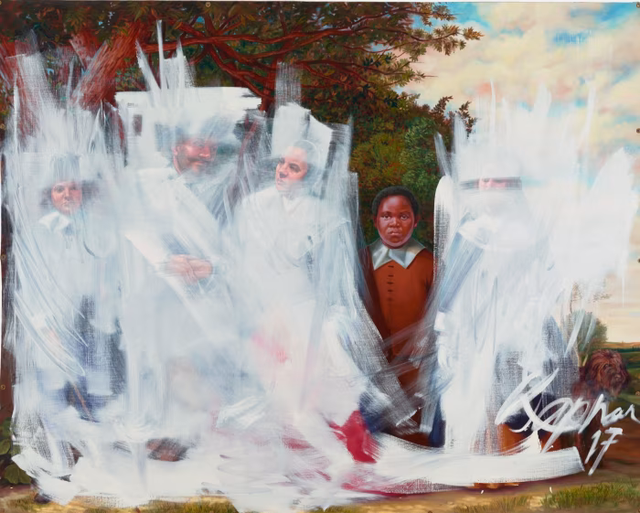
Kaphar’s 2017 work, “Shifting the Gase,” is based on the 1640s painting “Family Group in a Landscape” by Dutch artist Frans Hals. Kaphar’s painting was completed during a TED talk titled “Can Art Change History?” he gave in 2017, about the importance of what we see in art and how we are taught art history.
Kaphar shares a touching story about taking his two young sons to the American Museum of Natural History in New York. At the entrance to the museum is a sculpture of Theodore Roosevelt, seated on a horse, with a Native American man and an African man walking beside him. As Kaphar and his sons approached the sculpture, one of his sons asked why Roosevelt rode the horse and the other two men had to walk? Kaphar then explains to the audience how he understood this as a question fraught with deeper questions about justice.
Në skenë, Kaphar vazhdon të zbulojë versionin e tij të pikturuar të pikturës së Hals, ku shihet familja holandeze që pozon para një peme të madhe përgjatë një hapësire të shkurtër rurale: një nënë, një baba, një bir dhe një bijë, dhe një djalë i ri me ngjyrë që kuptohet si shërbëtor i familjes. Ai diskuton kuptimin e tij për pikturën si një gjuhë vizuale, duke theksuar se çfarë nënkuptojnë aspekte të caktuara të pikturës së Hals, dhe përdor bojë të bardhë dhe vaj liri në riprodhimin e tij për të pikturuar pjesërisht mbi të gjitha figurat përveç djalit me ngjyrë. Ajo që po bën Kaphar është të ftojë audiencën të marrë në konsideratë atë që shohin në pikturë, dhe historitë e të cilëve nuk tregohen. Është një mënyrë për t'u kthyer te pyetja e të birit. Një aspekt i rëndësishëm i pikturës së Kaphar, e cila tani mbahet në Muzeun e Bruklinit, është se ai përzien vaj liri me bojën, dhe shpjegon se duke vepruar kështu do të lejojë që imazhet themelore të kthehen në pamje të pjesshme në një moment në të ardhmen. Pra, ai nuk po fshin historinë ose personazhet. Ai po përpiqet të tregojë histori më të plota.
Njerëzit që e hasin këtë vepër për herë të parë ka të ngjarë të kenë emocione të përziera dhe interpretime të menjëhershme të kuptimit të saj. Këto reagime fillestare mund ta shtyjnë shikuesin të eksplorojë historinë që fshihet pas kësaj pikture dhe të mësojë më shumë rreth asaj se si arti mund të jetë një mjet i përdorur për të frymëzuar një kuptim më të mirë të mënyrës se si historitë e së kaluarës së të tjerëve ndikojnë në të gjitha historitë tona.
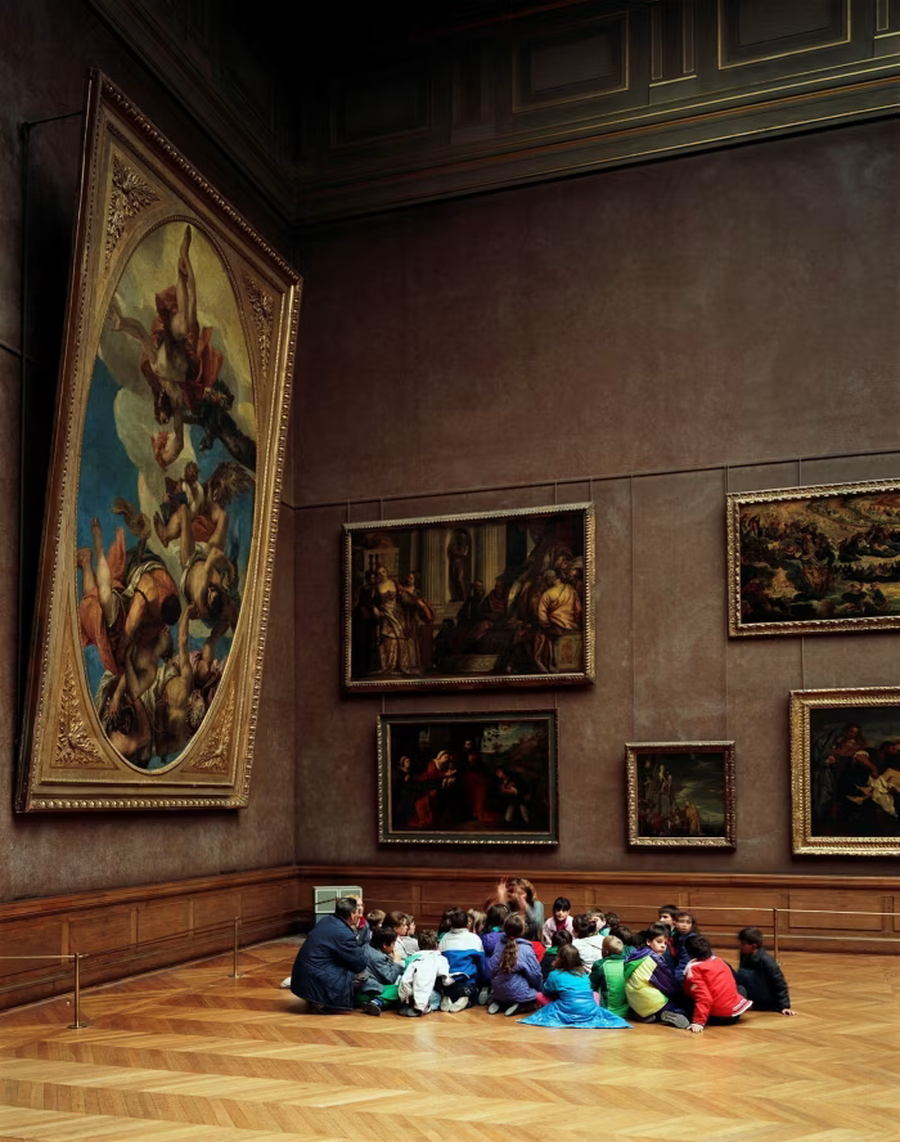
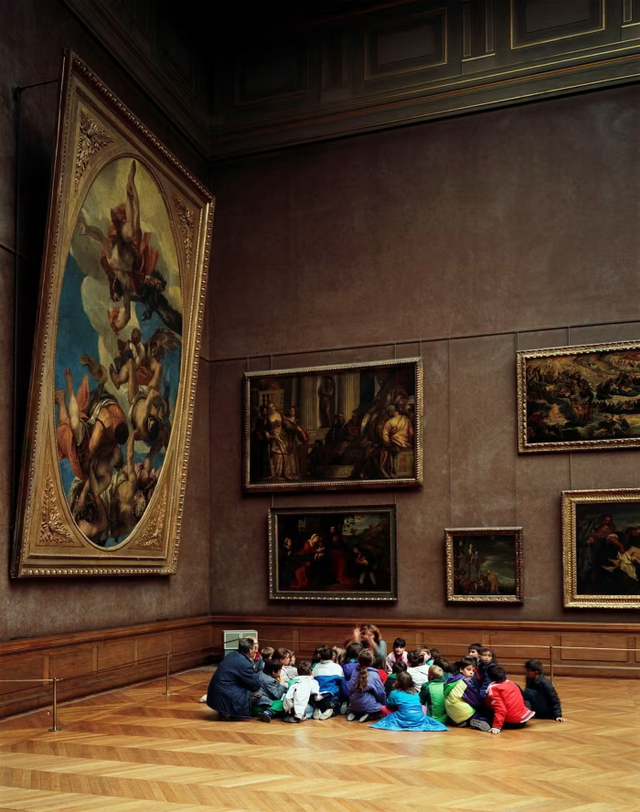
Contemporary German photographer Thomas Struth has used his camera as an artistic and investigative tool, exploring human nature, technology, public spaces, and the natural world for nearly five decades. “Louvre 2, Paris, 1989” is Struth’s photograph of a group of elementary school children sitting together on the floor of the Louvre looking at artwork with their teacher. The large room with its vaulted ceilings and large historical paintings contrasts strikingly with the cluster of small bodies huddled tightly together on the space of the gleaming wooden floor. This composition creates an evocative sense of the intersection between history and contemporary times. Depending on what is available to us to see, the context in which things appear, and the way we consider and interpret art, it is interesting to think about what can be transferred to this kind of encounter. I like to think about the fact that the children in this photograph, taken in 1989, would now be 36 years older. Did this moment or visit to the museum affect any of them in any lasting way? Did art become an important part of any of their lives? Do any of them have a deeper understanding of the power of art to change the way we view the world and our lives?
That same year, Struth began what is now known as the “Museum Photography” series, in which he photographed unstaged scenes of people engaging with art in museums around the world. One of the motivations behind this series was Struth’s interest in what drew museum visitors to certain works of art, including religious and historical paintings. One question he asked himself during his museum visits was: “What can you take away from photographs of the past that might be a catalyst for interesting or productive ideas for the future?” I think this remains an invaluable question for all of us, and access to art that covers a range of subjects from different cultures and time periods is essential to generating productive ideas for the future. Our shared humanity includes a shared collective history that can help inform how we create our future. / Adapted from “Pamphlet” by “Financial Times”



Lini një Përgjigje