


 Shkruar nga Pamfleti
A disappearance that is preceded by political statements, followed by missed deadlines and covered by institutional silence. From electoral podiums to criminal files, the story of Ervis Martinaj becomes a mirror of the real limits of the state in the face of power, crime and what is not said...
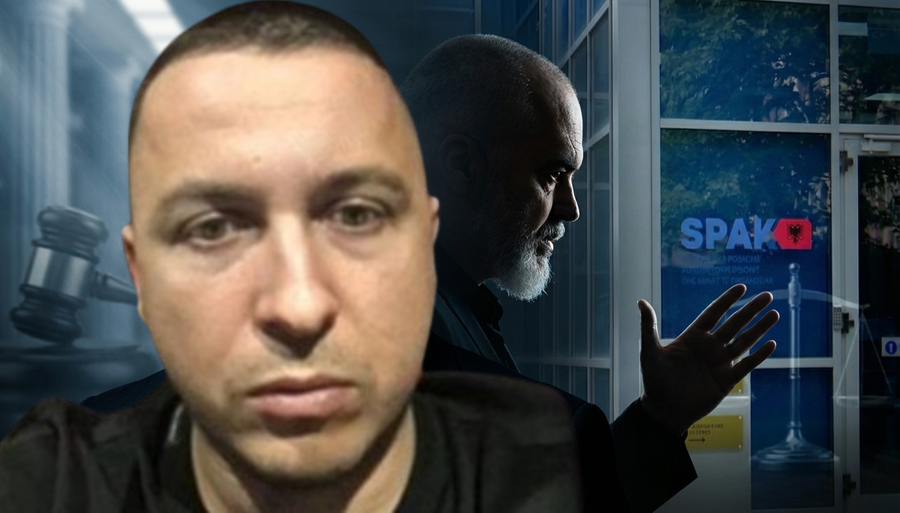
The story of Ervis Martinaj's disappearance does not begin in August 2022, the day his family members reported losing contact, but much earlier, at the moment when Albanian politics publicly admitted that they knew him, monitored him, and considered him part of a criminal reality that the state claimed to have under control.
Prime Minister Edi Rama articulated this relationship directly during the 2021 election campaign, when from an electoral podium he declared that he knew the people, movements and even the license plates of those he described as representatives of the world of illegal betting, indirectly mentioning Martinaj as a known actor identified by state structures. That statement was not random political rhetoric, but a public admission that the state had concrete operational information about his activity and social circle.
When Ervis Martinaj disappeared in August 2022, this political admission turned into a major institutional problem, because from that moment on, the state could no longer claim that it only had suspicions, but had to answer for the fate of a person it had publicly declared that it knew and monitored.
After the disappearance, Edi Rama changed his tone, but not his position. The Prime Minister declared that this story had to end, that the State Police had to give a clear answer as to whether Martinaj was alive or dead, and that the public could not be held hostage to rumors and underground voices. He set a deadline for the new Police Director, demanding concrete results and implying that the answer existed, but had not yet been proven in a publishable way.
From that moment until today, the Albanian state has changed leaders, but not reality.
In the period 2020–2026, three general directors of the State Police have been replaced, Gledis Nano, Muhamet Rrumbullaku and Ilir Proda. Each of them took office with the promise of strengthening order and fighting organized crime. None has come before the public with a final answer on the fate of Ervis Martinaj.
Gledis Nano left office at the height of the mystery, without giving any public explanation for one of the most serious national security issues. Muhamet Rrumbullaku took office with a 100-day political deadline for results, but even after the end of this deadline, the Police have not articulated any official version of what really happened.
In parallel, three heads of the Special Prosecution Office have been replaced, Arben Kraja, Altin Dumani and Klodian Braho. SPAK has seized Martinaj's assets, included him in indictments for organized crime, sent him for trial in absentia, but has not given any public answer to the fundamental question: what happened to him.
This is the strongest paradox of this story. The Albanian state treats Ervis Martinaj simultaneously as a missing person and a defendant, as a subject whose whereabouts are unknown and as a person against whom criminal prosecution, asset seizure, and judicial proceedings are being carried out.
No institution has undertaken to explain this contradiction.
The police declare that they do not speak without evidence. SPAK acts without speaking. Politics demands answers, but does not take responsibility for their absence. Meanwhile, the public is left facing a frightening institutional vacuum, where a person disappears under suspected criminal circumstances and the state, despite having pursued, investigated and accused him for years, cannot even say whether he is alive or dead.
This silence not only damages the image of the institutions, but also undermines the minimal trust that the state is able to control the criminal reality it claims to fight. Because if the state does not have an answer for the fate of a person it has considered a public danger, then the question is not only where is Ervis Martinaj, but who really controls the territory, information and truth.
At this point, the lack of an answer can no longer be explained solely by investigative difficulties. Because when a case remains open for years, despite the change of leaders, despite criminal actions and despite political statements, a reasonable suspicion arises that the silence is not a consequence of the lack of information, but of its weight. And when a truth is not told, not because it is not known, but because it affects dangerous balances, then the story of Ervis Martinaj ceases to be just a disappearance and becomes a test for the real limits of power and justice in this country... /Pamphlet



Ketu ka dhjete vjet qe nuk funksionon asnje qelize e vetme e shtetit. NGRIHUNI dhe bjerini gjithe kesaj klase politike 35 vjecare. Zgjidhje tjeter nuk ka
Sa afate 100-ditore i kan skadu kti lebos që kena për KM.Na ka ça trrapin sa her ndrrote ministër apo drrejtor policie e fillonte me 100ditorshin afat për zbardhjen e çështjes Martinaj
Eshte e lehte te kuptohet kush ka vrare! Nepermjet koordinatorit te krimit eshte dhene urdhri! Banda ekzekutuese eshte e njejte ne rastin e Brilant, dhe Ervis Martinaj! Dhe Gilmando Danin besoj se te njejtet e kane vrare! Banda e tyre eshte kercenim per SPAK, po te isha prokuror do arrestoja pa humbur kohe Proden qe te hapej rruga drejt ideatorit qe nxorri per tu vrare si mish per top 4 fakire!