


 Shkruar nga Pamfleti
Leaders of the European Union and the six Western Balkan countries will gather on June 5 in Montenegro to discuss enlargement, security and the region's gradual rapprochement with the EU market and policies...
A week focused on the Western Balkans is set to begin in the European Union institutions. From 1 to 5 June, attention, particularly within the Council of the EU, will be focused on a region that seeks assurances that it will not be overshadowed by the priority given to Ukraine, while also awaiting concrete signals of progress in the enlargement process. What better occasion than the second EU-Western Balkans Summit taking place in the region itself?
The EU-Western Balkans Summit 2026 in Tivat, Montenegro will be the main event of a week during which the President of the European Council, Antonio Costa, will visit all 6 Western Balkan countries to discuss with leaders and national authorities the opportunities and challenges related to enlargement, gradual integration, regional cooperation, security and stability.
" My second tour of the Western Balkans sends a clear signal ," Costa declared on the eve of the trip, adding that "the moment is favorable. Now is the time to deliver results . "
The visit will begin on June 1 in Sarajevo, Bosnia and Herzegovina. On June 2, Costa will visit Tirana and Skopje, on June 3 Pristina, and on June 4 Belgrade and Tivat. In the Montenegrin city, President Jakov Milatović has invited EU leaders to a dinner to mark the 20th anniversary of Montenegro's independence.
According to the expectations of European diplomats, one of the main results of the summit will be the approval by the EU Council of the authorization to open negotiations on individual agreements between the EU and each Western Balkan partner on roaming without additional fees, following the proposal presented by the European Commission in February, international media write.
The "Roam Like at Home" policy is based on the principle that citizens, when traveling to another country in the roaming-free zone, can use their mobile phone for calls, messages, and internet just like in their home country, without additional charges.
Following the accession of Ukraine and Moldova to this system on 1 January 2026, the European Union has taken concrete steps to implement the declaration signed at the 2022 EU-Western Balkans Summit in Tirana. In that declaration, leaders committed to gradually reducing roaming charges with the aim of their complete elimination by 2028.
Pas autorizimit nga Këshilli, Komisioni Evropian do të negociojë marrëveshje dypalëshe me secilin partner të Ballkanit Perëndimor. Nëse këto marrëveshje përfundojnë me sukses, qytetarët e vendeve të rajonit do të mund të përdorin telefonat e tyre celularë, për telefonata, mesazhe dhe internet, në të gjithë BE-në dhe vendet e tjera të lidhura me këtë sistem pa tarifa shtesë. Të njëjtat përfitime do të vlejnë edhe për qytetarët e BE-së që udhëtojnë ose komunikojnë me vendet e Ballkanit Perëndimor.
Samiti në Tivat pritet gjithashtu të vlerësojë përparimin e bërë në procesin e integrimit gradual të Ballkanit Perëndimor, me fokus të veçantë te Plani i Rritjes së BE-së për rajonin, duke analizuar si arritjet ashtu edhe mangësitë e tij.
Forcimi i sigurisë dhe trajtimi i sfidave që burojnë nga një situatë gjeopolitike gjithnjë e më komplekse, nga lufta në Ukrainë deri te tensionet në Lindjen e Mesme, do të jenë në qendër të diskutimeve.
Burime të BE-së shpjegojnë se diskutimet do të mbulojnë “të gjithë spektrin e bashkëpunimit” ndërmjet Bashkimit Evropian dhe Ballkanit Perëndimor. Kjo do të përfshijë edhe debatet mbi propozimet e fundit të kancelarit gjerman Friedrich Merz, sipas të cilave rajoni nuk duhet të anashkalohet nëse merret në konsideratë një formë e “anëtarësimit të asociuar” për Ukrainën.
Në një kohë kur ende nuk ekziston një propozim formal që të përcaktojë bazën ligjore ose përmbajtjen e kësaj nisme dhe kur diskutimet kufizohen kryesisht në komente, reagime dhe shkëmbime joformale mes vendeve anëtare dhe joanëtare të BE-së, diplomatët evropianë vlerësojnë se “një shkëmbim pikëpamjesh është i dobishëm” me gjashtë liderët e Ballkanit Perëndimor.
Ata theksojnë gjithashtu se “përveç nëse bihet dakord për një mandat të ndryshëm”, ekziston tashmë një proces me rregulla dhe metodologji të qarta, procesi i zgjerimit të Bashkimit Evropian.
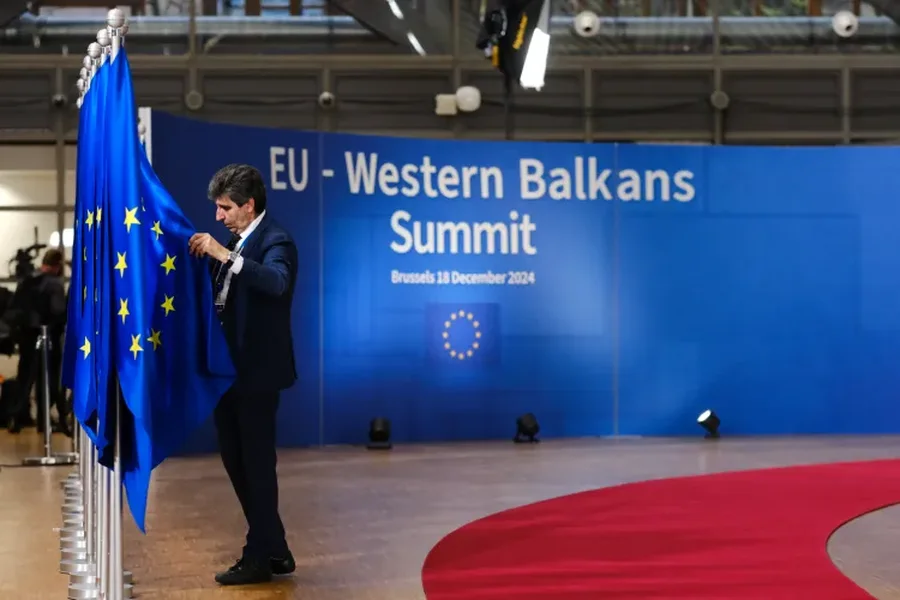
Historia e samiteve BE–Ballkani Perëndimor
Samiti BE–Ballkani Perëndimor është një takim i nivelit të lartë ndërmjet Bashkimit Evropian dhe gjashtë vendeve të rajonit: Shqipërisë, Bosnjë-Hercegovinës, Kosovës, Malit të Zi, Maqedonisë së Veriut dhe Serbisë.
Samiti shërben si platformë dialogu për perspektivën e anëtarësimit të Ballkanit Perëndimor në BE, por edhe për trajtimin e sfidave aktuale. Zakonisht ai përfundon me një deklaratë të përbashkët ku përcaktohen marrëveshjet, prioritetet dhe nismat për bashkëpunim më të ngushtë.
Samiti i parë BE–Ballkani Perëndimor u mbajt në vitin 2018 në Sofje të Bullgarisë. Në atë takim u miratua një deklaratë që parashikonte masa të reja për forcimin e bashkëpunimit në fusha si sundimi i ligjit, qeverisja e mirë, siguria, migracioni dhe zhvillimi socio-ekonomik.
In 2020, at the height of the COVID-19 pandemic, the summit was hosted by Zagreb, Croatia, and took place virtually. The European Union reaffirmed its commitment to the European perspective of the Western Balkans, while discussions also focused on regional cooperation in tackling the pandemic and economic recovery.
In 2021, the summit in Brdo, Slovenia, was held at the leadership level. The adopted declaration included initiatives to strengthen regional connectivity and accelerate the green and digital transitions.
Following the renewed impetus given to EU enlargement policy following the Russian invasion of Ukraine, 2022 was a particularly active year. In June, leaders gathered in Brussels to review progress in European integration and the impact of the war in Ukraine.
The first EU-Western Balkans summit ever organized in the region took place in Tirana on 6 December 2022. Discussions focused on security, migration, economic development, and opposing foreign interference.
The 2023 summit in Brussels continued this line, focusing on advancing gradual integration, strengthening economic sustainability, and deepening cooperation in the face of geopolitical challenges, particularly Russian aggression against Ukraine.
In 2024, the Brussels summit further consolidated the partnership between the EU and the Western Balkans, addressing a wide range of topics, from political cooperation and economic development to security, bilateral issues and migration.
The most recent summit, held on December 17, 2025 in Brussels, was dominated by Hungary's veto of the conclusions on enlargement and by Serbian President Aleksandar Vučić's decision not to attend the meeting, on the grounds that he was "protecting Serbia and its interests." / Pamphlet /





Lini një Përgjigje