


 Shkruar nga Pamfleti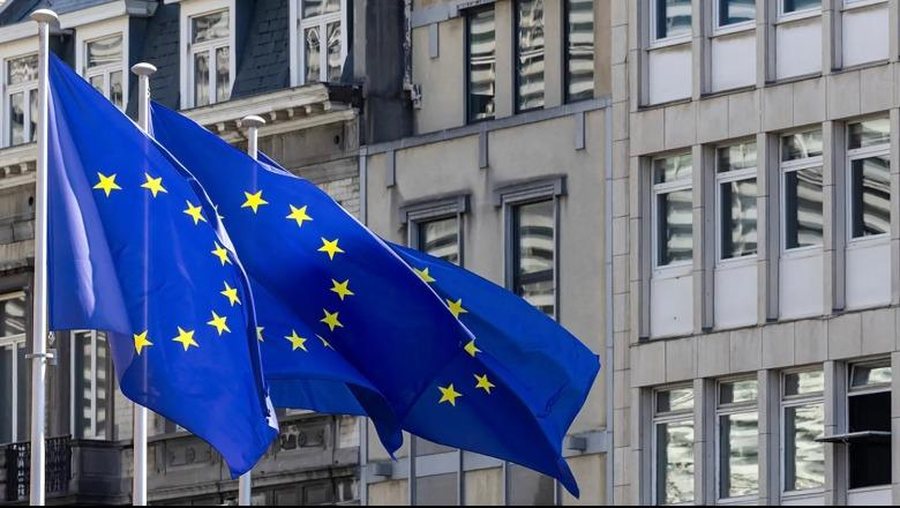
The EU enlargement summit is being held in Brussels today, bringing together the leaders of the Union and those of the candidate countries.
The summit proceedings are expected to begin at 2:00 PM until 5:00 PM.
Prime Minister Edi Rama will also be present at the meeting. Also present will be Montenegrin Prime Minister Milojko Spajic, Macedonian Prime Minister Hristijan Mickoski, Serbian President Aleksandar Vučić, Ukrainian President Volodymyr Zelensky and Moldovan President Maia Sandu. The President of the European Council, António Costa, will participate from the Union.
The summit will provide a first-of-its-kind platform for leaders of candidate countries to express their perspectives on the path of enlargement, from the determination of Ukraine and Moldova amid the ongoing war in Ukraine to the decades-long wait for membership of the Western Balkans, with each leader bringing their own insights into how enlargement is perceived from their nation's perspective and what the path ahead will bring.
The meeting represents an initiative to amplify the voices of candidate countries at a time when European Commission President Ursula von der Leyen has relaunched the process, rebranding enlargement as "European reunification."
The summit will provide a first-of-its-kind platform for leaders of candidate countries to express their perspectives on the enlargement journey, from Ukraine and Moldova's determination amid the ongoing war in Ukraine to the Western Balkans' decades-long wait for membership, with each leader bringing their own insights into how enlargement is perceived from their nation's perspective and what the road ahead will bring.
The enlargement process is not an abstract issue and the path it follows affects millions of Europeans, therefore, through their perspectives, leaders will bring to the debate both the hopes and dreams of their nations, as well as the voices of their peoples.
What are the challenges that summit participants face?
Following Russia's war in Ukraine and facing rapid geopolitical changes, Brussels has injected new momentum into enlargement discussions, seeing the process as key to Europe's security, economic strength and democratic values.
However, for each EU candidate, the path has come with different challenges: Ukraine applied for membership just four days after Russia's full invasion in February 2022 and achieved candidate status in an unprecedented four-month period, as the country continues to face the challenge of carrying out EU reforms while defending itself from Moscow's aggression.
Moldova followed Ukraine's example, applying a week later, in March 2022, and simultaneously receiving candidate status. The European Commission expects Moldova to complete negotiations by 2027, moving "perhaps twice as fast" as typical candidates.
President Maia Sandu has supported her country's path towards the EU despite Russian hybrid interference, including attempts to manipulate recent elections and constitutional referendums.
Serbia has been in negotiations since 2014, having applied in 2009, but has faced a decline in public support from over 70% in the early 2000s to around 40% today. However, both Belgrade and Brussels have reiterated that Serbia's place in the bloc is up for grabs.
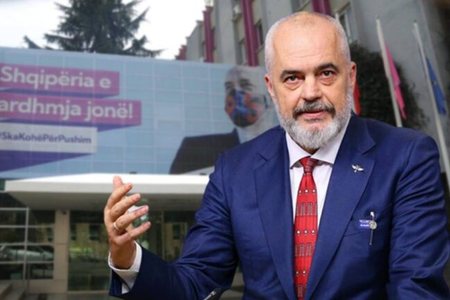
Albania's Prime Minister Edi Rama, who declared in September that "for the first time in history we can freely choose which empire we want to belong to, the empire of rights, values, security and defense," has seen remarkable progress recently after applying for membership in 2009 and is now one of the leading candidates, officially aiming for membership by 2030.
Montenegro leads all candidates with 33 chapters opened and seven provisionally closed since the start of negotiations in 2012. Prime Minister Spajić's government aims to complete negotiations by 2026 and achieve EU membership by 2028.
North Macedonia has waited the longest, applying in 2004, but has since faced successive setbacks due to neighboring disputes. After resolving the name issue with Greece through the 2019 Prespa Agreement, Bulgaria blocked negotiations on the recognition of its minority, language, and interpretation of shared history, a major obstacle that has yet to be overcome, as public support for EU membership has also waned.


Lini një Përgjigje