


 Shkruar nga Pamfleti
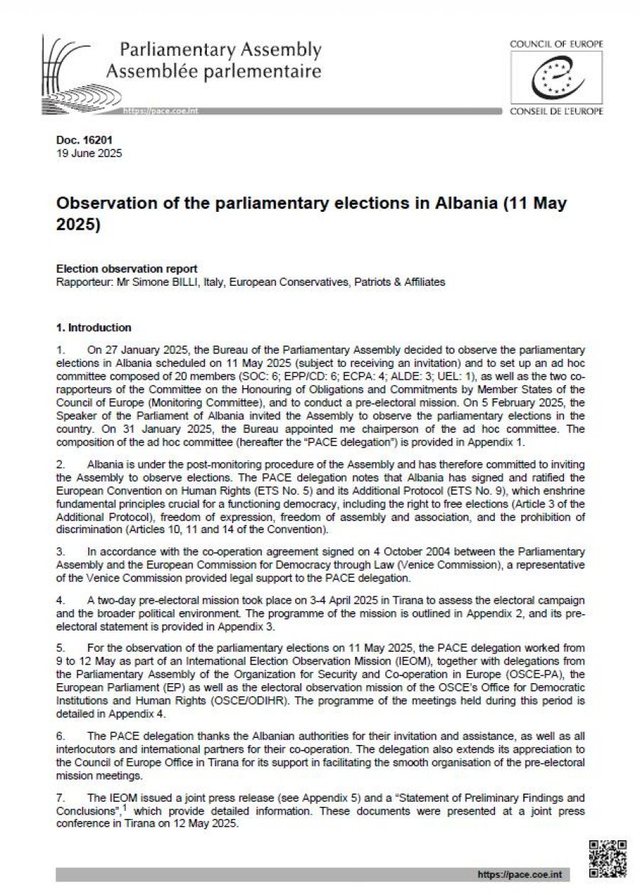
The Council of Europe has prepared its observation report for the May 11 elections...
After the OSCE, the Council of Europe has also dealt a strong blow to the May 11 elections. Although the process is considered fair and competitive, there were many problems.
This critical document, which will be presented on Monday before the European Parliament, sheds light on a worrying reality for the functioning of Albanian democracy and for the very legitimacy of elections in a country that still claims to be a serious candidate for membership in the European Union.
International observers identified a large number of irregularities that included vote buying, illegal use of state resources in the campaign, pressure on public administration, and systematic intimidation of voters.
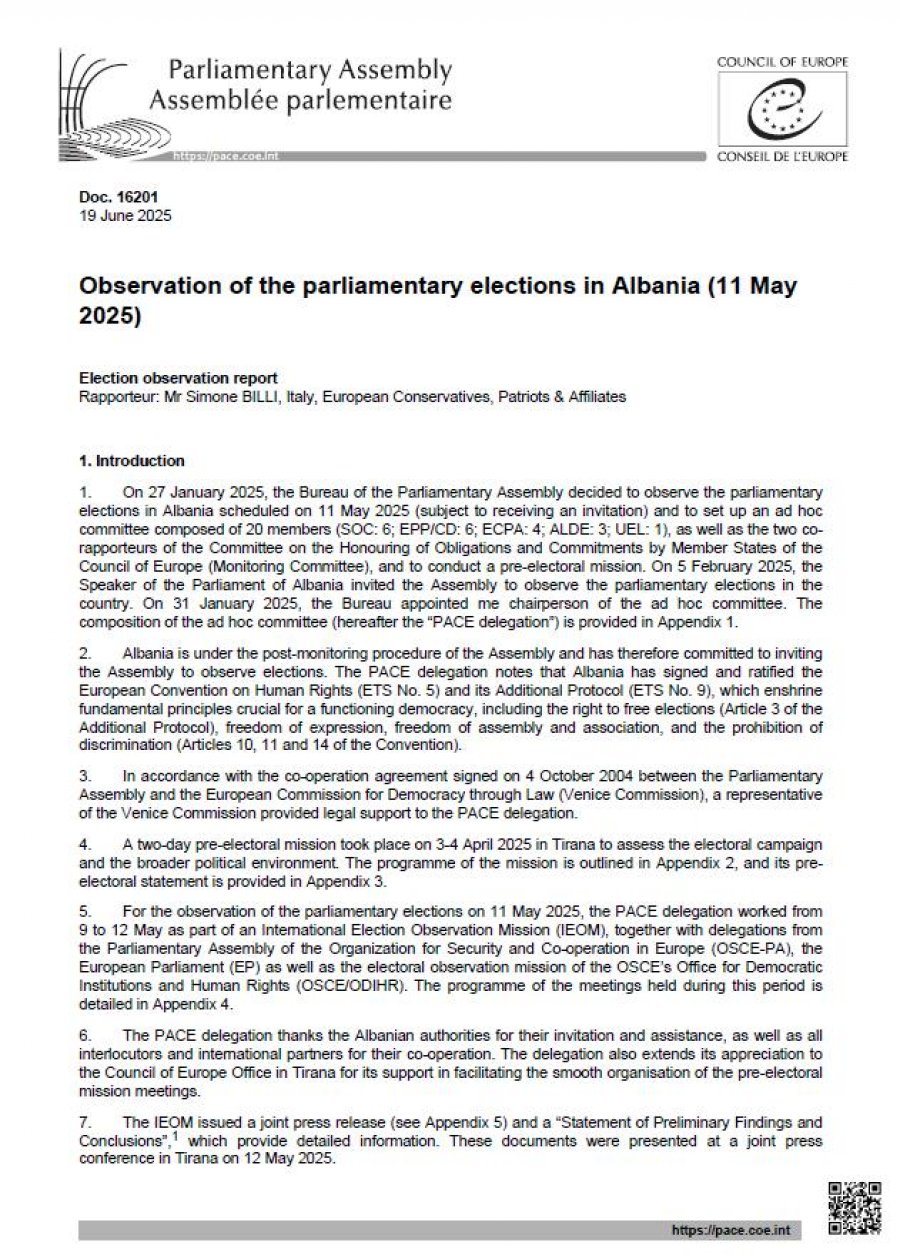
The Parliamentary Assembly delegation directly mentions what is already mentioned without gloves in diplomatic circles: the capture of the state by a political elite that controls not only the executive, but also the judiciary, the media, and the electoral processes.
One of the most serious findings of the report is that "the electoral process takes place in a climate where the rule of law is fragile and where corruption and clientelism undermine citizens' trust in democratic institutions." In this context, elections are not an instrument of accountability, but a manipulated formality to reproduce power.
Observers pay particular attention to the influence of the executive branch in the Central Election Commission, as well as the lack of effectiveness of the Prosecutor's Office in punishing electoral abuses. No senior official has been punished for electoral crimes, although there is ample evidence of direct involvement of political figures in vote manipulation schemes.
The report does not stop just at voting day, but emphasizes that the problems begin much earlier, with the capture of public administration, the selective distribution of economic aid during the campaign, electoral hiring, and pressure on vulnerable groups, especially in rural and poor areas.
Furthermore, the report raises the alarm about political control over the media and the massive use of propaganda, while independent media is under economic and legal pressure, contributing to a biased and polarized information environment.
Finally, the document mentions the fact that the lack of a real political alternative is another symptom of the capture of democracy. In a country where the opposition is divided and often delegitimized by the system itself, citizens are left without a voice and without hope for change through the ballot box.
Conclusions and recommendations of the CoE
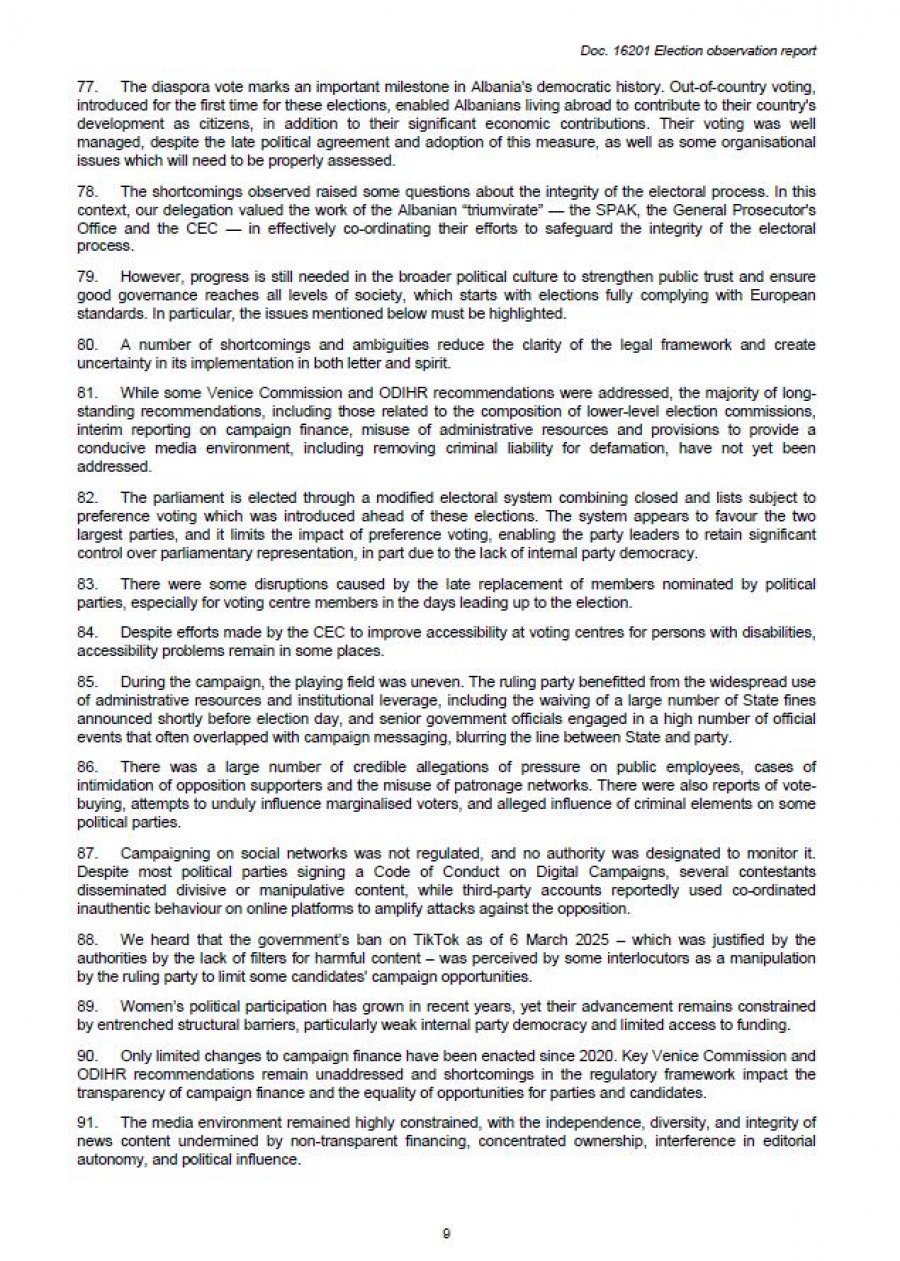
- Misioni Ndërkombëtar i Vëzhgimit të Zgjedhjeve (IEOM) konkludon se zgjedhjet parlamentare të vitit 2025 ishin konkurruese dhe të organizuara në mënyrë profesionale, por u zhvilluan në një klimë shumë të polarizuar, dhe pjesëmarrësit nuk gëzonin kushte të barabarta. Kandidatët, në përgjithësi, ishin të lirë të bënin fushatë, edhe pse disa raportuan raste intimidimi. Administrata zgjedhore e menaxhoi procesin në mënyrë gjithëpërfshirëse dhe transparente. Megjithatë, partia në pushtet përfitoi nga përdorimi i gjerë i burimeve administrative, duke krijuar avantazh të padrejtë. U raportuan gjithashtu presione ndaj votuesve, veçanërisht punonjësve të administratës publike. Legjislacioni zgjedhor dhe interpretimi i ngushtë i tij nga administrata zgjedhore nuk parandaluan praktikat abuzive. Përqendrimi i pronësisë së mediave, bashkë me autocensurën e gazetarëve dhe dominimin e mbulimit mediatik nga dy partitë kryesore, kufizuan mundësinë e votuesve për të marrë informacion të paanshëm. Fushatat në rrjetet sociale përforcuan diskursin polarizues, dhe nuk kishte ndonjë autoritet të ngarkuar për të monitoruar përmbajtjen manipuluese. Mekanizmi i ri i bashkërendimit ndërinstitucional për hetimin dhe ndjekjen penale të krimeve zgjedhore është një zhvillim pozitiv, por kërkohet ndjekje konkrete për të adresuar shqetësimet e vazhdueshme për manipulimet elektorale. Dita e votimit ishte kryesisht e qetë dhe e organizuar mirë, megjithatë pati mospërputhje të shpeshta me procedurat, incidente intimidimi dhe joshjeje të votuesve, si dhe probleme në numërimin dhe transparencën e votave.
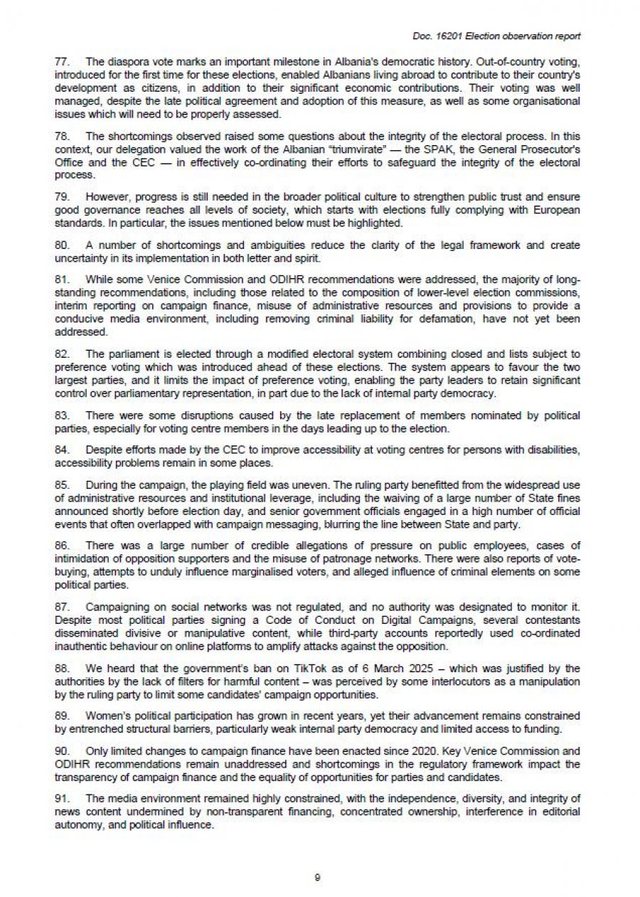
- Votimi nga diaspora përbën një moment historik për demokracinë shqiptare. Ky votim, i mundësuar për herë të parë, u dha mundësinë shqiptarëve jashtë vendit të kontribuonin si qytetarë përveç ndihmës së tyre ekonomike. Pavarësisht miratimit të vonuar politik dhe disa problemeve organizative, procesi u menaxhua mirë.
- Mangësitë e vëzhguara ngritën pikëpyetje për integritetin e procesit zgjedhor. Në këtë kuadër, delegacioni vlerëson punën e “triumviratit shqiptar” – SPAK, Prokuroria e Përgjithshme dhe KQZ – në përpjekjet e bashkërenduara për ruajtjen e integritetit të zgjedhjeve.
- Megjithatë, kërkohet progres më i madh në kulturën politike për të forcuar besimin publik dhe për të siguruar qeverisje të mirë në të gjitha nivelet, çka fillon me zgjedhje që përmbushin standardet evropiane.
- Ekzistojnë boshllëqe dhe paqartësi që dëmtojnë qartësinë e kuadrit ligjor dhe krijojnë pasiguri në zbatimin e tij si në përmbajtje, ashtu edhe në shpirt.
- Edhe pse disa rekomandime të Komisionit të Venecias dhe ODIHR janë zbatuar, shumica e rekomandimeve të vjetra, përfshirë ato mbi përbërjen e komisioneve zgjedhore, raportimin financiar gjatë fushatës, abuzimin me burimet administrative dhe krijimin e një ambienti të favorshëm mediatik, përfshirë dekriminalizimin e shpifjes, nuk janë adresuar.
- Parliament is elected through a modified closed-list and open-list preferential system. This system favors the two main parties and limits the effect of preferential voting, giving party leaders great control over parliamentary representation, partly due to the lack of internal party democracy.
- There were delays and interruptions due to late replacements of members of polling station commissions appointed by political parties.
- Despite the CEC's efforts to improve accessibility for persons with disabilities, some voting centers remained unsuitable.
- During the campaign, the terrain was uneven. The ruling party benefited from massive use of state resources and institutional influence, including the state's forgiveness of a large number of fines shortly before the election and the participation of senior officials in activities that overlapped with the electoral campaign, blurring the line between state and party.
- A large number of credible allegations of pressure on public officials, intimidation of opposition supporters, and misuse of clientelistic networks were recorded. There were also reports of vote buying, unfair influence on marginalized voters, and the influence of criminal elements on some political parties.
- The social media campaign was unregulated and lacked an authority to monitor it. Despite the signing of a Code of Conduct for Digital Campaigning by most parties, many candidates shared divisive or manipulative content, while third-party accounts used coordinated inauthentic behavior to amplify attacks on the opposition.
- The government's ban on TikTok on March 6, 2025 – justified by the lack of filters for harmful content – was perceived by some as a means of manipulation by the ruling party to limit the opportunities of some candidates.
- Women's political representation has increased in recent years, but their progress continues to be hampered by entrenched structural barriers, including the lack of internal party democracy and limited access to funding.
- Only limited changes have been made to campaign financing since 2020. Key recommendations of the Venice Commission and ODIHR remain unaddressed, affecting transparency and equality of opportunity in the campaign.
- The media environment remained very restricted, with the independence, diversity and integrity of news undermined by non-transparent financing, concentrated ownership, interference in editorial autonomy and political influence. /Pamphlet





Lini një Përgjigje