


 Shkruar nga Diplomatico | Pamfleti.net
Amidst internal crises, investigations and political pressure, the prime minister seeks international capital at Donald Trump's table.
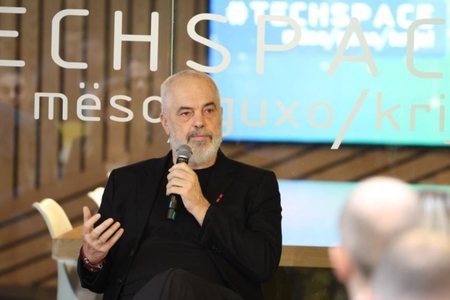
At a time when the domestic political terrain is slipping under his feet, Edi Rama is seeking to strengthen his international profile by approaching Donald Trump's new initiative for the so-called "Board of Peace".
The question that arises is not whether Albania should be active in global diplomacy; this is an axiom for a NATO member country, but whether this positioning serves the national interest or the personal need of the prime minister to generate political capital at a delicate time.
For Albania, participating in a new international forum may sound like an increase in diplomatic weight. But realpolitik is colder than rhetoric.
The "Board of Peace" is a structure contested by some Western democracies and viewed with skepticism in certain European circles, especially if it is perceived as an alternative or rival to the traditional multilateral architecture.
In this context, Tirana risks being positioned in a big game where the balances are still unclear.
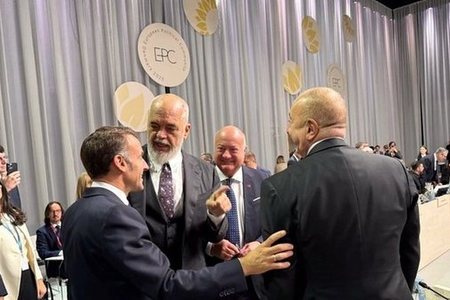
For Edi Rama, the photo with Trump and the narrative of "global role" can serve as an antidote to domestic criticism: investigations, corruption allegations, tensions with the opposition, and public fatigue after more than a decade in power.
Albanian political history has shown that leaders often seek legitimacy abroad when the terrain becomes unstable at home.
Diplomacy becomes a theater stage where the local public must be convinced that their leader is still a factor at the big tables.
But how real is this weight?
If the “Board of Peace” remains a symbolic platform without concrete decision-making mechanisms, then the benefit for Albania will be mainly image. And image, no matter how powerful in political communication, has a quick expiration date if it is not translated into investments, security, and tangible benefits.
If, on the contrary, this structure gains a real role in the processes of reconstruction or international mediation, then Tirana can claim a smart strategic positioning.
There is another dimension: the relationship with the European Union. Albania is in the process of negotiations and any move that is perceived as a deviation from the common Euro-Atlantic line could create silent tension.
Rama has invested heavily in the narrative of the “modern European leader of the Balkans.” An excessive rapprochement with a controversial American initiative could be seen as an internal calculation, not as a long-term state strategy.
On the other hand, for a small country, flexibility is often an asset.
Albania has historically survived by being pragmatic, maintaining strong ties with the US, and never challenging the Euro-Atlantic axis.
If Rama manages to present this commitment as a continuation of the strategic alliance with Washington and not as a personal alignment with Trump, then he can use it as a strong card in domestic politics.
But the essence remains: is this diplomacy for Albania or for Rama?
If his political situation is “on the line,” as recent developments suggest, then any international outing will be read through this prism. A successful meeting could produce weeks of political breathing space. A misperception or an unexpected turn in American dynamics could turn this investment into a boomerang.
In the end, great diplomacy is not a therapy for the internal crisis. It can soften it, mask it or postpone it for a while, but it does not solve it. If Rama seeks political salvation at global tables, the real proof will be what Albania concretely benefits; not how much applause he receives on the international stage. And this is a battle that is not won with photos, but with results./ Pamphlet



Lini një Përgjigje