


 Shkruar nga Pamfleti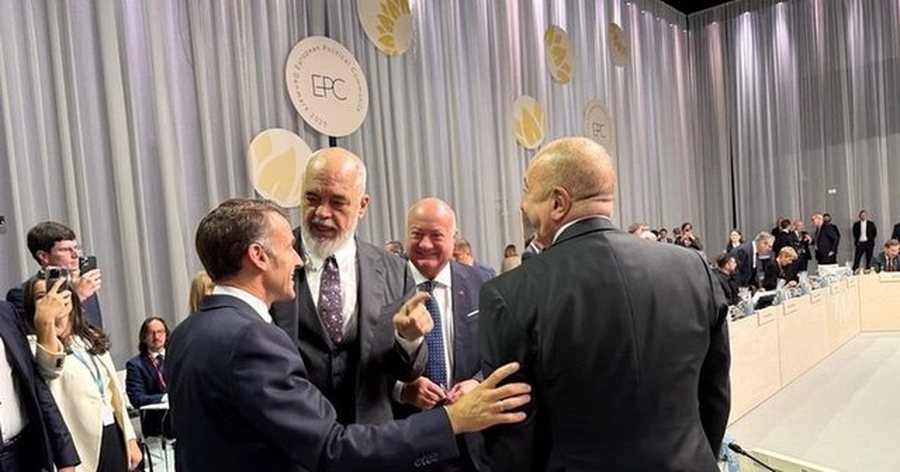
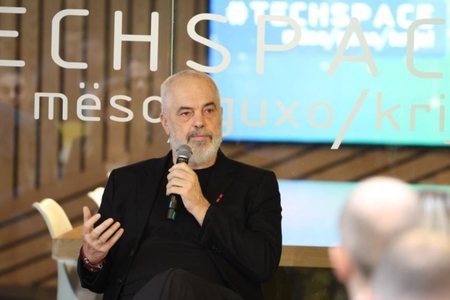
Albania's membership in the so-called "Peace Board" is not presented as a purely diplomatic step, but as a move with a clear political objective. This is how the Swiss public television SRF assesses in an analysis by its correspondent, Peter Balzli, linking Tirana's decision to Prime Minister Edi Rama's efforts to get closer to US President Donald Trump.
According to SRF, Rama has long sought to build a more direct relationship with Trump. The media recalls a video released in October, where the Albanian prime minister mocked a statement by the American president, who had confused Albania with Armenia. The footage was widely distributed in international media and, according to the analysis, created an awkward moment in public relations between the two leaders.
In this context, SRF interprets membership in the "Peace Council" as an attempt by Rama to reconsolidate relations with the American administration.
Full text
In January, US President Donald Trump introduced the so-called “Peace Board” at the World Economic Forum (WEF) in Davos. Major European countries did not participate in its establishment, as they consider this structure to be a parallel mechanism to the United Nations (UN).
Among the countries that intend to join this initiative are three Balkan states: Albania, Kosovo and Bulgaria. Romania has expressed interest in participating as an “observer” in the first meeting. SRF correspondent Peter Balzli analyzes the reasons and circumstances of these decisions.
Why do Albania, Bulgaria and Kosovo want to join?
According to Balzli, each of these countries has different motives. All three seek rapprochement with the United States, hoping for political or economic benefits.
Albania has advanced further in this process: the Albanian Parliament has already approved membership. In Kosovo, a similar decision is expected to be taken soon. Meanwhile, in Bulgaria, the situation remains unclear, as the country will elect a new parliament in the spring and it is not known whether it will ratify membership.
Why does Bulgaria want to join?
Bulgaria has only one oil refinery, owned by the Russian company Lukoil. The United States has imposed sanctions on the company. Bulgarian authorities fear potential fuel shortages and see rapprochement with the Trump administration as an opportunity to secure support.
Another factor is related to Delyan Peevski, chairman of the Movement for Rights and Freedoms (DPS), who is known as one of the most powerful oligarchs in Bulgaria and a media owner. His assets in the US have been frozen due to corruption charges. According to SRF's analysis, he has an interest in improving relations with the American administration.
Why does Kosovo seek membership?
Kosovo is not a member of the UN, as Serbia has so far obstructed this process. Kosovar political scientist Leart Hoxha states that “with the Peace Council there is an organization where Kosovo is treated equally, unlike the experience in the EU and the UN”.
For Kosovo, US support remains essential. The US and NATO military intervention during the 1999 war created the conditions for the establishment of the state of Kosovo.
What are Albania's reasons?
Prime Minister Edi Rama has long sought rapprochement with Donald Trump. Trump's daughter, Ivanka Trump, and her husband, Jared Kushner, are developing a luxury tourist project worth about $1.4 billion on the island of Sazani.
In October, international media published footage of Rama mocking a speech by Trump, in which the latter confused Albania with Armenia. According to assessments reported by SRF, this situation constitutes an additional impetus for Tirana to maintain good relations with the American administration.
How will the Balkan countries pay their membership fee?
The official membership fee for the “Peace Council” is one billion dollars. However, the three countries state that they do not expect to pay this amount.
Kosovo President Vjosa Osmani has stressed: "We have never been asked to pay such an amount. The Statute does not provide for this." In fact, according to the statutory documents, not all member states are obligated to pay the sum of one billion dollars. / Pamphlet



Lini një Përgjigje