


 Shkruar nga Michael Isikoff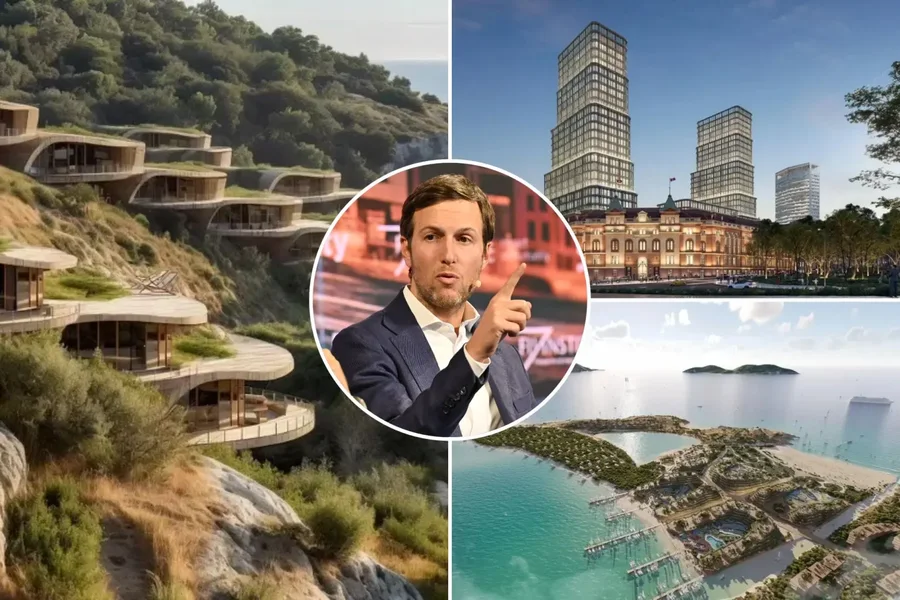
The US Congress is fighting hard to move the prosecution to investigate Trump's son-in-law...
When Jared Kushner, fresh from his White House post, founded an investment firm that quickly raised $2 billion from a Saudi wealth fund under the direction of the country's de facto leader, Prince Mohammed bin Salman.
But it turns out this giant-sized kitty isn't the only way Riyadh is funding Trump's son-in-law. As congressional investigators revealed this summer, the Saudi government has also been actively paying Kushner "management" fees for all that money — at least $87 million so far under a deal that guarantees him regular, hefty payments from Riyadh as well as other foreign governments in Qatar and the United Arab Emirates, which have also invested in his fledgling, Miami-based firm, Affinity Partners.
"That's the critical element," Congressman Jamie Raskin, the top Democrat on the House Oversight and Accountability Committee, said on a new "SpyTalk" podcast about the Saudi charges that continue to trickle down to Kushner's firm.
“I mean, $87 million is an incredible amount of money. Most people cannot earn them in their lifetime. The idea that Jared Kushner, as the top foreign policy actor for the Middle East, is not acting in the capacity of a foreign agent just doesn't make sense," he said.
Raskin, along with the chairman of the Senate Finance Committee, Sen. Ron Wyden (D-Ore.), whose investigators uncovered the Saudi management fee pipeline, last week wrote a letter to Attorney General Merrick Garland asking him to appoint a special counsel to investigate whether Kushner is serving as a unregistered - and therefore illegal - agent of the Saudi government in violation of the pre-World War II Foreign Agents Registration Act (or FARA, as it is commonly known).
"There are substantial reasons to believe that the Saudi government's decision to engage Affinity for investment advice is a fig leaf for sending money directly to Mr. Kushner and his wife, Ivanka Trump," Raskin and Wyden wrote in their 24 October addressed to Garland.
(Efforts to seek comment from Kushner on the issues raised by Wyden-Raskin's letter were unsuccessful. Affinity Partners did not respond to requests sent to the media inquiries section of the firm's website. Kushner has repeatedly said that he is just a private businessman and has no intention of returning to the White House if his father-in-law wins the election.)
Yellow light
Of course, it's unlikely that the ever-cautious Garland — already highly sensitive to Republican calls for the alleged "weaponization" of the Justice Department — will move quickly on a request to investigate the Republican presidential nominee's son-in-law, much less in before the elections. (The department's press office did not respond to a request for comment from SpyTalk.)
But Raskin and other Democrats hope to use the case to highlight the many foreign entanglements that continue to surround Trump and his family — investments and business deals that can appear large and present no end to potential conflicts. if the former president returns to power.
As the New York Times reported this week, Trump and his family have "cashed in" on numerous overseas ventures in recent years, including signing deals for luxury hotels in Dubai, Riyadh and Oman — not unlike what he's doing asked the Kremlin in 2016 to build a Trump Tower in Moscow.
Kushner, however, remains Exhibit A. The Wall Street Journal reported this month that he is currently negotiating a $1 billion deal with the government of Albania to build ultra-luxury resorts on a military island off that country's coast that once housed a Soviet submarine base. And as SpyTalk reported in June, Kushner's firm this year signed a $500 million deal with Serbia's pro-Russian government to build a residential and hotel complex in Belgrade that would include a monument to "victims of NATO aggression— s" during the bombings of 1999. campaign to stop the massacre of ethnic Muslims in Kosovo.
This agreement caused controversy. It was "a betrayal of the United States, its policies and the brave diplomats and airmen who did what they could to stop Serbian ethnic cleansing," General Wesley Clark, who led the NATO bombing campaign, told me at the time. -s.
But in Raskin's view, what makes Kushner's dealings particularly egregious — and puts him in potential violation of the Foreign Agents Act — is that he is, by his own admission, continuing to advise Trump and raise money for him, although he continues to remain in close consultation and, it seems, advise the Crown Prince.
"He has continued to advise Trump on foreign policy, which suggests that he certainly will not advise Trump to do anything about Saudi Arabia or the Middle East that conflicts with Saudi policy," said Raskin, who represents a Maryland district that borders Washington DC. "And most likely, he is acting as a courier for the views and interests of Saudi Arabia. And similarly, he advises Saudi Arabia on what's going on in American politics. So look," he added, "there's just this network of embedded conflicts of interest operating around Trump's world, and this is another one of them."
High hurdles
Sorting out these apparent conflicts — and determining whether his political activities have crossed the line that implicates FARA — would require an aggressive judicial investigation, including subpoenas and grand jury testimony to find out exactly what Kushner has been talking about. with Trump and the crown prince.
Such investigations are not undertaken lightly and are likely to require more substantial evidence than Raskin and Wyden have so far assembled. To make a FARA case, the department would need evidence that Kushner was seeking to "influence" US policy or the American public to further the interests of MBS and his autocratic government. Unlike the hard-hitting details about Saudi management fees that Democratic investigators gleaned from questioning of Affinity's top adviser, much of the evidence cited in Raskin-Wyden's letter about the continued political and foreign policy role of The Kushners are based on vague news, such as one last from Reuters reporting that Kushner had "discussed" US-Saudi diplomacy "numerous times" with MBS and another from the Wall Street Journal, which quoted him as saying he was "there to fully assist and advise" Trump and his team and describing him playing "an informal advisory role". / Adapted "Pamphlet" from "SpyTalk"


Lini një Përgjigje