


 Shkruar nga Pamfleti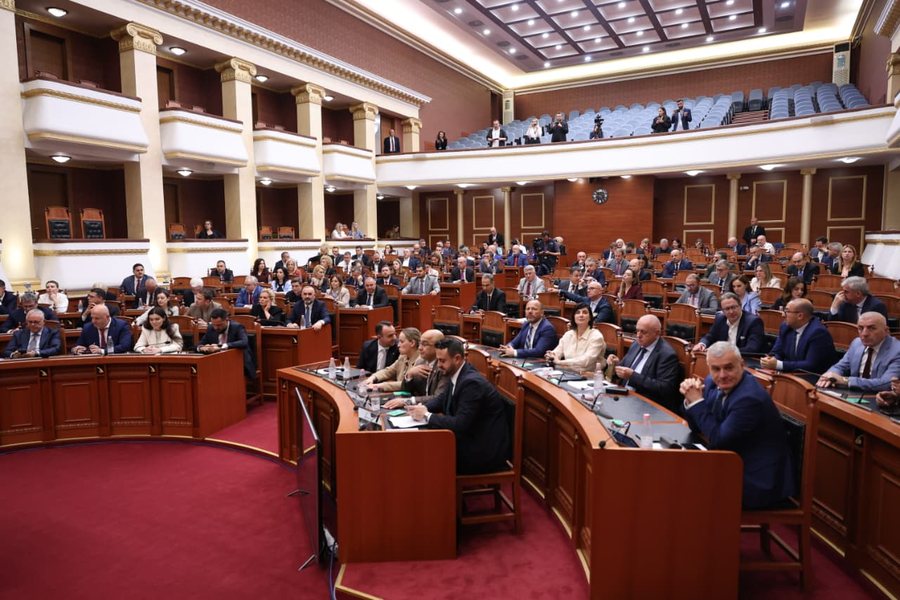
Journalist Lutfi Dervishi stated that this Thursday's parliamentary session was different from other times, describing the Assembly as "more normal" compared to the way it has functioned so far.
Invited to the show "Off the Record" with Andrea Dangli on A2CNN, Dervishi commented on the consensus vote on the resolution on European integration, where the majority and the opposition joined the votes.
According to him, during the session, an effort was observed to respect parliamentary regulations more and to create a more institutional climate in the Assembly.
" While following the Assembly today, I saw a more normal Assembly than I have seen before. I saw, perhaps for the first time, the Speaker of the Assembly trying to apply the rules of procedure to the majority as well, because until now it seems as if the rules of procedure were only for the discipline of the opposition ," Dervishi declared.
The journalist also brought up as an example the way the time for discussions in the hall was managed.
" I saw that he didn't have a problem with the time, he said that the SP parliamentary group should give a minute to the leader of the Democratic Party. So, it shows a kind of effort to be a normal country ," he said.
However, Dervishi stressed that the adopted resolution also highlighted serious problems in the way the state and the Assembly itself function.
According to him, the fact that Parliament adopts resolutions to guarantee government oversight or the implementation of court decisions shows that institutions are recalling functions that should be normal and unquestionable.
" What is the duty of the Assembly? From the soul of the representative, it says 'to make laws' and forgets the oversight mission. Now the Parliament says 'we will oversee the executive'. That is, it is like going to first grade and saying we will do the homework, we will learn the primer ," declared Dervishi.
He also focused on the part of the resolution related to respecting court decisions, describing as alarming the fact that the Assembly feels the need to vote on such a commitment.
" Then it says 'we will implement the court's decisions'. The end of a state is when the court's decision is not implemented. The state does not function when the court's decision is not implemented. Now Parliament comes out and makes a resolution and votes there that we will implement the court's decisions ," the journalist said.
In conclusion, Dervishi described the resolution as a kind of reflection of politics itself on the way institutions have functioned so far.








Lini një Përgjigje