


 Shkruar nga Pamfleti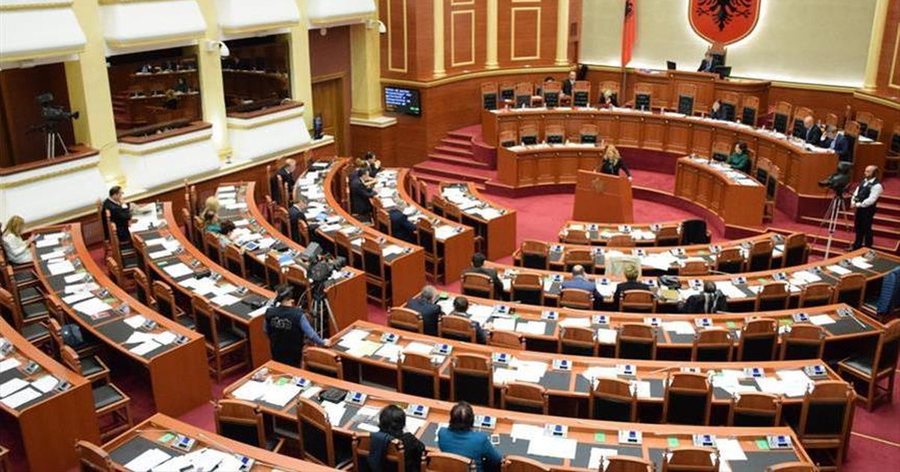
On May 11, citizens will turn to the ballot boxes to elect their representatives in the Assembly, the deputies. This year, one more deputy mandate was added to the capital, from 36 to 37. This mandate was removed from the district of Korça. The change of the electoral map in the distribution of 140 mandates is related to the internal movements of the population from one district to another.
Despite this, there are some constituencies that have had a decrease in the number of residents, such as Elbasan or Fieri, but continue to have the same number of parliamentary mandates. Even in the next elections, the representation of the District of Tirana in the Parliament will have the greatest weight, if you put together 6 other districts. The electoral race also has the innovation of the changed formula of open lists, while the obstacle of the national threshold of 1% of votes for independent candidates has fallen.
Every election year, the Central Election Commission, based on the population data of the National Civil Registry, takes the number of Albanian citizens and divides it by 140 mandates of the Assembly, thus determining the average number of citizens belonging to each mandate Assembly.
Then, to divide how many mandates belong to the 12 regions, the number of residents of each region is taken and divided by the average number obtained and it is determined how many mandates a region will produce. Each electoral district is initially assigned a number of mandates equal to the full number obtained from the division. In the event that at the end of the performed action, one or more mandates remain undistributed, they are distributed to the areas on the basis of the largest decimal point obtained from the division. The distribution of the remaining mandates is carried out in descending order, starting from the area with the largest decimal point. In case the decimal point of two or more areas is the same, the last mandate is assigned to the area that has the largest remaining number of citizens who have not produced a full mandate.
Take the Dibra district as an example. The number of Albanian citizens registered at the country level is 4,627,824, which is divided by 140 mandates and the figure is 33,056. We take the number of inhabitants of Dibra, 170,488 and divide it by 33,056. The figure is 5 out of 158, which means that Dibra has 5 mandates.
Tirana and Korça suffered fluctuations in mandates for this year. The capital won one more mandate, while the southeast region lost one.
Over the years, the capital has only had an upward trend in terms of the number of mandates. From 2009 to 2025, Tirana has gone from 32 seats in the Assembly to 37 seats. The coastal city, Durrës, also had an increase in mandates, where in 2009 there were 13 mandates and in the 2013 elections, due to the increase in the population in that district, the number of mandates went to 14, not changing anymore.
Fieri, Elbasani, Shkodra and Lezha continue to hold the same number of mandates from 2009 to 2025, although it can be seen from the figures that the population in these counties has decreased. If we stop in Gjirokastër, Dibër, Kukës or Berat, the number of citizens' representatives in the parliament has decreased.
If we were to divide the parliamentary arena by percentage, in the elections of 2025, the district of Tirana alone owns 26% of the seats in the parliament, or as much as 6 districts such as Korça, Lezha, Berati, Dibra, Gjirokastra and Kukësi combined. Northerners own only 19% of the parliamentary weight in the Assembly, sending deputies from the region of Shkodra, Lezha, Dibra or Kukës. The five southern counties own about twice that, 35%. The three counties of "Central Albania", Tirana, Durrës and Elbasan will have 46% of the seats in the Parliament of Albania.
In the summer of 2024, DP and SP, in agreement with each other, decided to change the formula for the preferential election of candidates, with the claim that they opened the lists even more, leaving only 1/3 of the names in the hands of the mayors.
Applying the formula in practice actually shows the opposite. Let's take Tirana as an example, where in 2025 there will be a fight for 37 parliamentary mandates. Before moving on to the open list, the 12 names selected by the chairman, or 1/3 of the list, must be exhausted. Translated into the SP result of 2021 for Tirana, when it received 18 mandates, it means that only 6 MPs would emerge from the preferential lists.
This agreement was opposed by the minor parties, which have taken legal steps in the constitutional court.
Over the years, there have been candidates for deputies who have not chosen to be represented by any party, but to be independent. They have faced a condition: to go to the parliament, they had to pass a percentage of votes at the national level that has been different for years. In the 2021 elections, it was 1%, but according to the constitutional court, this obstacle was unconstitutional, which means that this election year independent candidates have not met the threshold. It is enough for them to get enough votes to win a mandate in the district where they are competing. For new parties, or those with a regional focus, this condition continues to remain in force. The race is played within a county, but the hurdle is national.
Regardless of the system, the list or the way of distribution of mandates, what matters for the public interest is a parliament that guarantees democracy, responsibility and accountability to serve the citizens. An aspect that often seems to be forgotten. (A2 Television)






Lini një Përgjigje