


 Shkruar nga Pamfleti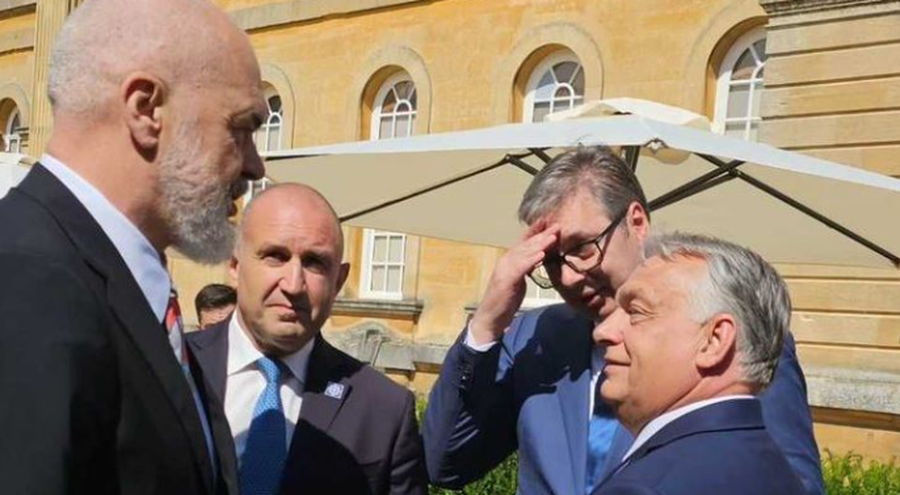
The fact that the Hungarian opposition is studying Serbia as a winning electoral formula is an alarm for the entire region. Because many of the elements of this model are already present in Albania...
When the Hungarian opposition starts looking to Belgrade to learn how to gain power, the problem is no longer just Hungary or Serbia. The problem is the normalization of an authoritarian electoral model, which is spreading throughout the Western Balkans, including Albania.
According to an analysis by Danas.rs, some opposition circles in Hungary consider Aleksandar Vučić as an example of how to win sustainably in conditions where elections are held, but the real race is distorted. Control over the media, instrumentalization of the state, dosed nationalism and capture of institutions are the key elements of this “formula”.
Ironically, this formula is neither purely Serbian nor Hungarian. Viktor Orbán has institutionalized it within the EU, while Vučić has perfected it in the Balkans. What about Albania? It is not off the map.
In Tirana, the model operates with a milder, but equally effective, variant. Edi Rama has built a long-term hold on power not through classic repression, but through the dominance of the public narrative, indirect control of the media, the use of the state as an electoral instrument, and the systematic weakening of the opposition.
Elections are held regularly, but equality in competition is increasingly formal. Administration, public funds, infrastructure projects, and government communication are used as electoral advantage, while independent institutions often function more as decor than as real checks on power.
The similarity with Serbia is no coincidence. As in Belgrade, the government in Tirana is built on the idea that stability is more valuable than pluralism, and that the West will tolerate anything as long as the government maintains a pro-European discourse and does not produce regional crises.
This is the moment where Albania becomes part of the same history as Hungary and Serbia. A history where democracy is reduced to procedure, while real power is concentrated in a single decision-making center.
For oppositions in the region, the message is dangerous: if you want to win, don't fight the system; learn to use it. It is precisely this logic that is transforming the Balkans into a laboratory of "soft" autocracies, where votes are cast but real choices are diminished.
In this context, the fact that the Hungarian opposition is studying Serbia should be seen as a warning for Albania as well. Because the more this model is copied, the less room remains for real political rotation.
The question that arises is not just who wins the next elections.
The question is: is Albania heading towards a functional democracy, or towards authoritarian stability with a Western facade?/ Pamphlet



Lini një Përgjigje