


 Shkruar nga Pamfleti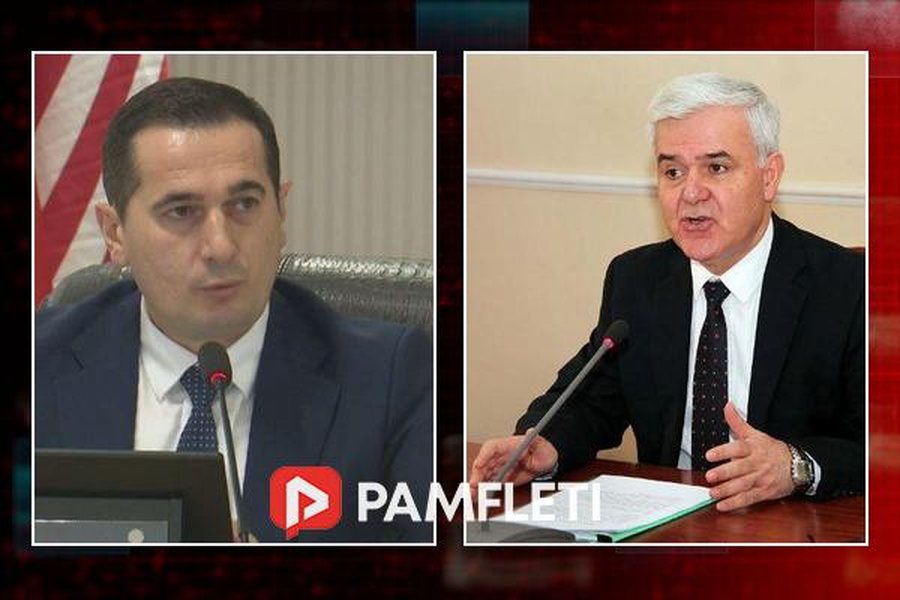
Xhafaj responds to Klodian Braho: Parliament has the right to control
Fatmir Xhafaj chose to wait a few days before publicly responding to SPAK's refusal to receive him on a so-called "monitoring" visit.
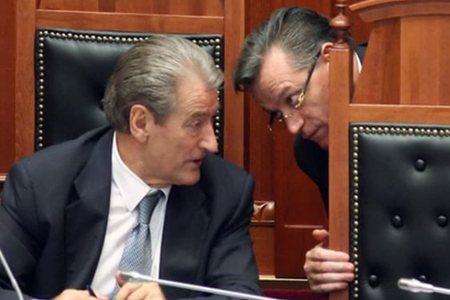
Today, from the parliamentary committee room he heads, the former Interior Minister spoke at length about the powers of the Assembly, institutional dialogue, and parliamentary practices, attempting to demonstrate political strength in the face of an institution that is also investigating majority MPs.
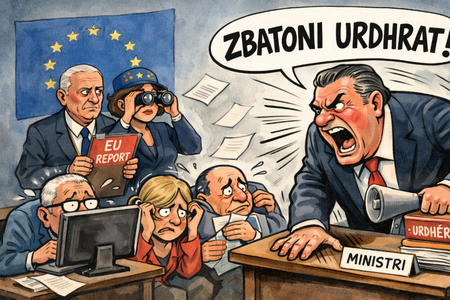
Although he did not directly mention the name of the head of the Special Prosecution Office, the message was clear and directed at Klodian Braho. Xhafaj tried to relativize SPAK's refusal, arguing that parliamentary oversight does not constitute interference and that monitoring visits are "consolidated practice."
" Parliamentary norms and practices do not in any way see the constitutional function of parliamentary oversight as monitoring independent institutions and especially their activities, and therefore they do not have an intrusive character of any kind. Monitoring visits are a consolidated parliamentary practice even in the previous legislature ," said Xhafaj at the meeting of the Committee on Civic Initiatives, Cooperation and Institutional Oversight.
But herein lies the paradox and concern. SPAK is an independent constitutional institution, established to investigate high-level corruption and organized crime, including politicians and MPs. In this context, the insistence of a parliamentary committee on “monitoring visits” raises doubts about the real boundaries between institutional cooperation and political pressure.
Xhafaj insisted that the commission he heads has parliamentary control sanctioned by law and that this control, according to him, serves for cooperation and not for interference.
" Albania is a parliamentary republic. The Assembly, in exercising its constitutional powers, also serves as a space for institutional dialogue ," he declared.
But the facts speak of a concrete clash. On the very day that Klodian Braho took office as SPAK's chief prosecutor, the commission led by Xhafaj requested to be included in the agenda of the Special Prosecution Office. The request concerned a monitoring visit on SPAK's results in the fight against money laundering, supported, according to the letter, also by a request from the Financial Intelligence Agency.

SPAK responded firmly "no" to this meeting, suggested for February 6, 2026, describing the monitoring visit as an overstep of the law and a violation of the institution's independence.
" Any practice of conducting such monitoring visits would conflict with the constitutional independence of the Special Prosecution Office ," SPAK's official letter states, emphasizing that independence is not merely formal, but a fundamental condition for impartial and effective investigations.
However, SPAK left the door open for legal cooperation, clarifying that it can inform the commission according to legal provisions, but not accept monitoring.
The Xhafaj-SPAK clash highlights an old tension between politics and the new justice system: while SPAK claims real independence and rejects any form of political monitoring, a part of the political class continues to seek control spaces, even when it comes to institutions that are investigating politics themselves.


Lini një Përgjigje