


 Shkruar nga Pamfleti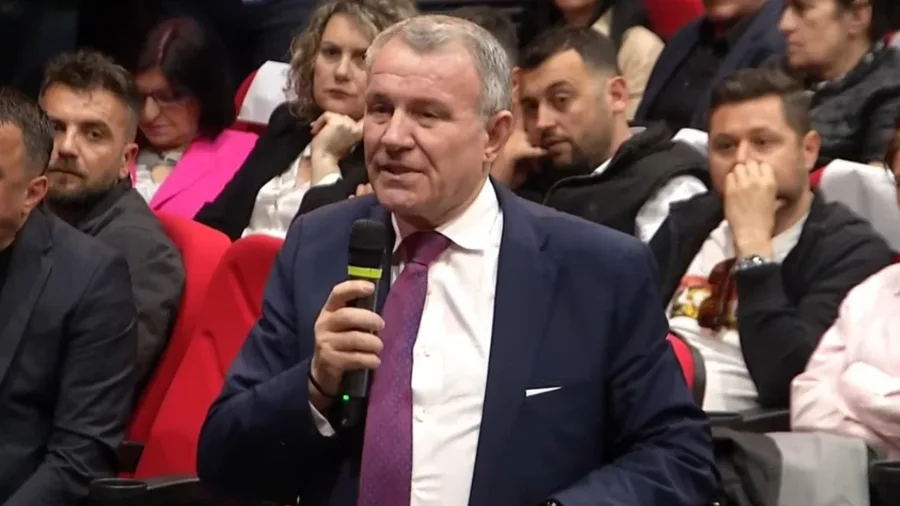
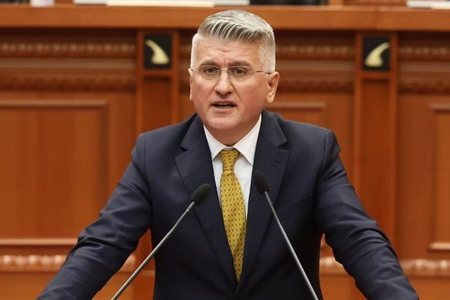
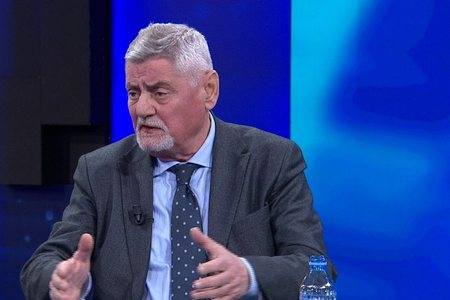
Former Minister of Finance, Arben Malaj, has opposed proposals to reduce the number of municipalities within the framework of the Administrative-Territorial Reform, calling for the return of communes and the strengthening of local democracy.
During a citizen hearing on Administrative Reform, Malaj also criticized the way the meeting was organized, emphasizing that participants were notified late.
"Don't just give us a day's notice, because we're not a pizza taxi. We need time to prepare," he said.
According to Malaj, decentralization is essential for the functioning of democracy and the proximity of institutions to citizens helps reduce the democratic deficit. He rejected the argument that the European Union requires a limited number of local units, emphasizing that there is no such standard for the number of municipalities or communes.
One of the main points of his position was criticism of administrative units, which he described as non-democratic, but purely administrative structures. In this context, Malaj demanded that municipalities be restored and their leaders be directly elected by citizens.
He warned that reducing the number of municipalities could have negative consequences for rural areas.
"Any reform that aims to reduce the number of municipalities and communes will be a second failure," he declared.
Malaj also noted that the problems are not only related to territorial division, but also to the way institutions function, emphasizing the importance of the quality of their leadership.
Arben Malaj: Greetings and thank you, to the commission and the citizens, but don't just notify us one day in advance, because we are not pizza taxis. We need time to prepare. If we talk about decentralization, we talk about democracy and local democracy is defined as the lifeblood of democracy at the local level.
The closer we are to the citizen in the reforms we make, the smaller the democratic deficit becomes. Second, you often use the alibi that the EU wants large regions with over 800 thousand people, but there is no limit to the number of municipalities and communes there should be within this concept.
Third, you have the concept of the administrative unit, it is not democratic, but administrative. You should return the municipalities, elect their own mayors and not worry about capacities, because in the end we know that the EU works with the principle of substitution.
When the neighborhood fails, the municipality responds, when the municipality fails, the region responds, when the country fails, the EU responds with all its means and assistance so that the lives of citizens are not harmed. If these principles are not taken into account, the situation is very critical.
Next, Mr. Mazniku, the situation is not as rosy as you present it, especially in Vlora. Richard Mollet, who founded the EU, says that institutions are very important, but the people who are entrusted with these institutions are more important. If democracy is missing, autocracy comes. Let's not deal with the territory, the municipality has organizational charts and the latter has structures.
Will there be communes and municipalities in difficulty? There will be, that's why the state is redistributing, it should apparently use citizens' taxes. I have defended the idea that reducing municipalities will impoverish villages. Any reform that aims to reduce the number of municipalities and communes will be a second failure.


Lini një Përgjigje