


 Shkruar nga Pamfleti
From Bosnia and Herzegovina to Serbia and Albania: Viktor Orban's ouster is not expected to bring a "political spring" to EU candidate countries
Despite Peter Magyar's victory over Viktor Orbán's regime in Hungary, a similar political development is not expected to occur in the Western Balkan countries aiming for membership in the European Union.
An analysis by Florian Hassel in the German media emphasizes that the change in Budapest may have a limited impact, mainly in the Republika Srpska in Bosnia and Herzegovina. This entity, led by Milorad Dodik, has so far benefited from Hungarian support, including loans and political protection in EU institutions. However, the lack of a united opposition, with a pro-European orientation and strong leadership, makes a rapid democratic change impossible.
It is further stated that a similar situation is occurring in Serbia. The large protests that began after the tragedy in Novi Sad in November 2024 showed widespread public dissatisfaction, but did not produce an alternative political structure.
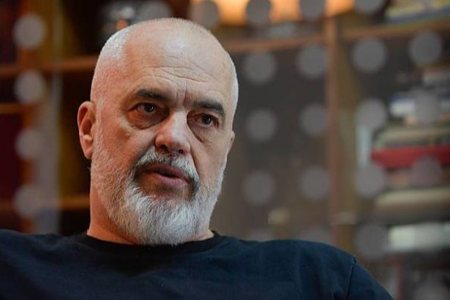
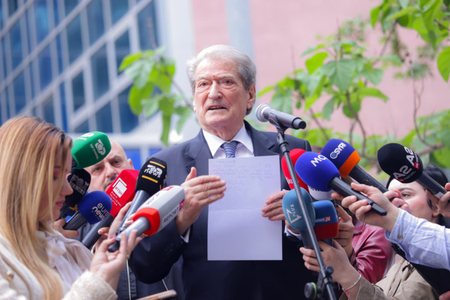
In Albania, according to the analysis, Prime Minister Edi Rama has consolidated power since 2013 in a system characterized by corruption. The creation of SPAK in 2019, under international pressure, was considered a positive step, as the institution undertook investigations into senior political figures. However, political support for this structure was questioned when the investigations affected close associates of the prime minister. Efforts to protect senior officials from criminal prosecution show the limitations of the reforms. But the opposition faces a lack of credibility, as its leader, former Prime Minister Sali Berisha, is also under corruption charges.
In this context, the author concludes that developments in Hungary are not expected to trigger similar changes in the Balkans, due to the structural weaknesses of the opposition and the lack of a clear political orientation towards democratic reforms.
Analysis published in the Süddeutsche Zeitung
It would be too good to be true: Peter Magyar has triumphantly won in Hungary, against a regime of Viktor Orbán that from the outside seemed almost invincible. This raises the question of whether this change of power could also serve as a boost for the EU candidate countries in the Balkans. But this hope turns out to be misplaced.
After the change in Budapest, only Republika Srpska (RS) could face difficulties. It is part of Bosnia and Herzegovina and suffers under the authoritarian regime built by Milorad Dodik. Cooperation between Hungary and RS has been close so far. Hungary has offered large loans and vetoed when the EU has tried to pursue a tougher course towards the autocratic Dodik. That could change now. However, the main condition for a democratic change of power is missing: in RS there is no united and strong opposition, with a pro-European vision and a somewhat charismatic leading figure.
The same applies to neighboring Serbia. The country experienced a major wave of protests from November 1, 2024. Then the shelter of the train station in Novi Sad, recently renovated at least from the outside, collapsed. As a result, 16 people lost their lives. However, the students who led the protests refused to cooperate with existing civic groups and parties. Mistrust of politics was very deep. They also failed to create a leading figure.
In local elections in late March, President Aleksandar Vučić suffered significant losses in several areas. But especially in the provinces, support for his regime remains strong. Serbia lacks a figure like Péter Magyar, someone who would take on the difficult task of constantly traveling around the country and offering citizens disillusioned by corruption and economic stagnation a real alternative. In addition to the lack of a charismatic figure, Serbia also lacks the will to turn towards Europe. EU flags were hardly seen at the protests. The old opposition is divided and in some cases even more nationalist than Vučić himself, who relies on Moscow.
"No democratic substance is left in Albania"
The situation in Albania is no better either. Prime Minister Edi Rama, since his first victory in 2013, has built a system characterized by excessive corruption. In 2019, under international pressure, the Special Anti-Corruption Structure (SPAK) was created.
It acted so decisively against politicians who had previously seemed untouchable that it quickly became the most trusted institution in the country. But Rama supported it only until the institution sought to press charges against his deputy.
“Albania’s democracy is stripped of any democratic substance,” Albanian political scientist Blendi Kajsiu recently assessed. The opposition is also discredited, as its leader and former Prime Minister Sali Berisha is himself under suspicion of corruption.
Against this backdrop, the overthrow of Viktor Orbán is not expected to bring a "political spring" to the Balkans. /Adapted from Pamphlet /



Lini një Përgjigje