


 Shkruar nga Diplomatico | Pamfleti.net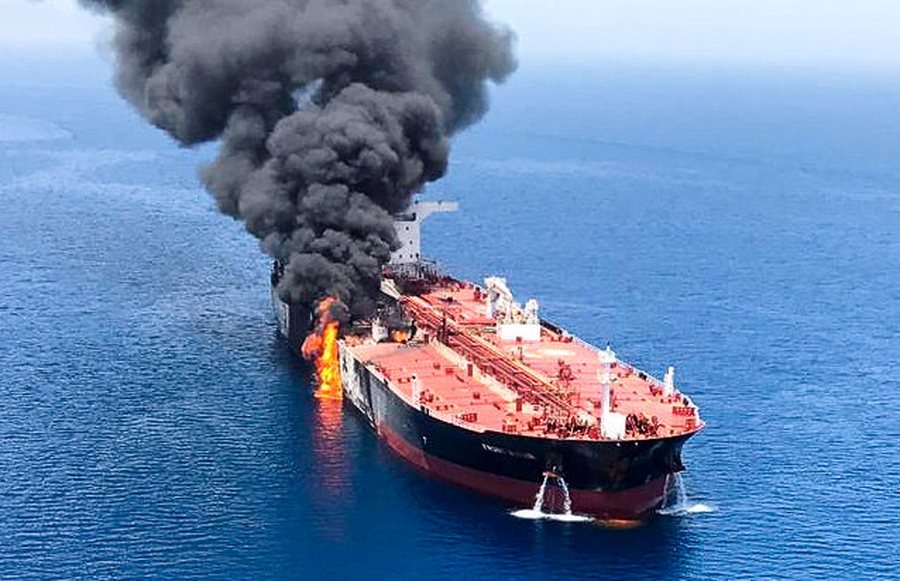
The Kharg terminal remains the heart of Iranian exports, but not necessarily the regime's fatal point. Rising oil prices, alternative outlets and financial channels in Asia are giving Tehran more breathing room than expected...
In the classic logic of war, a country under bombardment should weaken, lose revenue and head towards financial asphyxiation. But in the case of Iran, exactly the opposite is happening. Under the flames of military escalation, the regime in Tehran not only does not appear to be economically collapsed, but according to an analysis by Corriere della Sera, it may be billing even more than before the strikes began.
This is the great paradox of Iranian oil: the war that was supposed to turn off the money taps is actually increasing revenues. And that's because in the global energy market, the crisis doesn't just produce destruction. It also produces panic, price increases, and extraordinary profits for those who still manage to get the goods to market. In this case, Iran remains one of the biggest beneficiaries of this turbulence.
At the center of this game is Kharg Island, the main Iranian oil export terminal in the Persian Gulf. According to data cited by Corriere, based on TankerTracker, over the past year 344 ships loaded 572 million barrels of oil and fuel from Kharg, or about 1.56 million barrels per day. This represents about 95 percent of Iranian exports, making the island a vital artery for the country's economy.
For this reason, Kharg is seen as a strategic target that could, in theory, bring the regime to its knees. Donald Trump has explicitly mentioned the possibility that the loss or destruction of this terminal would cut off Tehran's revenues and push the regime towards surrender or the reopening of Hormuz. But the calculation is not that simple.
Because the Iranian energy reality is more dispersed and resilient than it seems. Tehran has built alternative outlets precisely so as not to be held hostage to a single point of attack. An alternative terminal is located at Kooh Mobarak, south of the Strait of Hormuz, connected by a pipeline about 1,000 kilometers long. In addition, according to the article, Iran has other loading points in Lavan, Sirri and Qeshm, as well as three coastal terminals for liquefied gas. This means that even if Kharg were to go out of business, Iranian exports would not disappear completely.
Herein lies the real crux of the problem for Washington and its allies: a strike on infrastructure may reduce export volumes, but not necessarily revenues. The reason is both brutal and simple: the war has pushed up the price of oil. The price of Iranian oil and refined products has risen from less than $50 a barrel to over $100. So even with fewer barrels on the market, Tehran can make as much or more money than before.
In other words, the bomb that falls on infrastructure can be compensated for by the panic that erupts in the markets. And the higher the fear for Hormuz, the more valuable every Iranian barrel that manages to sell becomes. This is the cynical mechanism by which war, instead of exhausting the regime, can give it financial oxygen. This is an analytical interpretation based on today's data.
But it's not just oil. It's also the financial network that accompanies it. Dubai has for years provided banking services to the Iranian oil industry and to capital seeking to evade sanctions and transparency. Now, in the conditions of war, Iranian exporters also consider Hong Kong and Chinese banks as safer channels. This means that the regime is not only relying on tanks and terminals, but also on a parallel financial infrastructure that continues to keep the arteries of money open.
Another significant detail is that the United States has lifted sanctions on 150 million barrels of Iranian oil that were in the oceans at the start of the war, worth at least $10 billion. This shows that in times of war, even tactical decisions by major powers can produce financial side effects that give the adversary more room than initially expected.
Essentially, the story of Iran today is this: the regime may be under military fire, but not necessarily under economic collapse. And that changes the whole meaning of pressure on Tehran. Because when an energy power benefits from the chaos that war itself produces in the markets, then military strike is no longer enough as an economic strategy. It can damage, but not suffocate.
For the region and for the West, this is a clear alarm. The war in the Middle East is not measured only by missiles, drones and military targets. It is also measured by the price of a barrel, by alternative export routes and by banks that agree to launder or shelter strategic capital. And in this area, Iran seems to have entered the war better prepared than many had thought./ Pamphlet







Lini një Përgjigje