


 Shkruar nga Pamfleti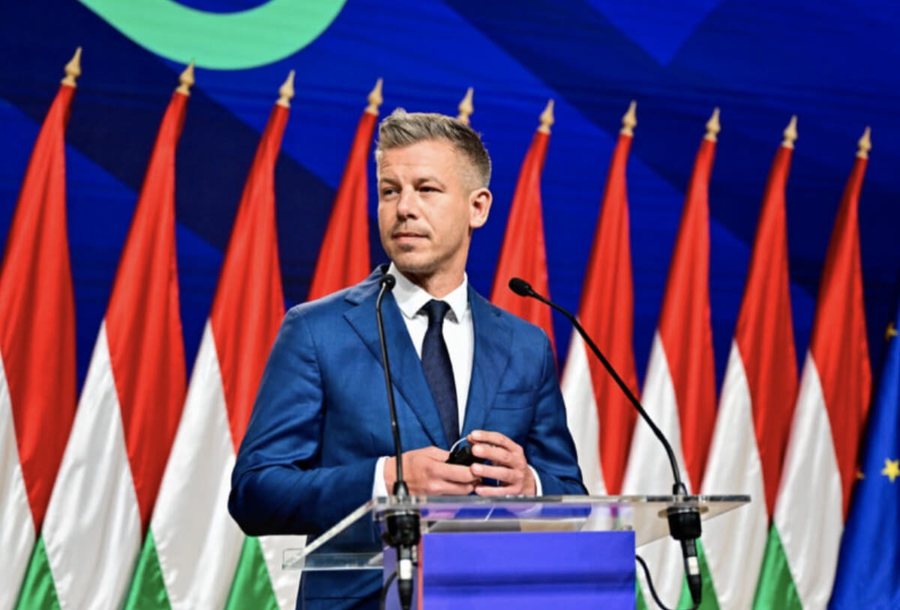
The Hungarian prime minister warns that delays to Balkan countries could damage the European Union's credibility, as the debate over enlargement and Ukraine intensifies in Brussels...
The debate over the future of European Union enlargement has received new political impetus after statements by Hungarian Prime Minister Peter Magyar, who stressed that the Union should prioritize the Western Balkans over Ukraine. His comments come at a time when Berlin is trying to reshape the EU’s strategic approach towards Kiev and the Balkans, following German Chancellor Friedrich Merz’s recent proposal for a special partnership framework that would include Ukraine and countries in the region.
In an interview with the Austrian news agency APA in Vienna, Peter Magyar said that there can be no different criteria or a “two-speed” accession process within the European Union. According to him, all candidate countries must go through the same institutional procedures and meet the same requirements. He added that this position reflects broader concerns shared by some other EU member states.
The Hungarian Prime Minister stressed that the Western Balkan countries have spent years harmonizing their legislation and policies with the European Union's acquis communautaire, making significant political and economic commitments in the process. He warned that the European Union risks losing credibility in the region if it continues to delay the European perspective of the Balkan countries, while politically opening the door to new candidates.
Magyar's statements are part of a wider European debate on how to balance geopolitical support for Ukraine with maintaining the coherence of the EU's enlargement policy. Friedrich Merz's government has sought to link Ukraine's security to a new cooperation framework that would also include the Western Balkans. Budapest, however, insists that the EU cannot ignore commitments made to countries that have been in the accession process for years.
Speaking about the possibility of Ukraine's membership, Peter Magyar was cautious about the timeline, estimating that even under the most favorable conditions the process could not be completed for at least another decade. He also added that, if Ukraine meets the required criteria in the future, Hungary will organize a referendum on its EU membership, underlining the importance of political and social legitimacy in such a decision.
The Hungarian prime minister also linked the enlargement debate to the European Union's migration policy, reiterating Budapest's support for strengthening the protection of the EU's external borders. Referring to the union's new pact on migration and asylum, he expressed Hungary's opposition to mandatory mechanisms for distributing asylum seekers, arguing that the European Union should focus more on the fight against irregular migration.
Despite political differences on the Hungarian domestic scene, the positions expressed by Peter Magyar on enlargement, Ukraine and migration show considerable similarities with Budapest's long-term approach under Viktor Orbán, especially regarding the priority given to the Western Balkans and the strict protection of the European Union's external borders.
Peter Magyar's statements reflect the different approaches emerging within the European Union regarding the future of enlargement and the bloc's geopolitical priorities. At the same time, they underline the strategic importance that some member states continue to attach to the Western Balkans, at a time when the EU is struggling to balance commitments to the region with long-term support for Ukraine. / Pamphlet /


I pari Hungarez qe qenka i paster e i ndershem.