


 Shkruar nga Pamfleti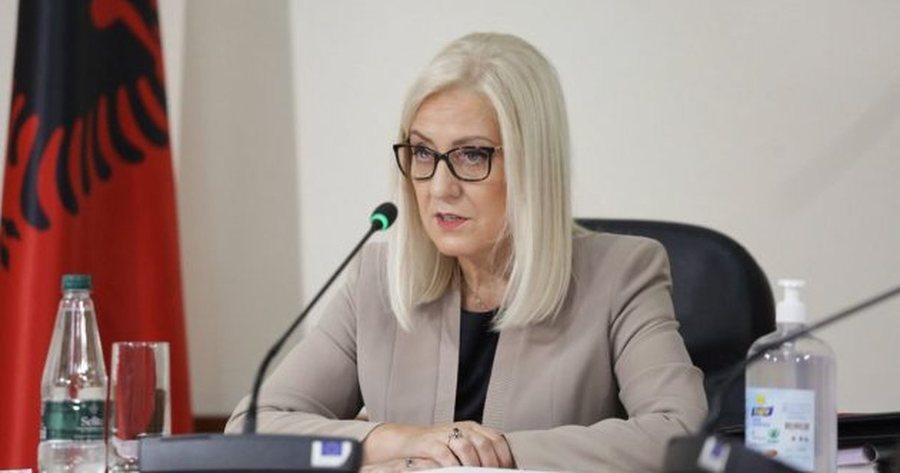
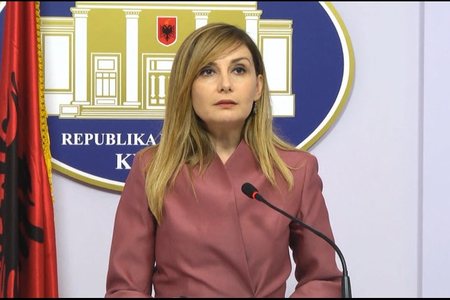
The Speaker of the Assembly, Lindita Nikolla, as a result of the tense situation created in the parliament, appeals for reflection.
Nikolla said that the opposition has a chance to restore the demands for investigative commissions after the entry into force of the new law.
The head of parliament also underlined that the Parliament is not in crisis and that all this anomaly created in the plenary sessions by the democratic deputies has come as a result of the deadlock in which the Democratic Party is.
Her statements were made in an interview for Top Channel.
The Albanian parliament, since 2023 and until now, continues in a prolonged crisis, one of the most serious of these 33 years, no parliamentary sessions are held, there are whistles, noisemakers, exceptions, etc. Why do you think this crisis happened, in your opinion?
Nikolla: I would like to say that it has not turned into a parliamentary crisis, because a parliamentary crisis would mean that the Assembly of Albania does not function and does not exercise its constitutional duty to make decisions, we are not in these conditions. We are definitely in a situation where the normality, the development of the parliamentary sessions is not in accordance with the regulation of the Assembly, where the members of the opposition violate the regulation and the Code of Ethics. And where, let's say healthy political debate for the adoption of draft laws is excluded. Let me tell you that since the start of this legislature and until the moment we speak, there has been a deep crisis in the Democratic Party - since September 2021, which is being outlined and is trying to be posed as a parliamentary crisis. It is an internal crisis of the Democratic Party. The opposition has every right to use every democratic and constitutional means to exercise its functions, but in no way to bring the street to Parliament, or the alley to Parliament, or to block the work of other deputies who do not think the same as them.
However, the crisis within the opposition is clear. But you as the Parliament, you as the leader of the Parliament, leave this thing in abeyance and do not make a decision to determine to whom belongs the head of the parliamentary group, or all the institutions that depend on the Assembly?
Nikola: I understood you, I have not left anything pending. In this position, I am the first among equals, I am not even a leader of a political formation, and as such I have no authority to decide more than who is the chairman of the parliamentary group of a political party. It is the prerogative of the political parties with their internal rules to set the parliamentary conditions, such as parliamentary group elections, who will be their political leader. And definitely the self-declaration of every deputy in the Parliament of Albania. So that in this sense of both the regulation of the Assembly and the constitution, the ball is not in the court of the President of the Assembly. The ball is in the court of the democratic party, they are in conflict. They have addressed the court. They have to resolve this deadlock with their internal rules and then the President of the Assembly has the obligation to notify the Assembly and all other structures.
Parliamentary investigative commissions have been a right of the opposition...
Nikola: Your question is correct. In fact, there was an investigative commission from the opposition, I want to say in response to this question, that the head of the Assembly is not the head of any political group or political force in the Assembly. He is the head of the institution and the plenary sessions, as such he takes care to create all the administrative and infrastructural conditions, and the procedures of the Assembly's regulations, so that all deputies have the opportunity to exercise their constitutional duties. And in this sense it is definitely a duty. The President of the Assembly has no political decision-making to express, and in this sense, it is the parliamentary groups, the political forces, which read the constitution and the decisions of the Constitutional Court, judge on these decisions and take their decisions. At the moment we speak, we have a new law on investigative commissions that also reflects the decisions of the Constitutional Court. And I believe that maybe it is a moment of reflection to continue further with investigative commissions from the opposition side.


Lini një Përgjigje