


 Shkruar nga Pamfleti
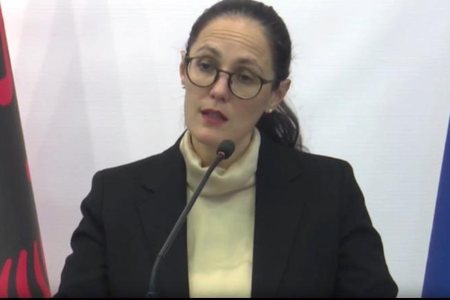
During a high-level roundtable organized by the Westminster Foundation on strengthening democratic governance and transformative reforms, Democratic Party MP Jorida Tabaku expressed concerns about the functioning of the legal system and the role of Parliament in ensuring accountability.
According to her, the experience in the Assembly has shown a deep structural problem: the distance between approved laws and their implementation in practice is not accidental.
Tabaku argued that a good part of the legislation, especially in the fight against corruption, is drafted more to fulfill the formal requirements of European integration than to bring concrete results.
She emphasized that, although on paper the legal framework often complies with European Union standards, the lack of real implementation has brought limited effects and reduced confidence in reforms.
Another concern raised by her is related to the weakening of the oversight role of Parliament. According to Tabaku, the Assembly has become a formal institution, often acting as a “notary” of government decisions. She cited as problems the lack of public consultations, the frequent use of expedited procedures and the practice of submitting draft laws by majority MPs to avoid institutional filters.
"These practices weaken the quality of legislation and create space for laws oriented by narrow interests," she said.
Regarding the European integration process, Tabaku underlined that it requires real political will and not just formal fulfillment of criteria. According to her, marginalizing the opposition and bypassing democratic procedures harms the credibility of reforms and negatively affects the path towards the EU.
Focusing on Post-Legislative Control, she emphasized that this mechanism remains limited in effectiveness, especially when the government does not take into account the findings or acts contrary to them.
“The issue is not just the existence of mechanisms, but the will to actually implement them,” Tabaku emphasized.
The MP also raised concerns about the lack of detailed analysis on Public-Private Partnership contracts and concessions, which have a direct impact on public finances. According to her, control should include not only the implementation of laws, but also the process of their adoption itself.
"If the Assembly continues to adopt laws without reflection and analysis, without learning from mistakes, then it risks remaining a formal institution, with no real role in controlling power," she said.
In conclusion, Tabaku emphasized that the main challenge is not the lack of laws, but the lack of will to implement them and to build functional institutions that guarantee accountability. According to her, without an active Parliament in the oversight function, the fight against corruption and the European integration process remain unfulfilled.





Lini një Përgjigje