


 Shkruar nga Pamfleti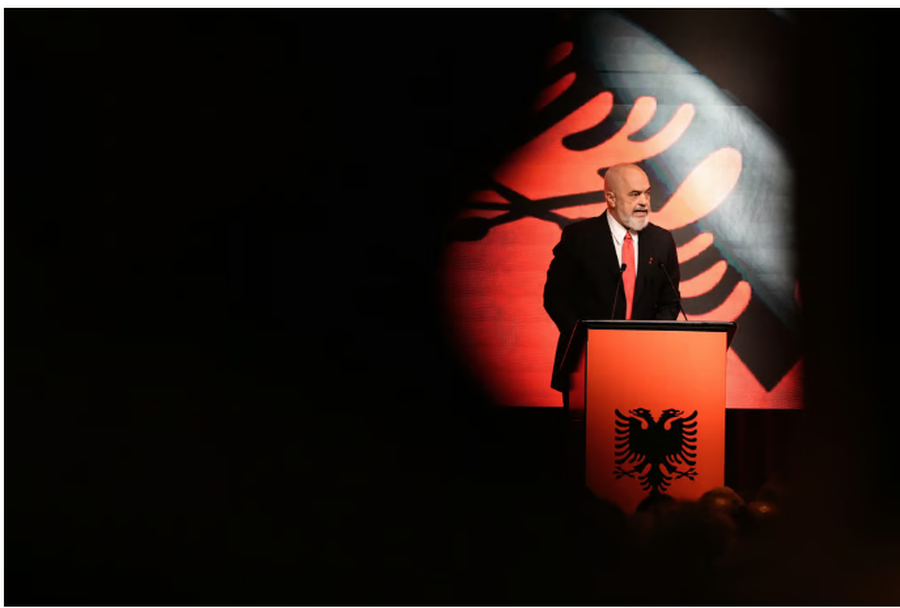
An escalating confrontation across the Atlantic could spell trouble for the candidate country...
A growing clash between Brussels and Washington threatens to overshadow Albania's efforts to join the European Union as it faces a critical choice.
Public and private messages from allies of US President Donald Trump about the country's future trajectory and his plans to implement major economic reforms as part of the EU membership application submitted in 2009 are cause for concern, according to two EU officials, who spoke on condition of anonymity.
Socialist Prime Minister Edi Rama, who has governed Albania since 2013, has made Albania's EU membership by 2030 a key part of his campaign ahead of the May 11 parliamentary elections.
The center-left politician has even unveiled an Albanian EU passport and promised that citizens will have the right to travel, study and work across the continent.
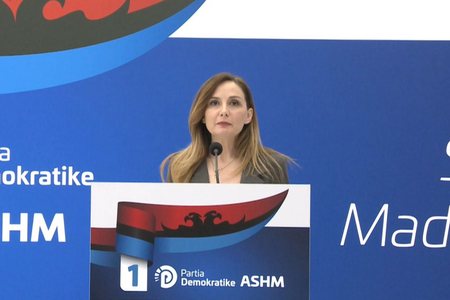
Meanwhile, the Democratic Party of Albania, the largest opposition group opposing Rama's government, hired former Trump campaign manager Chris LaCivita in February to lead its political strategy. The PD has led protests claiming that the vote would be neither free nor fair due to Rama's influence over the country's institutions, while the TikTok platform was banned by the government ahead of the election.
LaCivita told Politico last month that Europeans were "stupid" and accused Rama of being a "puppet of George Soros."
According to LaCivita, Democratic Party leader Sali Berisha "is a true friend of the United States and will work successfully with President Trump and the United States," while Rama's policies have meant "Albania is losing its best. Young people and professionals are leaving."
But, asked by Politico whether the US administration was putting unnecessary pressure on Albania to change its pro-European course, Rama responded via text message that the hypothesis was "fake news."
Transatlantic problems
As part of the EU accession process, the Balkan nation will need to harmonize its economic rules with Brussels - just as Washington intensifies its trade war with the bloc.
Nancy VanHorn, chargé d'affaires at the US Embassy in Albania, last week hosted a meeting with representatives of the American Chamber of Commerce and "discussed how a more favorable investment climate can attract a greater US presence in the local economy," according to an official announcement.
A European Commission spokesperson insisted that as a candidate country, Albania already has access to "thriving" investment opportunities.
"Candidate countries want to join the European Union because they see it as the most important and reliable way to ensure their long-term peace, stability and prosperity. Ultimately, it is up to each country to decide about its future and which path it wants to take," the official said.
Key reforms as part of the EU accession process "also contribute to the creation of a stable and predictable economic and legal system that is conducive to attracting foreign investment," the spokesperson added.
The EU's top diplomat, Kaja Kallas, held talks with Rama earlier this month in Tirana. "It is vital to maintain the high pace of reforms. I understand that reforms are always quite difficult," she said, adding that Albania's future is in the European Union.
According to Ivana Stradner, an expert on foreign interference in the Balkans and a researcher at the Foundation for Defense of Democracies, it would not be surprising that some with ties to the White House had sought to warn potential member states about joining the EU, given that President Trump has claimed that the bloc exists "to rip the United States off" on trade.
However, she added, the administration would be better off "fully supporting Albania's accession to the EU as it would contribute to the rule of law in the country and protect US investments and businesses in Southeast Europe."
Kreshnik Çollaku, a Democratic Party MP who serves on the Albanian Parliamentary Committee for Foreign and European Affairs, insisted that the decision to engage Trump's former campaign manager only shows that "our relations with the US have been normalized and strengthened."
He denied that any "relevant figures" from his party had held talks with Washington about leaving the accession talks.
"You can't put a price on Albania's EU integration. Membership has been a strong 34-year aspiration for the country and is intrinsically linked to our identity," he added. / Adapted from Politico/


Lini një Përgjigje