


 Shkruar nga Pamfleti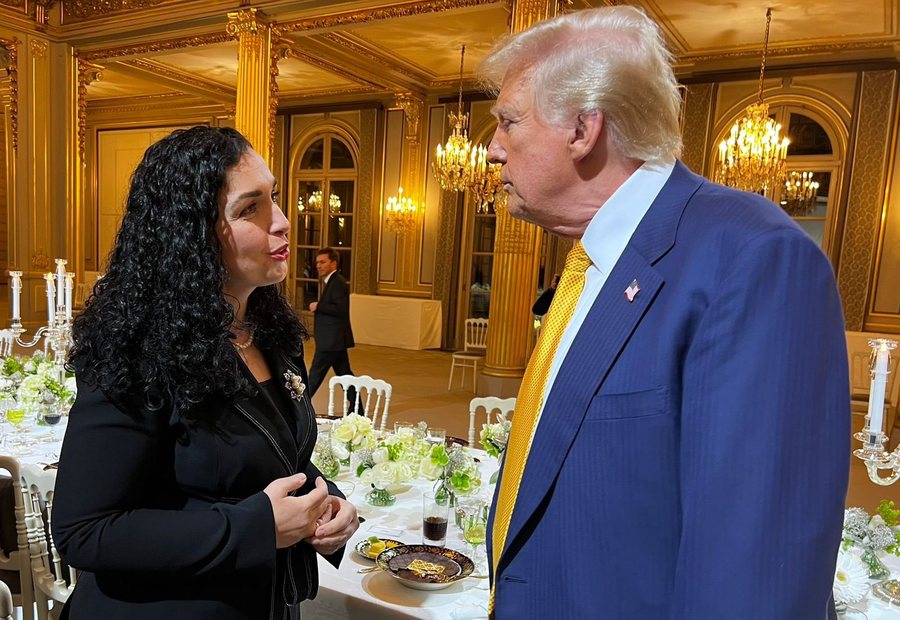
The letter sent to President Trump by two US congresswomen has caused strong reactions in Serbia.
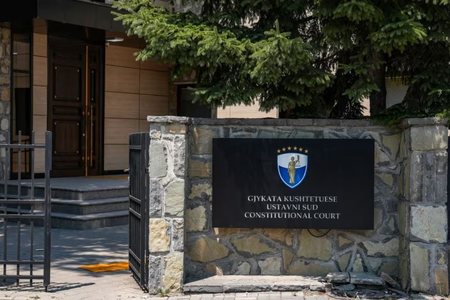
Since August 8, Kosovo has been awaiting another ruling from the Constitutional Court, following the failure of its elected representatives to constitute an Assembly after 54 attempts. Until this legal decision is made, Kosovo remains mired in political crisis, with uncertainty as to whether an agreement will be reached or whether the country will head towards early elections.
Despite the lack of a functioning government, lobbying efforts to finalize an agreement between Kosovo and Serbia have continued internationally. In May, two US congresswomen, Republican Claudia Tenney and Democrat Chrissy Houlahan, visited both countries and jointly sent a persuasive letter to President Donald Trump. In their message, they urged him to use his significant influence in the region to help facilitate a normalization agreement between Kosovo and Serbia, an outcome they believe would bring stability to the Balkans. They even proposed a possible visit to the region, accompanied by negotiations.
In their letter, the congresswomen highlighted President Trump’s popularity in both Kosovo and Serbia, noting that his approval ratings in the region are among the highest in Europe. They concluded by asserting that with Trump’s direct involvement, a lasting peace agreement and mutual recognition between the two countries is fully achievable.
It remains uncertain whether this issue will be high on President Trump’s immediate agenda. However, history has shown that U.S. engagement in Kosovo-Serbia relations has often led to significant developments. The key point is that any renewed engagement must include a clear articulation of the origins of the conflict, emphasizing who was the aggressor and who suffered the genocide. The narrative should not be rewritten to favor historical revisionism. Serbia has invested heavily in recent years in campaigns to distort the record of the wars in the Western Balkans, including efforts to obscure its role in the Srebrenica genocide and the broader conflict in Kosovo. Victims should not be forced to return to a battlefield reshaped by propaganda.
President Trump has been making frequent references to Kosovo-Serbia relations recently. During a meeting with NATO Secretary General Mark Rutte, Trump cited Kosovo and Serbia as one of several instances where he claimed to have prevented a potential war. This statement could be an early indication of a renewed diplomatic initiative led by the US President.
Meanwhile, the letter sent to President Trump by the two US congresswomen has caused strong reactions in Serbia. The "People's Power" movement and other groups have asked the Serbian Ministry of Foreign Affairs to immediately distance itself from this initiative sent to Trump.
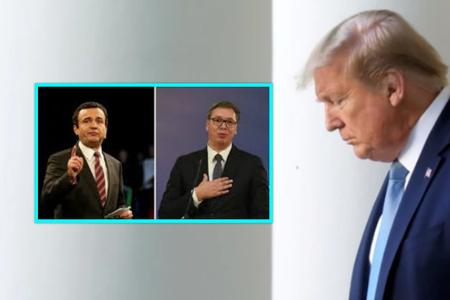
The effectiveness of Trump’s mediation efforts was previously demonstrated in the Washington Accord, signed at the White House on September 4, 2020. This agreement, brokered by Trump, involved Serbian President Aleksandar Vučić and Kosovo Prime Minister Avdullah Hoti. In footage from the event, archived on Trump’s White House YouTube channel, Vučić appears visibly uncertain about the content of the document he was signing, particularly when Trump mentions Serbia’s intention to move its embassy to Israel. Serbia later backed out of this commitment, citing changes in national interest following Israel’s recognition of Kosovo.
However, the agreement to normalize economic relations between Kosovo and Serbia was hailed as a success. Kosovo fulfilled almost all of its obligations under the agreement, including establishing diplomatic relations with Israel, a move publicly announced the same day the agreement was signed.
As has been emphasized in previous analyses, a direct and strategic intervention by the United States remains essential to secure a final and lasting agreement between Kosovo and Serbia. The European Union, despite continued efforts, including the Franco-German Plan proposal, which Kosovo has accepted in principle, has struggled to deliver a comprehensive and workable resolution. In this context, renewed US engagement, potentially led by President Donald Trump, could reinvigorate the stalled dialogue and inject the political will needed for progress. Its previous involvement in the Washington Agreement demonstrated the ability of American diplomacy to produce tangible results even within a highly complex geopolitical environment.
However, any future agreement must go beyond technical and economic normalization to confront the deeper historical and moral underpinnings of the conflict. Addressing the legacy of war crimes, affirming the aggressor-victim dynamic, and countering ongoing attempts at historical revisionism by Serbian state narratives are essential components for achieving a lasting peace. International mediators must ensure that justice and historical truth are not sacrificed for the sake of a quick compromise.
Ultimately, resolving the Kosovo-Serbia dispute requires a multidimensional strategy, one that integrates principled diplomacy, international legal standards, and a long-term commitment to regional reconciliation. Whether Trump or another Trump-appointed U.S. representative is at the helm, the credibility of any mediation process will rest on its ability to secure not only diplomatic recognition but also lasting stability and mutual trust.
In an era of global uncertainty and rising geopolitical tensions, a renewed American focus on the Balkans, particularly on the Kosovo-Serbia issue, should not be dismissed as coincidental. Rather, it represents a timely and strategic opportunity to achieve long-awaited progress in one of Europe’s most enduring conflicts./ Adapted from “Pamphlet” by “ Robert Lansing Institute ”




Lini një Përgjigje