


 Shkruar nga Daniel Serwer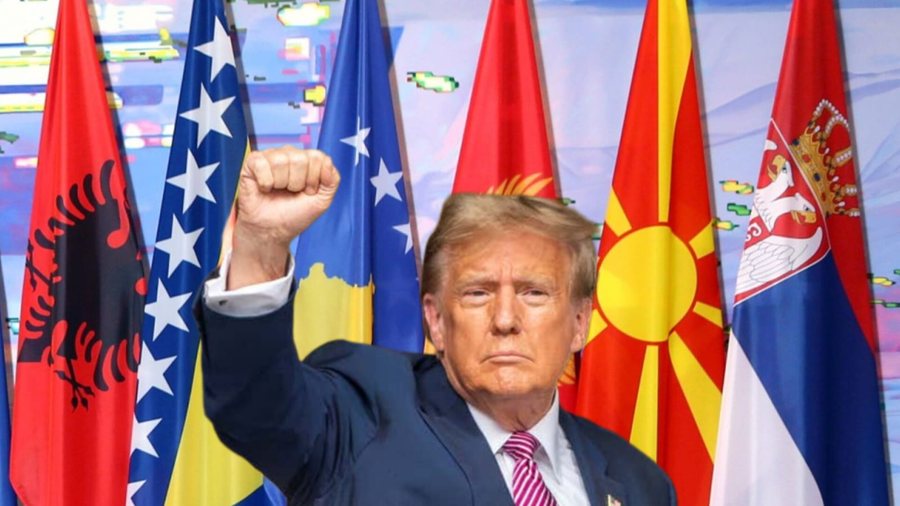
Trump's reliance on Richard Grenell for advice on the Balkans and his son-in-law's investment in Belgrade will guarantee support for Serbia's ambitions.
In the three Balkan countries, Kosovo, Bosnia and North Macedonia, the US and the EU are in competition with Russia and China. The Russian objective is to destabilize and thereby cause Washington grief. It does this by using politicians in Belgrade, including the President, as proxies. Serbia seeks the dominance of the Serbian population in neighboring countries. This target of the "Serbian world" is a carbon copy of Putin's "Russian world" that justified the invasion of Ukraine.
The Chinese are looking to use the Balkans, particularly Serbia, as a trade route to the EU, which is still the region's (and Serbia's) main trading partner. The US states that it wants to see all the Balkan countries in the Western camp. But Washington has turned a blind eye to Serbia's eventual turn to the East in the past two years. Belgrade happily receives arms from Russia and investments from China. The EU claims that it wants all the states of the Western Balkans to become members, but this prospect is far away. Meanwhile, Brussels fails to use sanctions and even verbal punishments against those who stand in the way of EU membership.
Macedonia
Moscow will be pleased with the new Macedonian government. It includes a deputy prime minister who is a staunch Russophile, as well as two others close to Moscow. A Hungarian bank said Russian financing provided a 1 billion euro loan to the new government shortly after it was sworn in. The newly installed president has refused to use the country's official name, North Macedonia. The 2018 agreement with Greece to use the name was a major EU achievement.
The new prime minister in Skopje is still trying to emphasize his western orientation, his ambition for EU membership and North Macedonia's loyalty to NATO membership. His Albanian coalition partners will insist on these points. A deputy prime minister can be either someone important or someone the prime minister wants to keep an eye on.
Macedonia's biggest current international issue is with the EU member state, Bulgaria. Sofia insists that Skopje recognize in its constitution fewer than 1,000 citizens who identify as Bulgarian. The new Prime Minister campaigned against this. But he may be willing to do so in the final phase of EU accession, when the Bulgarians can no longer raise additional issues. Meanwhile, some optimists hope that the Bulgarians will be willing to be absent from the decisions on Macedonia's accession process. This is what Hungarian Prime Minister Orban did about EU aid to Ukraine.
Bosnia is divided, as always
The Russians will also be pleased with the current situation in Bosnia and Herzegovina. Serbs and Croats there often combine to do things that please Moscow, including subverting the judicial system. The Europeans have been reluctant to use their considerable influence in Bosnia, thinking that the accession process will fix everything. Brussels has not sanctioned the Serbian leader, despite Washington's pressure. Moscow seems willing to keep giving him money, with little chance of getting it back.
The Bosniaks and other participants in the current government of the 51% of the country they control jointly with the Croats owe their position to the Americans. But they are a weak cane to lean on. While the economy of the Federation is doing better than that of the RS, its policy is still far from functioning.
Prishtina is running without benefits
Unlike Belgrade and RS, the authorities in Pristina have no way to hedge their bets. Kosovo necessarily "becomes" (this is the technical term) with NATO and the EU.
But the current prime minister is unhappy with Washington and Brussels for appeasing Belgrade. The results are strongly felt in the US-sponsored and supported "dialogue" between Pristina and Belgrade. Kosovo wants Belgrade to withdraw a letter denying an agreement on political normalization reached last year. He demands that Serbia sign the agreement and hand over for trial the self-confessed mastermind of a September 2023 terrorist plot. The prime minister has made these legitimate wishes a condition for re-engaging in a dialogue that has produced precious few results. This angers the EU and the US, which see dialogue as an end in itself, not just a means.
The result is irregular. Kosovo is in dialogue mainly for the improvement of relations with the USA and the EU. But its conditions for participation are doing the opposite. This is not the first time that Prishtina has displeased her closest friends. Somehow it must find a way to make demands of Belgrade without alienating Brussels and Washington.
American leadership is crucial, but so is European energy
Most everyone I spoke to in the Balkans understood that the November elections in America will be decisive for the Balkans. President Trump favored the division of Kosovo and will undoubtedly continue in this direction if re-elected. Even without doing anything, his willingness to hand over part of Ukraine to Russia will reopen the issue of division in the Balkans.
Trump's reliance on Richard Grenell for advice on the Balkans and his son-in-law's investment in Belgrade will guarantee support for Serbia's ambitions. This would accelerate challenges to the borders of Serbia, as well as Bosnia and possibly Montenegro and Macedonia. Such challenges mean violence, ethnic cleansing and ultimately war. The simmering Balkans will boil over into instability and even war if Trump gets another chance to pursue ethnic division.
President Biden, although in my opinion is very soft towards Serbia, has maintained nominal support for the sovereignty and territorial integrity of all Western Balkan states. In a second term, he must course-correct. He should give up the political normalization between Kosovo and Serbia, which is a bridge too far, and strengthen the policy towards Serbia. He should also try to overcome the Dayton constitution in Bosnia and recommit to inter-ethnic democracy in Macedonia. The appointment of Estonia's anti-Russian prime minister as the EU's new high representative for foreign affairs will give Washington a much stronger cane to lean on than the outgoing Josep Borrell. It will be much more powerful in opposing Moscow's influence./ Adapted "Pamphlet" from "PeaceFare"




Lini një Përgjigje