


 Shkruar nga Daniel Serwer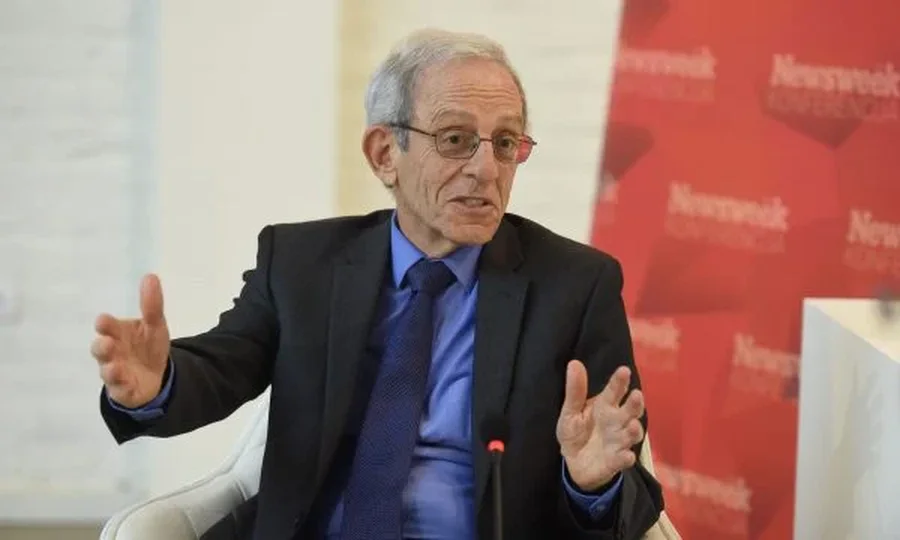
A 51-page preliminary investigative report from the Republic of Kosovo is already circulating in the US government...
A month ago, Kosovo police prevented an attempted uprising near a Serbian Orthodox monastery in Banjska, in the northern part of the country. A 51-page preliminary investigative report from the Republic of Kosovo is already circulating in the US government.
A paramilitary group of about 80 cadres recruited, trained and specially designated for this purpose carried out the attack, with heavy weapons provided by Serbia.
Belgrade's aim was to prompt a Kosovo police response to the shootings from the Banjska monastery that could be used to justify a Serbian military intervention, ostensibly to rescue endangered Kosovo Serb citizens and pilgrims from Serbia.
The plan included challenging, threatening and possibly killing members of KFOR as well as the Kosovo Police, who lost an officer to a land mine.
The chain of command included the Serbian state, whose president and security structures are legally and morally culpable.
Dozens of perpetrators who escaped to Serbia are now protected by Serbian justice and Belgrade. There is still a risk of a recurrence, as evidenced by the continued offensive posture of the Serbian security forces surrounding Kosovo, as well as the intense pro-occupation propaganda campaign that continues inside Serbia.
Some details from the investigation related to the attack in Banjska
The Serbian Armed Forces trained paramilitary perpetrators over a period of two years at the bases of the army and the Ministry of the Interior. Humers donated by the US were used in the training. Kosovo authorities have captured detailed plans based on maps supplied by the military to paramilitaries to open roads into Kosovo for weapons and supplies from Serbia. Serbian special forces and drones entered Kosovo on the eve of the uprising, and medical ambulances transported weapons into the country.
The operation was led by Milan Radoicic, at the time the vice president of the Belgrade-sponsored political party in Kosovo, a close associate of Serbian security officials and a political ally of President Vucic. The paramilitaries used camouflaged vehicles with KFOR labels and fake license plates. The plan included withdrawing the Kosovo Police blocking the roads, shooting them from the Banjska monastery and provoking an attack that would serve as a pretext for Serbian military intervention.
The paramilitaries were well equipped with military-grade weapons almost entirely made in Serbia. These included 66 AK-47s, 9 machine guns, 6 sniper rifles, 41 anti-tank rocket launchers, 2 automatic grenade launchers, 8 anti-tank mines and 122 hand grenades, along with appropriate ammunition and over 350 explosive units. There is documentation that some of these weapons were definitely supplied by Serbia.
Serbia continues to promote violence against Kosovo
Since September 24, Serbia has continued to threaten Kosovo with violence. It has honored the paramilitaries involved in the foiled plot and declared a day of mourning for the three terrorists who were killed. High-production-value graffiti in Serbia, including soccer stadiums, and in Kosovo's four Serb-majority northern municipalities has promoted the idea that Serbian forces will soon return to Kosovo. Serbian armed forces are still on high alert.
President Vucic and the media he controls use the language of hatred when referring to Kosovo, its political leaders and Albanians in general. Ambitions to create a "Serbian world," a pale copy of Putin's "Russian world" that includes Ukraine, are widespread. Serbia has dramatically increased its military exercises with Russia. Belgrade's intimidation of Serbs in northern Kosovo to prevent cooperation with Pristina continues, as do covert operations against Kosovo's institutions.
The terrorist attack did not begin on September 24, and it did not end then either
There have been four previous attacks in northern Kosovo since December 2022. The same units and some of the same personnel were involved, including the attack on KFOR troops in May. None of the perpetrators have returned to Kosovo to face the charges. They are sheltered by the Serbian state and remain available to carry out violent operations in the future. So far, there has been no diplomatic action taken against Belgrade by either the US or the EU, which will encourage Vučić to continue further destabilizing efforts to justify Serbian military intervention in Kosovo.
The exact Russian role in the September 24 plot is still unclear, but Russian support for escalating Serbian efforts to challenge Western resolve in the Balkans is evident. The Russians will not have failed to notice the lack of Western response. Moscow and Belgrade will increase their efforts. /Adapted "Pamphlet" from "Peacfare"


Lini një Përgjigje