


 Shkruar nga Pamfleti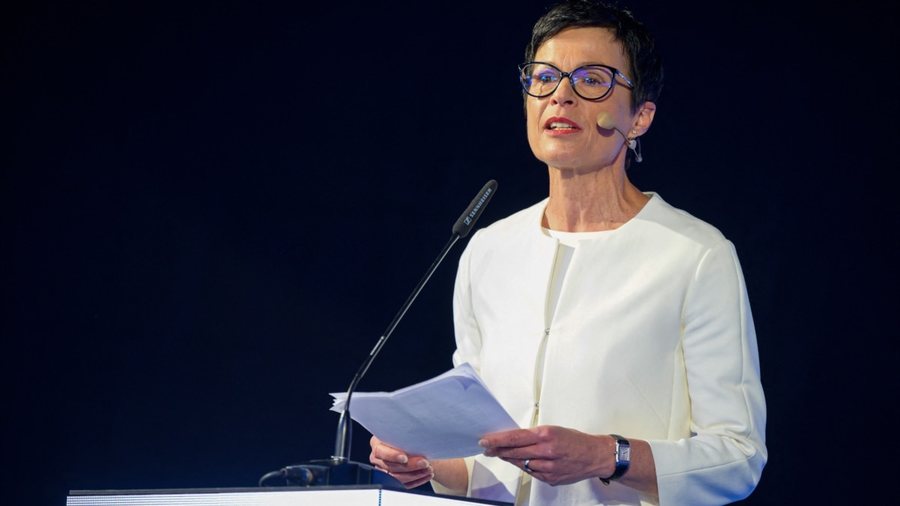
The candidate for Commissioner of EU Enlargement, Slovenian Marta Kos, said on Thursday that she would not follow the trends of territory exchange between Kosovo and Serbia.
She made these comments while speaking at a hearing in the European Parliament (EP), where she answered questions from deputies in the EP's foreign policy committee.
"As for the exchange of territory, no. No. The European Commission and I, if I am confirmed, will not follow these trends", she said after being asked about the ideas for the exchange of territories between Kosovo and Serbia, which, according to the deputy who asked the question, can be returned to the table. after the victory of Donald Trump in the US presidential elections.
The previous Trump administration has said that it would not oppose the exchange of territories between Kosovo and Serbia to resolve the dispute between them, provided that Pristina and Belgrade worked out a "mutually satisfactory solution".
Kosovo has also been asked about its possible role in the dialogue between Kosovo and Serbia.
She expressed willingness to work with Kaja Kallasi, who is expected to be confirmed in the position of representative for EU foreign policy, and to take over the mediation of the dialogue between the two neighboring countries.
"The dialogue is formally in the hands of Kaja Kallas. I will certainly work with him. After knowing this region and the mentality, I want to cooperate in this field. Let's move forward. It's been done very formally so far," she said.
She said that she expects Kosovo and Serbia to implement the agreement on the normalization of relations, which they agreed to at the beginning of 2023 within the dialogue mediated by the EU.
But, Kos warned that "if things don't work out, we have to find a new way", quoting Albert Einstein that "it is madness to keep doing the same thing every day and expect a different result".
From European Parliament sources it is learned that Kos has received the support of the necessary majority in the EP Foreign Policy Committee to exercise the function of Commissioner for Enlargement.
Meanwhile, speaking about the expansion, the candidate for commissioner said that Montenegro and Albania have the possibility to conclude the negotiations for membership in the bloc until 2026 and 2027, respectively.
Kos hopes to get the consent of the commission to be appointed to the post of Commissioner for Enlargement.
She said during the hearing that she will be "committed" to speeding up the enlargement process and that she will maintain as a principle the position that candidate countries should join based on merit and the fulfillment of reforms and conditions for membership.
"Today, for the first time in ten years, there is a real opportunity to bring one or two countries closer to the end of the negotiation process. It may happen that we can conclude the negotiations with Montenegro, close all the chapters, by the end of 2026. With Albania by 2027", she said.
Montenegro has opened all the negotiation chapters and temporarily closed 3. After several years of stagnation, this country restarted the negotiations in June of this year and is now working towards their closure.
On the other hand, Albania opened the first chapter of negotiations for membership with the European Union on October 15.
Kos emphasized that during her mandate, if she is appointed, she will insist that the EU also keep its promises to the countries in the enlargement process.
During the session, she was asked several times, mainly by far-right MPs from the eastern countries of the bloc, about the suspicions that in the past she cooperated with the intelligence services of the former Yugoslavia. She has rejected these accusations.
She was nominated for the post in September by European Commission president-elect Ursula von der Leyen. If confirmed, Kos will replace Oliver Varhely in this position.
The formal confirmation of commissioners will take place at the end of the process when the hearings for all candidates are completed. It is intended that the new European Commission will be confirmed at the plenary session of the European Parliament on November 25 and begin its mandate on December 1./ REL


Lini një Përgjigje