


 Shkruar nga Pamfleti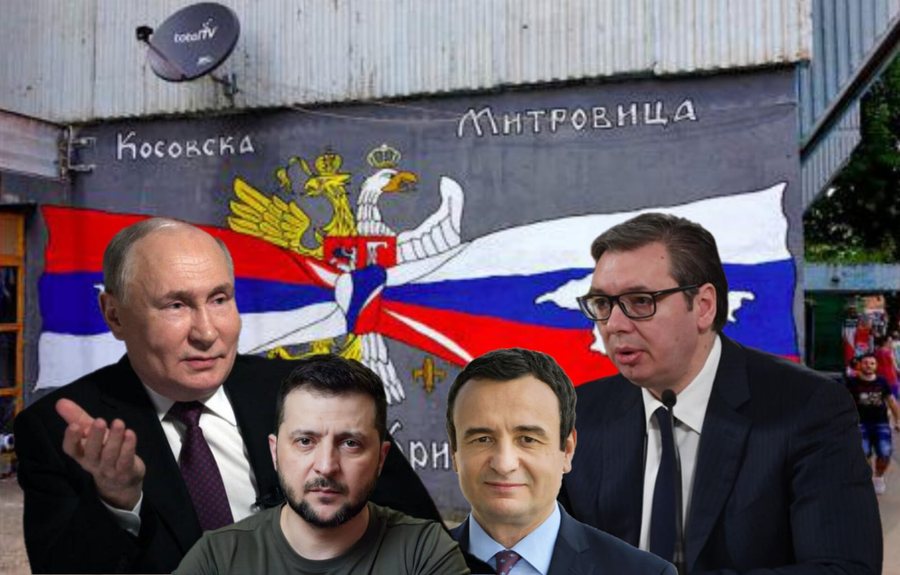
The narratives used by Russia towards Ukraine and Serbia towards Kosovo have many similarities.
"The narratives used by Russia towards Ukraine and Serbia towards Kosovo are very similar", says senior researcher at the Octopus Institute, Bleta Brovina, who has published a scientific paper comparing the narratives used by these two countries.
In an interview with The Geopost, Brovina emphasizes the importance of being aware of misinformation, stressing the need for broad and fair information on these topics which at first sight do not seem important, but which are vital in reality.
" Yes, this month our institute "Octapod" also organized the international conference, which turned out to be quite successful and for the first time this paper was publicly presented, which talks about the expansionist platforms, more precisely about the false narratives that Russia uses against Ukraine and the false narratives that Serbia uses against Kosovo. With the start of the war in Ukraine, attention has been drawn to Ukraine, so there are more scientific publications, but there is also more attention and, unlike in previous years, Ukraine is not much talked about, even in Western universities. that a lot is known about Ukraine and the purpose of this paper was to somehow make a comparison with Kosovo, because the narratives used by Russia towards Ukraine and Serbia towards Kosovo have many similarities, but also have some small differences, which you can explain more beyond what they are ", said the researcher Brovina.
Furthermore, the senior researcher at the Octopus Institute also discovered the similarities between the Russian narratives towards Ukraine and the Serbian one towards Kosovo. She mentions three main points through which they clearly explain the similarities between Russia and Serbia. According to her, both states use history and national identity, victimization and citizenship legitimacy to spread misinformation.
" I have mentioned in my paper the 3 main narratives, it is the historical and national identity narrative used by Russia or Serbia, Russia uses it against Ukraine and Serbia uses it against Kosovo. It is the other narrative of victimization that both countries, Russia and Serbia, use this narrative to portray themselves against their own countries, their own population, and even international partners as victims, which is not true, it is a narrative of fake. And it is the third narrative, it is that of the legitimacy of citizenship and sovereignty, which Russia and Serbia use. Russia to contest the sovereignty and citizenship of Ukraine, while Serbia used Kosovo, in the case of Kosovo, to contest the citizenship of Kosovo and its sovereignty ", explains the researcher.
She also explains the differences between the Serbian and Russian narratives. According to the study, Russia has used the same religion as Ukraine to assimilate its population. Such a thing has not been made possible by Serbia with the Albanian population of Kosovo, since they do not share the same religion. Under these conditions, Serbia has found another alibi, raising the narrative that Kosovo's citizens have come from Albania to territories it considers its own.
"On the contrary, these are narratives that are divided, towards Kosovo that Serbia uses and towards Ukraine that Russia uses. However, unlike Russia, which uses the Orthodox religion against Ukrainians to build its narrative that they are one people with Russia and completely ignoring the unique identity of the Ukrainian people, Serbia has not been able to do so due to the non-separation of the same religion as the population of Kosovo, for this reason he used a false story that the Kosovar population came from Albania and are descendants.
Here lies the difference between these two, because they cannot use it in this case because of the completely different language and culture, also the completely different religion of the population of Kosovo, Serbia has not been able to build it the way it has Russia. built in Ukraine, but has used another false narrative, which it continues to use, whether for internal purposes, whether for political cohesion, whether for increasing nationalism in Serbia, but also to gain support, whether from our partners internationals, who are helping us a lot for Kosovo to move forward towards its European path. So, we must be careful that these stories are studied and the local, regional, European or wider population is informed about this ", says Brovina.
In the end, Borvina also explained the importance of such studies, which according to her, encourage the increase of Western attention towards Kosovo, which has somehow been neglected since the start of the war in Ukraine.
" These works are very important, as I said earlier, whether from prestigious universities, it is not that they had knowledge, especially when the focus is now greater on Ukraine, Kosovo no longer has the focus as in 1999, but with this work I have noticed that the attention and interest in Kosovo has increased and we, both Ukrainians and Kosovars, are freedom-loving people, oriented towards Europe, towards European integration, therefore it is very important that people are informed about this... It is important to inform the population and awareness of the situation, that the war in Ukraine is not a war of only Ukrainians, it is a war of all of us, it is a war of European values, it is a war that we all have to fight together, our partners international, and come out victorious in these. For this reason, these topics are of a vital nature for the protection of our freedom-loving, liberal and European values" , concluded Brovina. / Adapted "Pamphlet" from "TheGeopost"


Lini një Përgjigje