


 Shkruar nga Pamfleti
After a year without a government in Kosovo, new elections were held on Sunday. The left-wing nationalist party Vetëvendosje won again...
Fireworks and car horns disrupt the peace of the night!
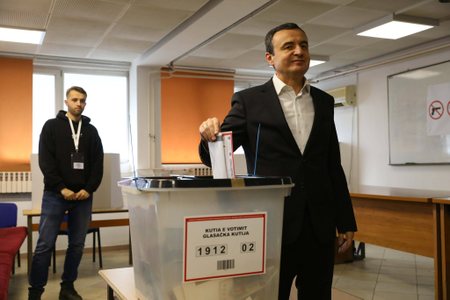
On Sunday evening (December 28), left-wing nationalist Albin Kurti won the second parliamentary elections this year.
His party, Vetëvendosje (VV), received 49.4 percent of the vote, according to preliminary results. This result is 7 percentage points more than in the previous elections in February. After these elections, efforts to form a government failed and VV was unable to reach an agreement with any of the other parties for almost a year. This necessitated new elections.
According to preliminary election results, the Vetëvendosje Movement has secured almost half of the votes. This clarifies the political landscape more than before; for a functional government, the Vetëvendosje would only need to form a coalition with several parties representing ethnic minorities.
Kosovo's electoral system allocates ten seats in its 120-seat parliament to the Serb minority. Ten other seats are reserved for other ethnic groups such as Bosniaks, Turks and Roma. The result sparked jubilation in Kosovo's capital, Pristina. Supporters of the ruling party drove through the city in convoys of cars honking their horns as fireworks lit up the sky.
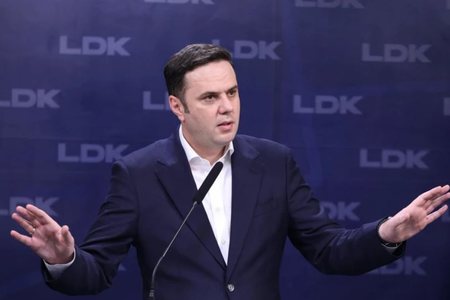
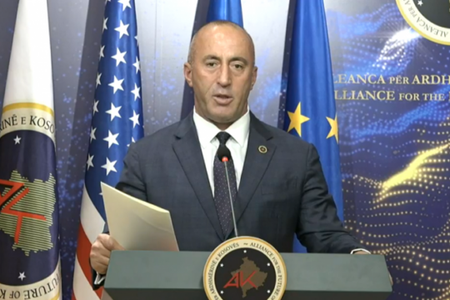
The exact election results have not yet been finalized, but over 90 percent of the votes have already been counted. The Kosovo State Election Commission announced preliminary results as follows: The liberal Democratic Party (PDK) received 21 percent of the vote, the center-right Democratic League of Kosovo (LDK) 13.6 percent, and the conservative Alliance for the Future (AAK) 5.7 percent.
Voter turnout was 45 percent, slightly lower than in February, when 46.6 percent of eligible voters cast their ballots. According to some commentators, VV's strong showing can be attributed, in part, to its mobilizing potential. The timing of the election also likely played a role; between Christmas and New Year, many Kosovars living abroad visit their homeland, including people from Germany.
VV is particularly popular among this group of voters.
The VV has governed Kosovo since 2020. After the governing coalition with the LDK and two Serb parties collapsed after just a month, new elections were held in 2021. The VV secured a parliamentary majority and, with Kurti as Prime Minister, was able to govern alone. Regular parliamentary elections were held on 9 February 2025, but after failing to form a government, new elections have now been held again.
Kosovo is the newest state in Europe. Kosovo attempted to secede from the disintegrating Yugoslavia in 1998. After the war, the region was placed under United Nations administration in 1999. In 2008, Kosovo declared its independence, which is internationally recognized by over 100 countries, including Germany.
Serbia, as the legal successor to Yugoslavia, refuses to recognize its independence. Albin Kurti personally resisted the Serbian and international presence in Kosovo during the 1990s and 2000s and became one of the most prominent figures of the resistance movement. /Adapted from Fr.de/





Lini një Përgjigje