


 Shkruar nga Pamfleti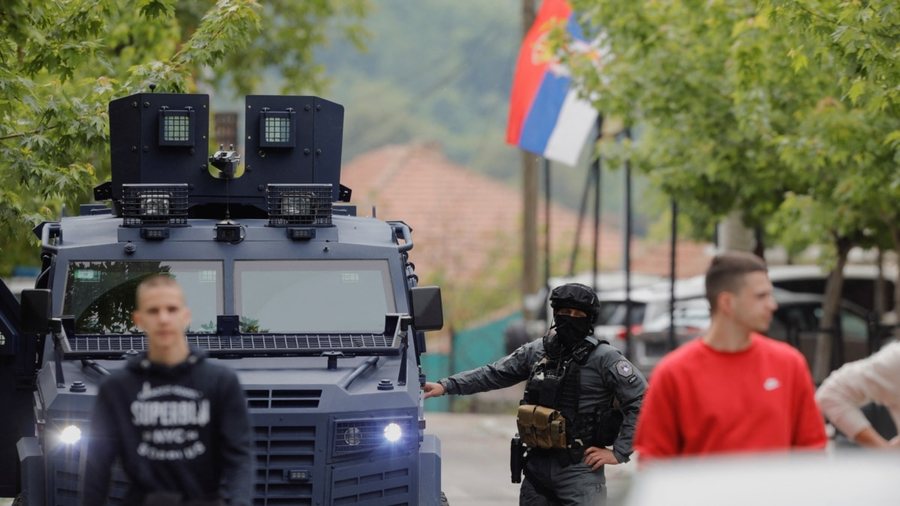
The government of Kosovo announced that it has agreed to reduce the police presence in the north and support the holding of new elections in the four northern municipalities, as part of actions to de-escalate the situation.
All steps, according to the Government of Kosovo, will be "finalized within a two-week period".
This agreement was reached during an informal meeting held in Bratislava between the Deputy Prime Minister of Kosovo, Besnik Bislimi, and the EU's special envoy for the Kosovo-Serbia dialogue, Miroslav Lajçak.
According to the Government's announcement, the police presence in and around municipal buildings in the north will be immediately reduced by 25 percent.
Likewise, Kosovo and the EU have also agreed to undertake some other steps.
" The Government of Kosovo through a public statement supports the holding of early elections in the four municipalities in the north of the country and that after the summer season ", said the Government, adding that the institutions in Pristina express their commitment to ensure the necessary legal basis for the organization of these elections.
Likewise, the Kosovo Police, together with the EU Rule of Law mission (EULEX) and the NATO peacekeeping mission in Kosovo, KFOR, will, as necessary, assess the security situation "in particular to look at the possibility of further reducing the police presence in and around municipal buildings", announced the executive.
"The EU will invite the two chief negotiators to Brussels with the aim of finalizing the sequencing plan for the Agreement towards normalization, after which the implementation of all articles of the agreement will begin," said the Government of Kosovo .
Even the EU has confirmed to Radio Free Europe about the points with which it has agreed with Kosovo.
" This includes the immediate reduction of police presence in and around municipal buildings, conducting regular joint security assessments with EULEX and KFOR as necessary, considering the possibility of further reduction of the presence and not no move is made that could escalate the situation and encourage extraordinary elections, as well as the creation of a legal basis for them" , said the EU.
Regarding the meeting between the chief negotiators of Kosovo and Serbia, REL finds out that it will be held next week.
The European Union had presented several requests for the reduction of tensions in the north, which started at the end of May, after the new Albanian mayors of Zveçan, Leposaviq and Zubin Potok entered the municipal buildings under the escort of the Kosovo Police.
Since then, local Serbs have been protesting in the north, demanding that, in addition to the mayors, the special police units from the north should also be withdrawn.
Even earlier, the heads of state in Kosovo have expressed their readiness to organize new elections in the municipalities in the north, but they have requested that they be prepared, so that there is no boycott.
The elections of April 23, from which the new Albanian mayors emerged in the four municipalities in the north, were boycotted by the Serbian parties and population.
Otherwise, Kosovo has constantly requested that the implementation of the Agreement towards the normalization of relations, which was reached in Brussels on February 27, begin. On March 18 in Ohrid, the parties also reached the Annex for the implementation of this agreement.
The agreement, of 11 articles, does not include the mutual recognition that Kosovo insists on, but requires Kosovo and Serbia to accept each other's documents and symbols, including: passports, diplomas and license plates.
The document requires the parties to implement all the agreements reached so far in the dialogue for the normalization of relations, including the one for the formation of the Association of Serb-majority municipalities in Kosovo, which the Government in Pristina has so far rejected. , on the grounds that it may jeopardize the functionality of the state./ REL


Lini një Përgjigje