


 Shkruar nga Pamfleti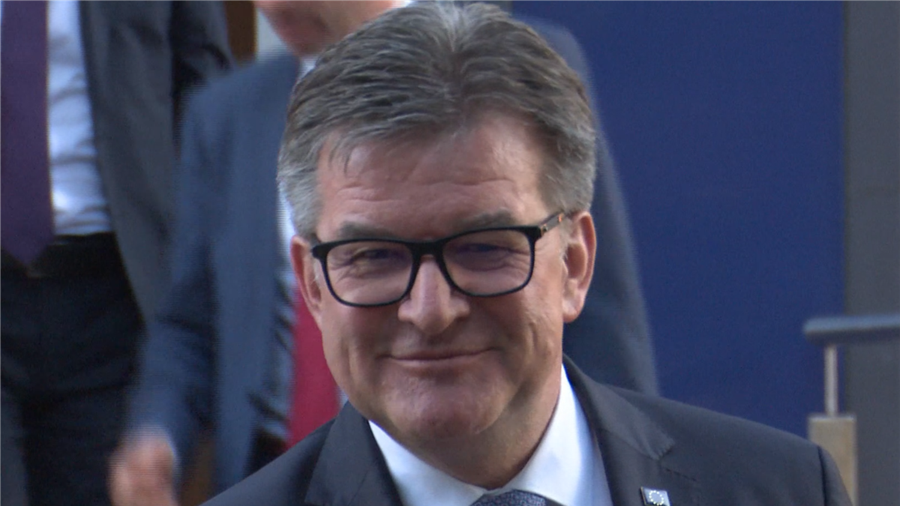
The envoy of the European Union for the Kosovo-Serbia talks, Miroslav Lajcak, said on Monday that the first meeting of the Joint Commission for Missing Persons is expected to be held this week in Brussels.
" Again in Brussels, the focus of this week will be on Missing Persons with the first meeting of the Joint Commission ", wrote Mr. Lajçak on social networks.
The meeting is expected to be held almost a month after the chief negotiators of Kosovo and Serbia, Besnik Bislimi and Petar Petkovic, agreed on the implementation of the declaration on missing persons, which was part of the agreement reached in 2023 in Brussels and Ohrid.
In May 2023, the leaders of Kosovo and Serbia signed a joint declaration on persons missing during the war in Kosovo, through which they pledged to "fully implement obligations" to clarify the fate of approximately 1,600 people about whom nothing is known 25 years after the war.
The statement states that the parties will "cooperate closely in the identification of cemeteries and engage in their excavation, ensure full access to reliable and accurate information that helps in finding and identifying missing persons during the time period from January of 1998 until December 31, 2000".
This, according to the statement, includes "all materials, writings, orders, documents, records and any other type of document, including those considered classified by the relevant institutions of both parties".
This week's meeting, which appears to be the last with the mediation of the European special envoy Miroslav Lajcak, is part of the European efforts to renew the process of normalization of relations that is closely related to the integration aspirations of both sides.
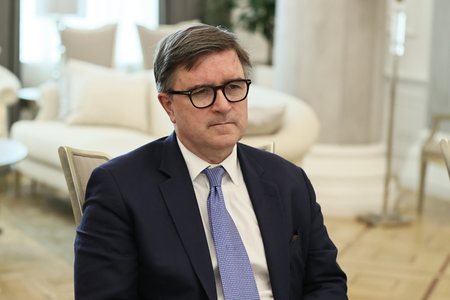
US Assistant Secretary of State for European and Eurasian Affairs James O'Brien said in an interview with the pro-government Serbian newspaper Kurir on Sunday that there is a normal European path to resolving issues between Kosovo and Serbia. He said that with a more active European Union in the region, "both countries understand that they can do some things to facilitate the resolution of problems in Kosovo. They should do this for the sake of their European integration, not as part of some special negotiations."
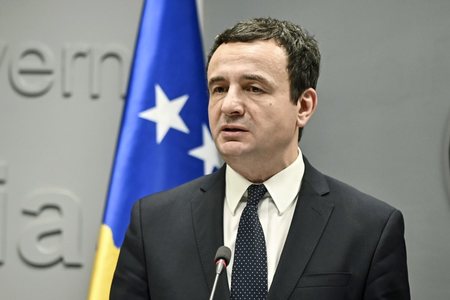
Asked if it will be possible for Kosovo Serbs to live normally while Prime Minister Albin Kurti is in power, Mr. O'Brien said: "I think so," noting that almost every European country has had to face an issue such, a community that feels connected to a neighboring state because of national, religious or historical ties.
"Today, thanks to the very successful work of Miroslav Lajcak and his team in the dialogue, there are outlines of a solution for the life of Serbs in Kosovo with respect for them as a community, so that they can live normally just like, for example, Germans in Italy or Dutch in Belgium. It is a normal thing throughout Europe," said Mr. O'Brien.
At the end of last year, the ministers of the European Union, in a text with the conclusions on the enlargement process, called on Kosovo and Serbia to "implement without delay and without preconditions the agreement on the road to the normalization of relations", stressing that this is a condition for their progress in the bloc integration process.
Kosovo is being asked to immediately begin establishing an association of Serb-majority municipalities, while Serbia is being asked to recognize Kosovo's documents and symbols. These demands are part of an agreement reached nearly two years ago, the implementation of which, despite Western pressure, has so far stalled./ VOA



Lini një Përgjigje