


 Shkruar nga Pamfleti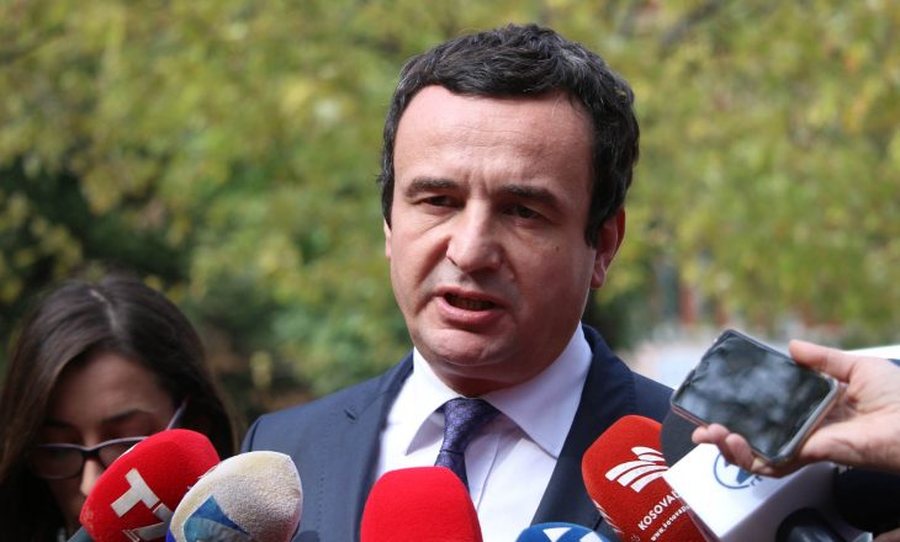
The Russian invasion of Ukraine is changing the political landscape. The President of Serbia, Aleksandar Vucic, although he refuses to join the sanctions against Russia, is allowing Serbian companies to send weapons to Ukraine. America's ambassador to Serbia praises him as a "better and better partner." So it is Kurt who is taking the blame.
'The Economist' has devoted an article to the situation in the north of Kosovo and as it is written in the text "this time the ethnic Albanians of Kosovo are to blame".
The article provides an analysis of the situation that a possible scenario can be hidden behind the crisis in the north of Kosovo and that implicates the Prime Minister of Kosovo, Albin Kurti. Meanwhile, the article states that the Russian invasion of Ukraine has changed the political landscape, where the president of Serbia, Aleksandar Vučić, although he does not agree to join the sanctions against Russia, is allowing Serbian companies to send weapons to Ukraine. This move by Vucic has earned him praise and Kurti is the one taking the blame.
Full article:
"A dominant escalation against previous escalations", this is how Gabriel Escobar expressed himself about the situation in northern Kosovo. Escobar is an American diplomat tasked with helping the EU to calm relations between Serbia and Kosovo, a republic of under 2 million inhabitants which most of the western world recognizes as an independent country, but which Serbia still considers its land.
On June 14, three Kosovo police officers were arrested by Serbian police, although both sides dispute which side of the border they were on. On June 26, they were released. But this last of many Kosovo-Serbia crises continues.
Kosovo police have arrested local Serbs who, they say, attacked NATO peacekeepers (KFOR) and journalists. Police also claim to have found a large cache of weapons in the northern part of Kosovo, where most of the people are ethnic Serbs. Ethnic Albanians are a large majority elsewhere. US and EU diplomats are battling the crisis, fearing another violent incident could spark a wider conflict.
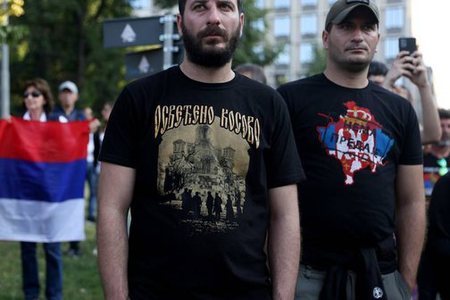
Last November, Kosovo Serbs resigned from the country's institutions, including the police. Elections in the Serb-populated north to replace mayors who had resigned were boycotted by the Serbs, so ethnic Albanians were elected instead, often by only a small proportion of voters. When the new mayors tried to enter their offices in May, local Serbs protested and a mob attacked NATO peacekeepers trying to hold the demonstrators back. The Serbian government in Belgrade has until now kept Serbian paramilitary-criminal groups in northern Kosovo under control, but has recently appeared less active in doing so.
Escobar and Miroslav Lajcak, the EU negotiator, had made a breakthrough in the spring by securing an agreement to implement a plan where Serbia would treat Kosovo as a state in all but name. In return, Kosovo's small Serb minority would be granted a form of autonomy, which was promised in a previous agreement in 2013.
But Serbia broke the new agreement by trying to block Kosovo's membership in the Council of Europe. America and the EU then asked Albin Kurti, the prime minister of Kosovo, not to physically install the mayors of the northern ethnic Albanian municipalities in their municipalities. He did it anyway. Backed by ethnic Albanian police, he is changing the status quo of the past 20 years, alarming Kosovo Serbs. A former political prisoner in Serbia, Kurti has discovered that playing hardball pays off.
The Russian invasion of Ukraine is changing the political landscape. The President of Serbia, Aleksandar Vucic, although he refuses to join the sanctions against Russia, is allowing Serbian companies to send weapons to Ukraine. America's ambassador to Serbia praises him as a "better and better partner." So it is Kurt who is taking the blame.
A diplomat says he doubts Kurti is likely to keep his promise of autonomy for Kosovo Serbs and suggests the crisis in the north may help him mask the fact that he has failed to deliver on many of his promises elsewhere. The troubles in Kosovo could also be a welcome distraction for Vucic as he faces demonstrations at home.
For 30 years America has been the biggest benefactor of Kosovo Albanians. In 1999, an American-led NATO intervention ended Serbian rule in Kosovo. Now not only the Americans have come out against Kurti, but also Edi Rama, the prime minister of neighboring Albania. Kurt is unfazed. America and the EU have started imposing sanctions on Kosovo, but not on Serbia. There is no end to this crisis in sight. And the threat of violence on a wider scale is real.


Lini një Përgjigje