


 Shkruar nga Pamfleti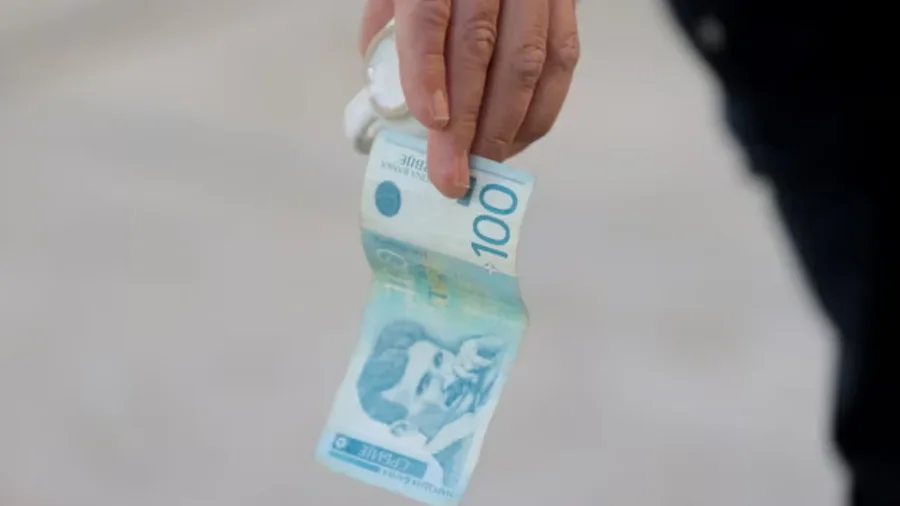
The British tabloid "The Guardian" has dedicated an article to the course of events and statements that followed the decision of the Central Bank of Kosovo to ban the use of the Serbian dinar.
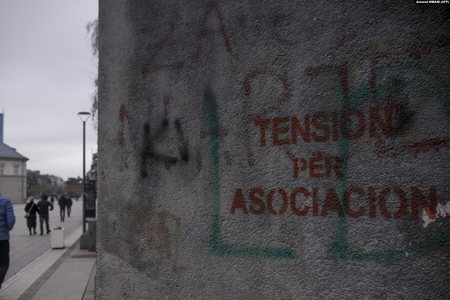
The article says the US has accused authorities in Kosovo of unnecessarily stoking ethnic tensions after the government imposed a ban on Serbia's currency and instructed its Serbian minority to adopt the euro.
The article also states that ethnic Serbs, who make up about 5% of its population of 1.8 million, still use the dinar, a reflection of their refusal to accept Kosovo citizenship. The article also reflects the reactions of internationals, as well as of Kosovo and Serbia regarding the issue.
The US has accused authorities in Kosovo of "unnecessarily stoking ethnic tensions" after the government imposed a ban on Serbia's currency and instructed its Serbian minority to adopt the euro. Police raids ordered by Pristina's interior ministry on four organizations working in Serb-populated areas, which came days after the currency change, have intensified fears of a worsening security situation. Serbian officials say the sudden move to close operations will negatively affect the daily lives of ethnic Serbs who depend on their social services. The EU criticized Pristina on Monday for taking "unilateral" steps it fears will lead to a further deterioration in relations with Serbia, which refuses to recognize Kosovo's independence.
"These steps are worrying because they are not contributing to the de-escalation of the situation. They are not coordinated; they are taken unilaterally without the necessary level of prior consultation in order to prevent or prevent the negative impact they may have on the ground," said Josep Borell, the EU's high representative for foreign affairs.
Officials say the status of the organizations targeted in the police raids, the Belgrade-funded parallel structures, should be addressed through EU-brokered normalization talks between Kosovo and Serbia. Dialogue has failed since a clash between Serb militants and Kosovo police left four dead in September. The euro has been the de facto currency in Kosovo since it declared independence in 2008, a decade after the country's ethnic Albanian majority engaged in a brief independence war that eventually led to NATO intervention and the withdrawal of Serbian forces.
But ethnic Serbs, who make up about 5% of its population of 1.8 million, still use the dinar, a reflection of their refusal to accept Kosovo citizenship. Tens of thousands in 10 municipalities depend on pensions, salaries and social benefits in dinars distributed by Belgrade. The international community has asked the Kosovo government to postpone the euro-only policy, saying that the decision to change the currency, announced by the central bank in mid-January, has not left enough time to adapt.
Western ambassadors in Belgrade said they were particularly concerned about the regulation's impact on schools and hospitals, "for which no alternative process appears viable".
At the weekend, the American ambassador to Kosovo, Jeff Hovenier, expressed concern about the efforts of the Kosovo police to seize vehicles carrying Serbian dinars, which are then distributed for "social benefit payments from Serbia".
"These actions are unnecessarily heightening ethnic tensions and consequently limiting the United States' options to serve as an effective advocate for Kosovo in the international arena," Hovenier said.
Prishtina agreed last week to extend the transition period, but declined to say for how long. Highlighting the tensions, Serbia's populist president, Aleksandar Vucic, said the dinar ban was part of a wider policy of ethnic cleansing of Serbs from Kosovo, describing it as a "criminal strike" against the minority of 100,000 residents.
"People are scared, they are waiting in line to get their money," Vucic said in a televised speech on Friday (2 February).
Vowing to ignore the regulation, Vucic said Serbia would seek an urgent meeting of the UN Security Council to discuss escalating tensions with Kosovo. The currency ban is not the first measure to anger Belgrade. As part of efforts to establish control across the territory, ethnic Albanian authorities have also removed Serbian flags and signs from public buildings and banned vehicles with Serbian license plates.
Sources close to the Kosovo government said the switch to the euro in the north of the country was prompted by concerns about counterfeit money and illegal cash flows, not by a desire to provoke the Serbian government. They said the parallel institutions raided by Kosovo police were "illegal" and that Serbia had agreed to close them as part of the 2013 Brussels agreement.



Lini një Përgjigje