


 Shkruar nga Pamfleti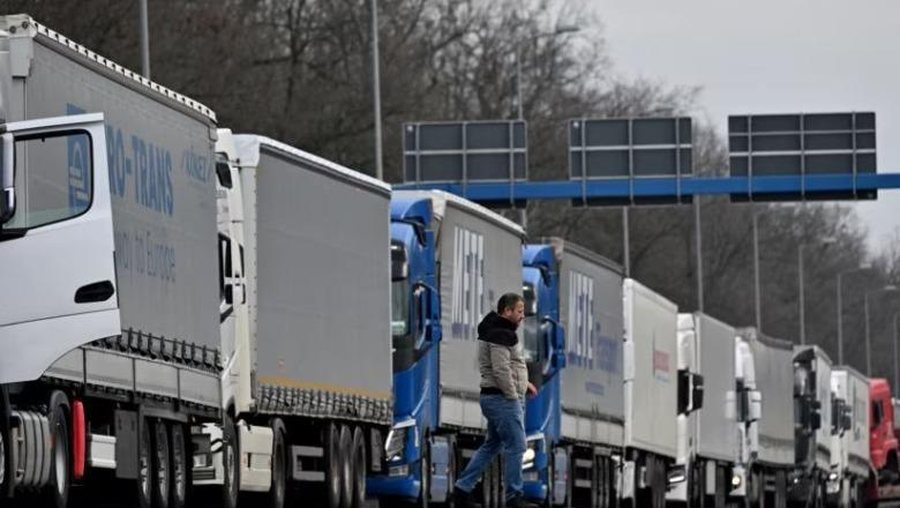
The movement of trucks and transport vehicles from Kosovo towards the border with Serbia resumed on Friday afternoon, after Serbian transporters ended a blockade that lasted several days, the Kosovo National Center for Border Management announced.
Serbian drivers stated that the decision to lift the blockades came after a signal from the European Commission, which emphasized that professional drivers constitute a special category of workers and require a stay longer than 90 days in European Union countries.
Later, transporters from Bosnia also confirmed that they had ended the blockades, while the day before, colleagues from Montenegro and North Macedonia had done the same.
Blockades had blocked freight terminals at dozens of entry and exit points in Serbia, as part of a protest against the Schengen Zone stay rules, which transporters describe as an obstacle to their work.
The protesters are demanding that the stay period be extended from three to four months within a six-month period.
According to the Serbian Chamber of Commerce, economic losses for Western Balkan countries have reached around 100 million euros per day.
Meanwhile, the European Commission adopted on January 29 a new visa strategy, which aims to find practical solutions and extend the stay for certain categories of workers from third countries.
The Kosovo Chamber of Commerce and Industry has positively assessed the lifting of the blockades, emphasizing that they had caused serious delays in imports and exports, increased costs and uncertainty for businesses.
Although Kosovo was not part of the protests, it was directly affected because most trade exchanges are carried out through transit through countries in the region.



Lini një Përgjigje