


 Shkruar nga Pamfleti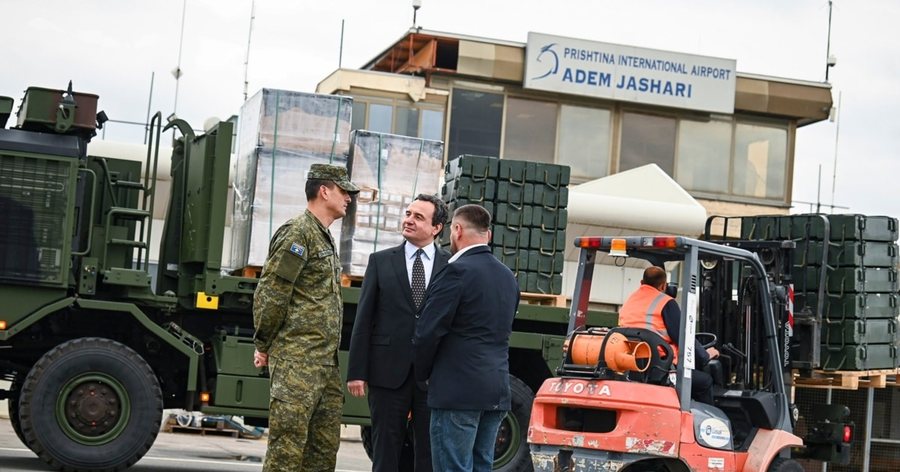
It is essential that any activity in Kosovo's airspace be conducted in proper coordination with NATO's peacekeeping mission in Kosovo, KFOR, to prevent tensions and guarantee security, an official from the Western military alliance told Radio Free Europe.
Kosovo authorities announced on October 8 that they had received "thousands" of combat drones from Turkey, prompting strong reactions from northern neighbor Serbia.
The NATO official praised Turkey as a long-standing contributor to the mission it leads in Kosovo, KFOR, and to regional stability.
But he did not want to answer REL's question about under what circumstances Kosovo could be allowed to use these drones, knowing that only the NATO-led mission has authority over its airspace.
"KFOR regularly monitors Kosovo's airspace, using all means and resources at its disposal, in accordance with its existing authority and mandate, under UN Security Council Resolution 1244 of 1999," the NATO official said.
He stressed that KFOR remains "closely involved in this important issue and is in close contact with Kosovo security organizations and the Serbian armed forces to this end."
KFOR is also the third security responder in Kosovo, after the Kosovo Police and the European Union rule of law mission, EULEX.
The NATO mission, among other things, is responsible for security on the border between Kosovo and Serbia.
NATO increased its presence in Kosovo during 2023, following rising tensions in the Serb-majority north, and now has 4,649 peacekeepers from 33 countries.
The Director of the Kosovo Center for Security Studies (KCSS), Mentor Vrajolli, told Radio Free Europe that, despite Kosovo not having authority over its own airspace, it must develop its defense capabilities.
"This is a kind of arms race that is taking place in the region, where I think it is expected that Kosovo will react in such a race, because its territorial security is being openly violated by a neighboring state," said Vrajolli, referring to claims by Kosovo officials of drone violations by Serbia.
Kosovo officials said in late September that Kosovo airspace had been violated by suspected Serbian drones. But they did not provide details about these claims, or when exactly these alleged drone violations occurred.
KFOR, on the other hand, told Radio Free Europe on September 26 that it had not observed any entry of drones from abroad into Kosovo's airspace that could affect the security of the entire country.
Vrajolli i tha REL-it se ky investim i Kosovës nuk është “jashtë kontekstit rajonal dhe global”, duke i parë edhe shkeljet e dyshuara me dronë rusë në Evropën Lindore javët e fundit.
“Këta janë dronë mbrojtës, pra nëse dikush vjen dhe e sulmon Kosovën, këta dronë përdoren për veprime të tilla, dhe nuk kanë synim për të hyrë në territorin e kujtdo për të kryer operacione të ndryshme”, shtoi ai.
Ai beson se qëllimi i Kosovës është mbrojtja dhe jo shënjestrimi i ndonjë vendi.
“KFOR-i është trup jo shumë i madh dhe ky mision jo medoemos e ka teknologjinë më të avancuar, për shkak se Kosova akoma nuk shihet nga NATO-ja si vend i rrezikut të drejtpërdrejtë... Prandaj institucionet e Kosovës duhet ta rrisin kapacitetin për t’i luftuar këta dronë”.
Ai shtoi: “Kosova ka shumë më shumë nevojë të zhvillojë teknologji që i verën dhe i deaktivizon këta dronë, sepse Kosova mund të përballet edhe me sulme terroriste me dronë, e realisht nuk e di sa kemi kapacitete që të ballafaqohemi me kërcënime të tilla”.
Serbia, e cila nuk e njeh pavarësinë e Kosovës, e akuzoi Turqinë - njërën prej anëtarëve më të fuqishme të NATO-s - se e “ëndërron ringjalljen e Perandorisë Osmane”.
Presidenti i Serbisë, Aleksandar Vuçiç tha se është i tmerruar nga sjellja e Turqisë dhe pretendoi se ajo e ka shkelur Kartën e Kombeve të Bashkuara dhe Rezolutën 1244 të Këshillit të Sigurimit të OKB-së.
“Tani është plotësisht e qartë se Turqia nuk dëshiron stabilitet në Ballkanin Perëndimor dhe është duke ëndërruar sërish për ringjallje të Perandorisë Osmane. Serbia është shtet i vogël, por ne i kuptojmë synimet e tyre reale”, tha presidenti serb përmes një postimi në X.
Më vonë, Ministria e Mbrojtjes e Serbisë tha se, pas dërgimit të dronëve turq në Kosovë, shefi i Shtabit të Përgjithshëm të ushtrisë së Serbisë, gjenerali Millan Mojsilloviq e ka zhvilluar një bisedë telefonike urgjente me komandantin e KFOR-it, gjeneralmajor Ozkan Ulutash.
Në komunikatën për media u se gjatë bisedës me komandantin e KFOR-it, Mojsilloviç ka shprehur protestë të ashpër kundër "vazhdimit të armatosjes së Kosovës".
Kosova pranoi dronë të llojit Skydagger RTF 7 dhe Skydagger RTF 15, sipas zyrtarëve të vendit. Ata thanë se pranuan “mijëra” sosh, pa treguar saktësisht sa.
Vranjolli tha se dronët Skydagger RTF nuk janë dronë sulmues, por mbrojtës dhe se Kosova i ka marrë këta dronë për mbrojtjen, dhe sektori i mbrojtjes është “hipotetik”.
“Shpresojmë se nuk do të kemi nevojë t’i përdorim këta dronë, për shkak se këta janë dronë shkatërrues, por nëse ndodh që Kosova të përballet me ndonjë sulm të jashtëm, atëherë Kosova duhet të ketë kapacitete për t’u mbrojtur”, tha ai.
Skydagger RTF është dron "i gatshëm për fluturim”, i pajisur me një mjet shpërthyes për përdorim kundër shënjestrave të palëvizshme dhe të lëvizshme, megjithëse ka edhe aplikime profesionale si vëzhgimi dhe kërkim-shpëtimi.
RTF means that the drone is fully assembled and includes all the necessary components, such as the drone itself: a radio transmitter, a receiver, and batteries, making it ready to fly immediately upon purchase.
The Skydagger RTF 7 drone can fly at a maximum speed of 130 kilometers per hour, at a maximum distance of up to 10 kilometers, similar to the RTF 15.
But, loaded with a maximum of 2 kilograms, this RTF 7 drone can fly for a maximum of 12 minutes, while without a load, 20 minutes. Meanwhile, the Skydagger RTF 15 drone can fly for a maximum of 14 minutes with a maximum load of 5 kilograms, while without a load, 36 minutes.
In August of this year, the Kosovo Security Force (KSF) - which is in the process of transforming into an army - was also equipped with armored vehicles, purchased from the United States.
Last year, it submitted a request to purchase 200 more Javelin anti-tank missiles, and is now in the process of making payment.
Kosovo has also purchased a fleet of Turkish drones, Bayraktar, in 2023.
In 2018, Humvee-type military vehicles also arrived in Kosovo from the United States.
The Kosovo government, at that time, signed a contract with the American company AM General for the purchase of 51 vehicles of this type.
Two years later, Kosovo purchased other military vehicles from the US, while in 2021, the US Government donated 55 ASV (Armored Security Vehicles) vehicles to Kosovo.
In recent years, the Government of Kosovo has increased the budget for the defense sector - this year it reached 207.8 million euros.
The KSF trains continuously at American and European bases, and also participates in multinational exercises such as "Defender Europe".
At the end of last year, Kosovo also signed an agreement with Turkey to build its first ammunition factory./ REL



Lini një Përgjigje