


 Shkruar nga Pamfleti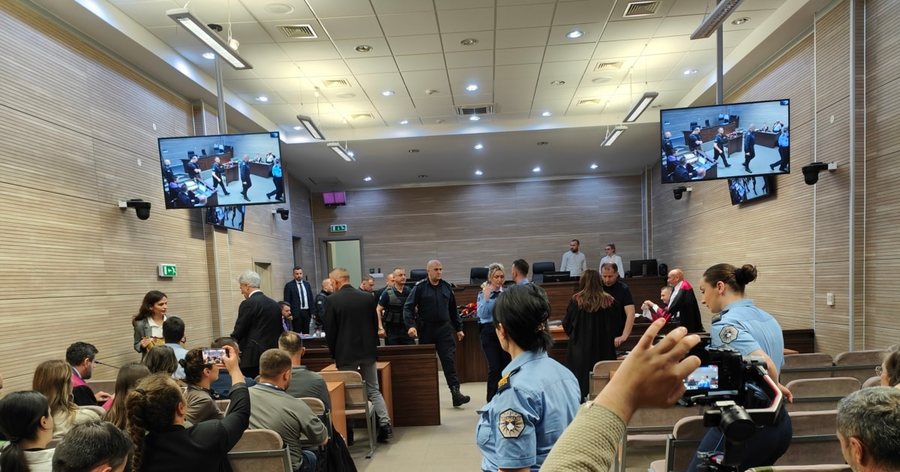
In the first hearing of the Banjska attack case - on Thursday at the Basic Court of Pristina - the lawyer for the family of Sergeant Afrim Bunjaku who was killed in that attack, Arianit Koci, requested life imprisonment for the accused.
At the beginning of the hearing, defendants Vladimir Tolic, Blagoje Spasojevic and Dusan Maksimovic pleaded not guilty to charges of terrorism, financing of terrorism and serious criminal offences.
Tolic and Spasojevic had refused to plead guilty at the preparatory hearing on October 9 last year.
The three defendants were arrested following the attack in Banjska, Zvečan, in September 2023, when an armed group of Serbs attacked the Kosovo Police and killed police officer Afrim Bunjaku. In the ensuing shootout, three more attackers were killed.
Responsibility for the armed attack in Banjska was claimed by Milan Radoićić, former vice-president of the Serbian List – the largest Serb party in Kosovo that has the support of official Belgrade.
It is believed that he and most of the members of the armed group are at large in Serbia.
Trial in absentia has been requested for the other 42 defendants in this case, who are at large. International arrest warrants were issued for them by the Basic Court in Pristina, with the aim of bringing them to court.
In absentia trials, which were made possible in Kosovo by the 2022 legal amendments, all options to ensure the presence of the accused are required to be exhausted. In other cases of this type, Kosovo has requested the authorities in Serbia to send the invitation for questioning to the accused, and the trial case has only continued after no response has been received from the accused.
At Thursday's hearing, after the defendants pleaded guilty, special prosecutor Naim Abazi said that the videos would prove that the attack was pre-planned and that the group was "well-organized."
During the screening of videos taken by drones on the day of the attack, Abazi said that the homes of citizens in that area were also damaged by the attack.
From the archive: Video recordings of exercises at a military training ground, testing of military equipment and footage of a hotel complex in Kopaonik, Serbia, are the evidence that, for official Pristina, proves Serbia's involvement in the September 24 attack in Banjska, Zvečan.
Tolliq, who was found wounded, was said to have been captured with military weapons, while Spasojevic and Maksimovic were shown photographs with other defendants in this case.
In their opening statements, the defendants Spasojevic and Tolic said that they "did not attack or kill anyone."
Spasojevic said he did not intend to unite northern Kosovo, inhabited by a Serb majority, with Serbia, while Tolic said he was in Banjska on September 24, but "for a different reason" than what is stated in the indictment.
Lawyers for the three defendants - Lubomir Pantovic defending Spasojevic, Milos Delevic defending Tollic, and Jovana Filipovic defending Maksimovic - said the indictment "does not meet the criteria" of the Code of Criminal Procedure.
They claimed that the indictment does not describe the individual actions of the accused, but only describes the event in general terms, without indicating the role that the accused played.
After all parties delivered their opening statements, Prosecutor Abazi said he could continue questioning the injured parties, but injured party Qerim Shaqiri requested a postponement of the hearing for health reasons.
The next session was scheduled for June 9, to be followed by other sessions planned to be held on the following days, on June 11, 12 and 13.
The Kosovo Special Prosecution Office, among other things, charges the defendants in the Banjska case with terrorist acts and acts against the constitutional order and security of Kosovo.
The prosecutor in the case, Naim Abazi, previously stated that the defendants had various roles within the criminal group, "from organizing and directing terrorist activities, to financing and laundering money."
The indictment states that this group, through the use of violence with heavy weapons, attempted to "separate the northern part of the territory of the Republic of Kosovo, namely the municipalities inhabited by a Serb majority, and to annex this part of the territory to the Republic of Serbia."
Milan Radoićić has been identified as the leader of this group, who is said to have played an important role in coordinating the attack and criminal activities.
Radoicic is blacklisted by the United States and the United Kingdom for links to international organized crime and corruption.
In Kosovo, he is also linked to the murder of a Serbian opposition politician, as well as the intimidation of witnesses in a trial over several illegal constructions.
In the indictment, the Prosecution cites 34 files of evidence, including video recordings, analyses of electronic devices, various responses from Luxembourg, Bosnia and Herzegovina, banks and various institutions, witness statements, etc.
Kosovo authorities describe the attack in Banjska as a terrorist act and accuse Serbia of being behind it.
On the other hand, Serbia has denied any involvement in the attack in Banjska, while Serbian President Aleksandar Vučić has emphasized that for Belgrade this attack is not terrorist, but that it is being investigated.
The international community has strongly condemned the attack in Banjska and has demanded that those responsible be brought to justice./ REL


Lini një Përgjigje