


 Shkruar nga Pamfleti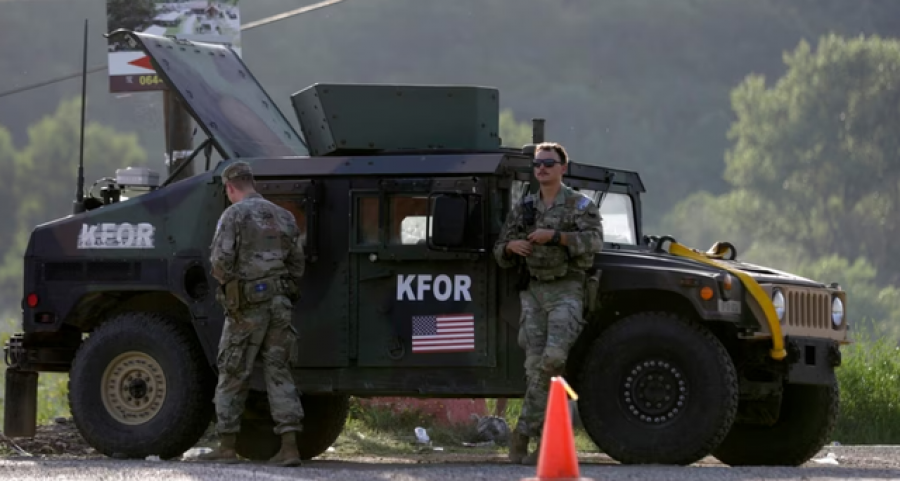
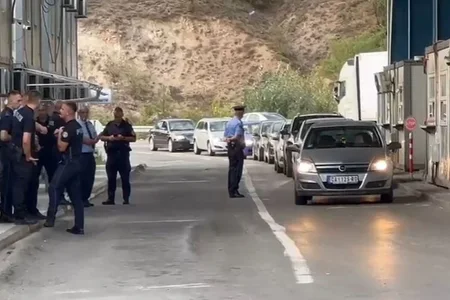
KFOR officials described the security situation in the country as calm, but fragile, especially in the north, populated mainly by Serbs.
In addition to independent patrols, they said that they are conducting joint patrols with the Kosovo Police, as well as parallel patrols with the Serbian armed forces along the border line, in order to guarantee security.
KFOR is carrying out patrols in various formats in all parts of Kosovo, officials of this force have confirmed through a spokesperson. They have shown that the patrols are based on the mandate from the UN, KFOR officials said that the situation continues to be fragile, especially in the north populated mainly by Serbs.
Except in the north, KFOR, through various communiques in recent weeks, has announced the patrols made in other cities as well.
" We implement our UN mandate at all times and impartially, through various activities. These include regular patrols, which are carried out in different formats, such as independent KFOR patrols throughout Kosovo and along the administrative border line, joint patrols with the Kosovo Police and synchronized patrols, parallel to the Serbian armed forces. on the respective sides of the administrative border line ", said the KFOR Information Office through a written response.
In the recently published communiques, it was said that members of KFOR have carried out patrols along the administrative border line in Pristina and Istog, in order to consolidate regional stability.
In KFOR they added that these patrols as well as engagements with all local communities - represent a concrete and tangible demonstration of NATO's long-term and unwavering commitment to sustainable security throughout Kosovo and stability throughout the Western Balkans.
" KFOR continues to closely monitor the situation. We have a visible, flexible and responsive presence that enables us to address any significant security developments effectively, in line with our UN mandate ," the response reads.
Asked about the security situation after the Government's warnings about the opening of the Bridge over the Ibër River, KFOR said that the situation is calm, but fragile.
"In general, the security situation in Kosovo is calm, but it remains fragile, especially in the north of Kosovo. We are closely monitoring developments and maintaining a visible and appropriate presence through regular patrols and engagement with local communities," the response continued.
KFOR added that they continue to operate in Kosovo as a third responder, after the Kosovo Police and EULEX.
" We continue to fulfill our UN mandate - based on United Nations Security Council Resolution 1244 of 1999 - to contribute to a peaceful and secure environment for all people and communities living in Kosovo , at any time and impartially. KFOR operates as a third security responder, in close coordination with the Kosovo Police and the EU Mission for the Rule of Law (EULEX), who are the first and second responders, respectively, " KFOR stated. .
They have talked about the possibility of increasing the presence with additional troops, in KFOR they said that the current mission consists of about 4,600 troops from 28 contributing countries, including NATO allies and partners.
"We have a visible, flexible and appropriate presence that allows us to effectively deal with any important security development, in accordance with our UN mandate", they stated in KFOR.
This force, as well as the diplomatic part of the international community, has called on the Government not to open the Bridge for vehicle traffic under the current circumstances. Its officials have even repeated several times that they are ready to confront anyone who threatens the security situation in the country.
The bridge over the river Ibër, or as the French KFOR soldiers had baptized it, "Austerlitz", as a synonym of the bloody battle of 219 years ago against the Austro-Russians, continues to be a symbol of the ethnic division between Albanians and Serbs.
Historically, the bridge has been a source of tensions and conflicts. In September 2009, it was partially reopened to traffic, but reinforced with local and international police forces. But the Bridge was concreted with sand and stones by local Serbian residents in July 2011, as a sign of opposition to official Pristina's efforts to establish authority in the north of the country and take control of the border points in Jarinje and Bërnjak.
A policeman of the Kosovo Special Unit was killed in this action.
After removing the sand stones, the Serbs built a so-called "Peace Park" in the north. This park, which replaced the barricade, only left the bridge free for a few hours. But with another agreement, the parties agreed that the park barricade will be removed and the revitalization of the Bridge will be done by the European Union.
The construction of a two and a half meter high wall within a week had turned the tensions around. The barrier was placed in the middle of the road by the North Municipality, but then it was demolished. This happened in February 2016 after the multilateral agreement between the Government of Kosovo, the Municipality of North Mitrovica, the European Union and the United States of America. At the same time, the EU restarted the works for the revitalization of the bridge and the local government of the north resumed the works for the return to the promenade of "Mbreti Pjetër" street.
Although the works have been carried out for years on both sides, the European Union has repeated several times that the decision to open the Bridge must be made within the Brussels dialogue, Koha reports.
NATO has also expressed its disappointment with the actions of the Kosovo authorities in the north, against the Serbian parallel structures. A few days ago, the Kosovo police closed the Serbian parallel structures in the four municipalities in the north. The reaction was immediate from international partners, who described Kosovo's action as unilateral and uncoordinated.


Lini një Përgjigje