


 Shkruar nga Pamfleti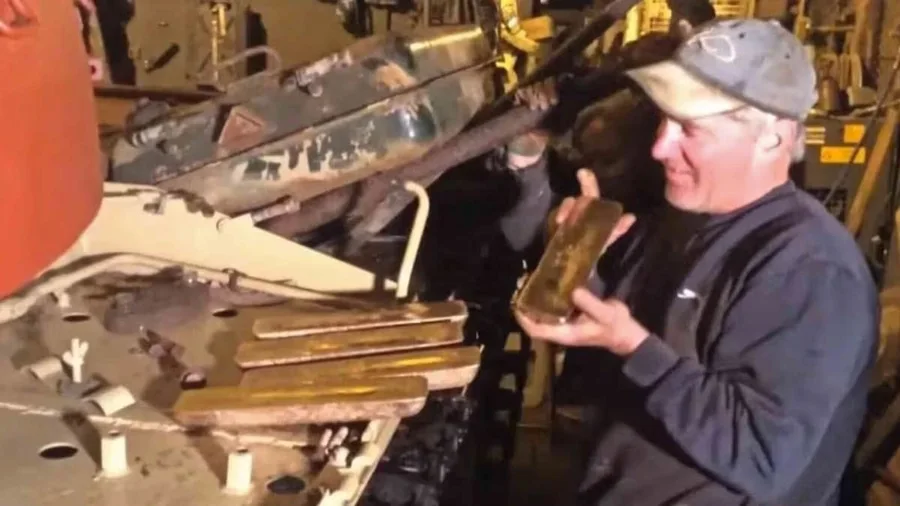
Nick Meade was a mechanic and collector of military vehicles. One of those who sees history where others see rust. When he spotted an Iranian Type 69 tank on an online platform, he almost automatically bought it. Another addition to his collection, one might say...
However, during the dismantling, he opened a hidden compartment and froze. Inside were 5 bars of pure gold. Heavy, untouched, forgotten by time. Their value was estimated at around 2.5 million euros and everything indicated that they had been there since the invasion of Kuwait in 1990.
Mead himself described the moment as utterly awkward. “We stood there looking at the gold, not knowing what to do,” he later said. In such cases there was no guide, only conscience.
He eventually decided to hand over the bars to British authorities so that their original owners could be traced. He received no financial reward. He says this without bitterness, but with a dose of disappointment. As he explains, gold has a “fingerprint” and its exact origin can be traced.
Initial analyses showed that the gold likely came from small-scale artisanal mining, a type of mining activity found mainly in poor areas of the planet and based on primitive tools, often using mercury.
This practice is currently considered the largest source of anthropogenic mercury pollution worldwide. Approximately 1,000 tons are released into the environment each year, with serious impacts on nature and human health.








Lini një Përgjigje